One Month Since U.S., Israeli War Against Iran: Who Is Gaining?
A month since the U.S., and Israel launched their war against Iran, the two are nowhere close achieving their goal of a quick victory.
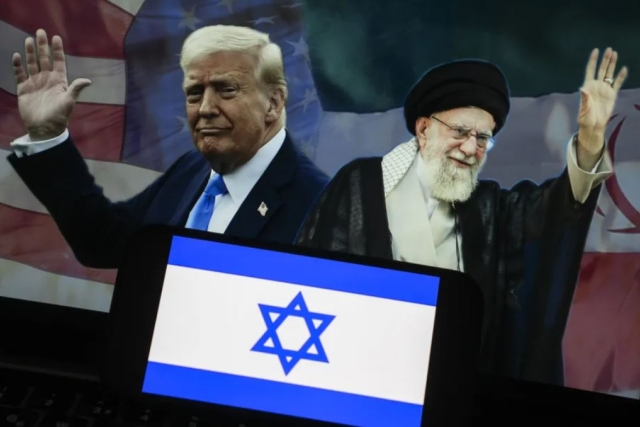
U.S. President Donald Trump and former Iranian Supreme Leader Ayatollah Ali Khamenei @AA
One month after the United States and Israel launched coordinated strikes on Iran on February 28 the conflict has expanded across multiple domains, with both sides sustaining losses, carrying out retaliatory attacks, and targeting critical infrastructure, while no clear decisive advantage has emerged.
The opening phase of the war, codenamed “Operation Epic Fury” by the U.S. and “Operation Roaring Lion” by Israel, began with a large-scale air campaign involving hundreds of strikes within the first 12 hours. Iranian Supreme Leader Ayatollah Ali Khamenei was killed in a daylight strike in Tehran, alongside around 40 senior officials and military commanders, including Major General Mohammad Pakpour, commander-in-chief of the Islamic Revolutionary Guard Corps (IRGC), and Brigadier General Aziz Nasirzadeh, minister of defence.
More than 500 military targets were reportedly hit across cities such as Tehran, Isfahan, and Natanz, including air defense systems, missile launchers, and naval assets.
U.S. President Donald Trump described the operation as a pre-emptive action to neutralize what he called the threat of a nuclear-armed Iran and to degrade its military capabilities.
Civilian casualties were reported early in the conflict. A U.S. Tomahawk missile strike on the Shajareh Tayyebeh girls’ school in Minab killed more than 160 people, mostly children.
Iran responded within hours, launching hundreds of drones and ballistic missiles targeting Israel and U.S. military installations across the region, including bases in Bahrain, Kuwait, Qatar, and the U.A.E. Missile strikes in Israel caused civilian casualties, including a fatal hit on a residential building in Tel Aviv on February 28 and a strike on a synagogue shelter in Beit Shemesh on March 1 that killed nine people.
Subsequent attacks continued through March. On March 21, Iran targeted areas near the Shimon Peres Negev Nuclear Research Center in Dimona, with additional strikes hitting Arad, injuring more than 150 people. Debris from intercepted missiles damaged areas near religious sites in Jerusalem’s Old City on March 16. By late March, at least 15 people had been killed and more than 4,000 injured in Israel.
Iran has also used cluster munitions in a significant portion of its missile attacks, contributing to civilian casualties in areas including Ramat Gan and the West Bank. A further missile strike on March 27 hit a commercial street in Tel Aviv, causing additional casualties. On March 28, Iran-backed Houthi forces in Yemen confirmed launching a ballistic missile toward Israel, marking an expansion of the conflict’s geographic scope.
Beyond Israel, Iranian retaliatory strikes have focused heavily on U.S. and allied infrastructure in the Gulf. Missile and drone attacks targeted Al Dhafra Air Base in the U.A.E., Al Udeid Air Base in Qatar, and multiple installations in Bahrain, Kuwait, and Saudi Arabia. Strikes damaged radar systems, aircraft, and support infrastructure, with some bases rendered largely uninhabitable.
U.S. and allied forces have also experienced aerial losses. Since early March, multiple aircraft have been downed or damaged, including a KC-135 refueling tanker, and an E-3 Sentry surveillance aircraft. On March 2, three F-15Es were downed in a major friendly fire incident over Kuwait. A U.S. F-35 made an emergency landing at a regional military base in the Middle East after allegedly taking fire during a combat mission over Iran. If proven accurate, it would make it the first time an F-35 has been confirmed as hit by enemy fire. By March 22, at least 15 U.S. aircraft had been lost or significantly damaged, including over a dozen MQ-9 drones. Iran has reported broader losses across all parties, including aircraft destroyed on the ground.
Casualties among U.S. personnel include at least 13 killed and more than 300 wounded. Additional incidents include fatalities at bases in Kuwait and injuries at Prince Sultan Air Base in Saudi Arabia following missile strikes.
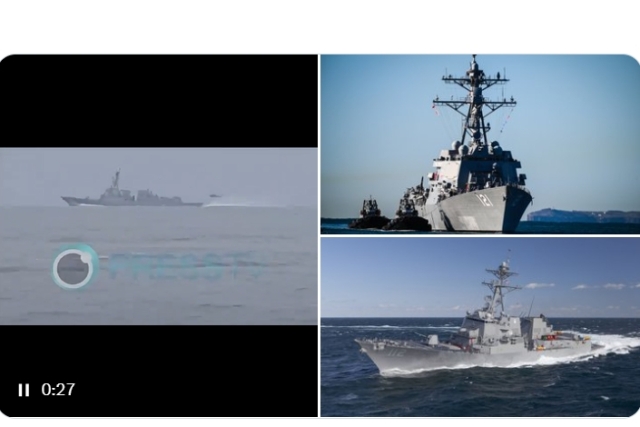
At sea, Iran has claimed attacks on the USS Abraham Lincoln carrier strike group, but U.S. Central Command has rejected these claims, stating the vessel remains operational and continues conducting missions.
The conflict has also expanded into infrastructure and economic targets. Iran closed the Strait of Hormuz on February 28, disrupting global energy flows and pushing Brent crude prices above $112 per barrel by March 27. Industrial sites, including the Ruwais refinery in the U.A.E. and major Iranian steel plants, have been struck. Iran’s South Pars gas field, the world’s largest natural gas condensate field, and other energy assets have also been targeted.
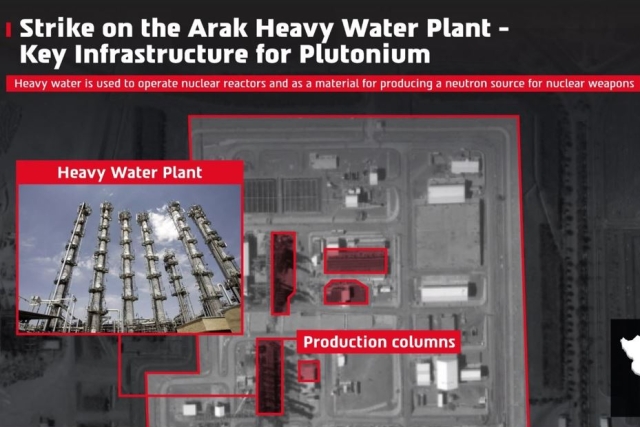
Nuclear facilities have been a central focus. U.S. and Israeli strikes hit the Natanz enrichment complex on March 21, while additional attacks targeted facilities in Bushehr, Arak, and Yazd. Iran has responded by targeting Israel’s nuclear infrastructure near Dimona. Israel has also claimed to have killed at least three Iranian nuclear scientists in March.
On the ground, the U.S. is preparing for potential escalation. Plans under consideration include the seizure or blockade of strategic Iranian islands such as Kharg Island, along with Qeshm Island and smaller islands near the Strait of Hormuz. The Kharg Island is known as as the petroleum nerve center of Iran, handling roughly 90% of the country's crude oil exports. As per reports, current U.S. troop deployments include thousands of Marines and airborne forces, with total potential ground forces exceeding 17,000 personnel in the region.
Since Feb 28, more than 1,900 people are reported dead and 24,800 injured in Iran from airstrikes. Iranian retaliation has caused over 19 deaths in Israel and multiple casualties in Gulf states, including three deaths in the U.A.E.

US Warships Forced to Retreat after Iranian Navy Fires Warning Shots in...
Ukraine Struck 18 Russian Oil Facilities in May, the Farthermost being 1700...
After Australia, Korea Next in Line to Acquire Nuclear-powered Submarines
Missed Patriot Interceptor, Not Iranian Drone Hit Kuwait Airport

One Month Since U.S., Israeli War Against Iran: Who Is Gaining?
One month after the United States and Israel launched coordinated strikes on Iran on February 28 the conflict has expanded...
Modern Tank Showdown: T-90MS, Leopard 2A7, M1E3 Abrams Compared
Main Battle Tanks (MBTs) have shown their mettle in recent conflicts such as in Ukraine despite being increasingly vulnerable to...
European Nations Prioritizing Europe-made IRIS-T & SAMP-T over American Patriot Air Defense Systems?
European nations looking to procure new air defense systems appear to be giving the much-vaunted American Patriot a miss in...

Russian T-90MS Crew Discuss Future Upgrades
Defense Mirror spoke with the crew members of the Russian T-90MS main battle tank, produced by UralVagonZavod

China's Mass-produced J-35A Aircraft Set to Disrupt Global Stealth Fighter Market
China is aiming to disrupt the global stealth fighter market by mass-producing its fifth-generation J-35A at a pace comparable to...

The Future of Combat: Miniaturized Laser Weapons Set to Replace Bullets and Missiles
Lasers may soon replace bullets, and drones could disable enemy UAVs with beams of light instead of missiles