Operational Laser Weapon for the German Navy By 2029
Rheinmetall and MBDA have transferred a laser weapon demonstrator for the German Navy for further testing.
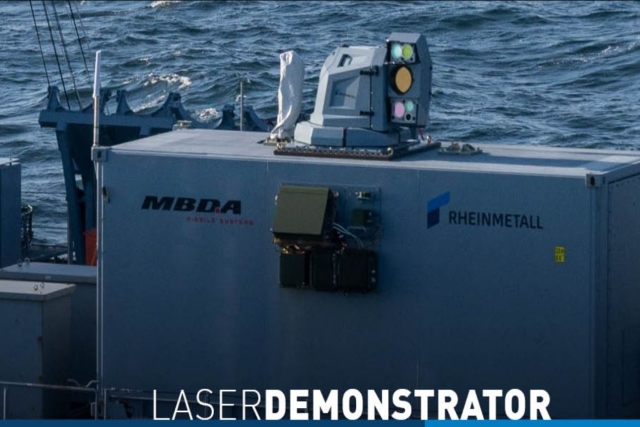
A high-energy laser demonstrator transferred for further testing in Germany has set the German Navy on a path toward operational shipborne laser weapons by 2029.
Following a one-year testing phase at sea, defense companies Rheinmetall and MBDA in Germany moved the container-based system to the Laser Competence Centre at the Technical Centre for Weapons and Ammunition (WTD 91) in Meppen. The weapon has already completed more than 100 live-firing trials on board the frigate Sachsen, demonstrating tracking capability and accuracy against drones under real maritime conditions.
Further land-based evaluation now focuses on its effectiveness against drones and other fast-moving threats. The laser weapon is intended to supplement cannons and guided missiles in close-range defense roles. Planned missions include countering drone swarms, engaging speedboats, and intercepting guided missiles approaching naval vessels.
The system uses German-developed optics and sensors for target detection and tracking. Integration work has been shared between the two contractors since 2019.
MBDA in Germany oversees target tracking, the control console, and command-and-control integration. Rheinmetall provides the aiming system, beam guidance, demonstrator container, and the high-energy laser source.
Work at Meppen, supported by WTD 91, aims to accelerate progress toward operational deployment.
Officials expect the first operational naval laser weapon to be available from 2029.
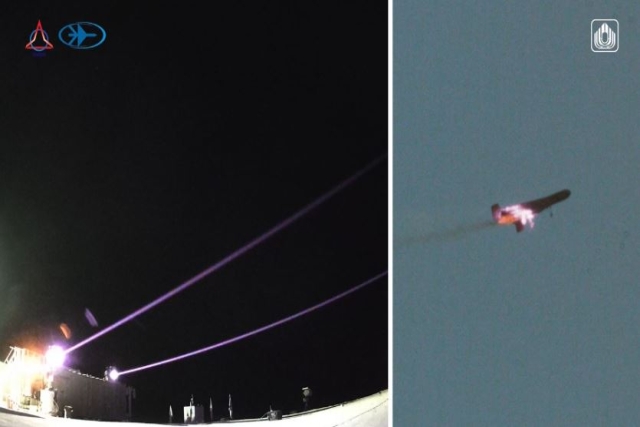
Israel Completes Iron Beam Laser Weapon Development, IDF Delivery Imminent

Australia’s EOS Unveils ‘Apollo’ High Energy Laser Weapon
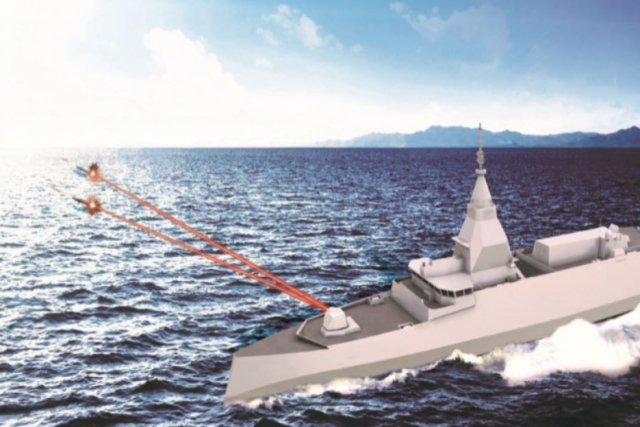
France Launches Syderal Laser Weapon Project for Drone Defense
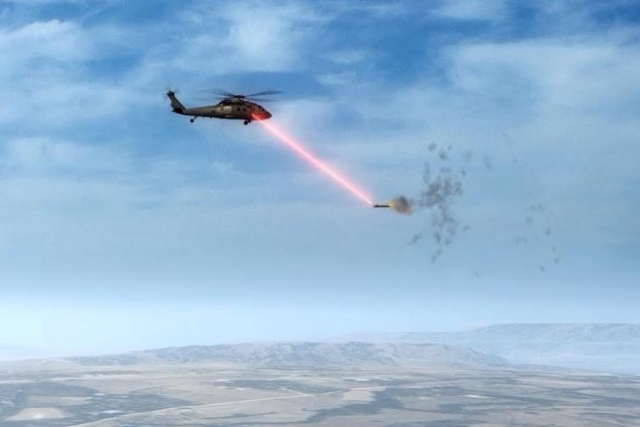
Turkey’s ASELSAN Demonstrates Laser Defense System Against Infrared-Guided Missiles

Houtis Fire Missiles at Saudi Airport after Riyadh Bombs Yemen’s Sanaa Airport...

Iran Blockade Back, Now U.S. to Charge 20% Hormuz Transit Fee
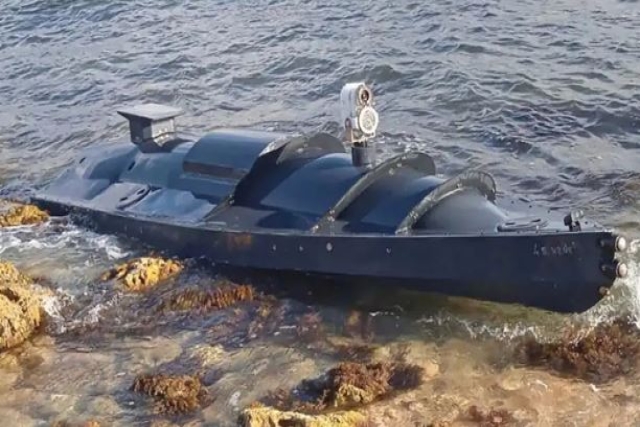
First Use of Unmanned Kamikaze Boat by the U.S. in Attack...

Russian FSB Prevents Ukrainian Plot to Attack Su-57 Fighter Bases with FPV...

One Month Since U.S., Israeli War Against Iran: Who Is Gaining?
One month after the United States and Israel launched coordinated strikes on Iran on February 28 the conflict has expanded...

Modern Tank Showdown: T-90MS, Leopard 2A7, M1E3 Abrams Compared
Main Battle Tanks (MBTs) have shown their mettle in recent conflicts such as in Ukraine despite being increasingly vulnerable to...
European Nations Prioritizing Europe-made IRIS-T & SAMP-T over American Patriot Air Defense Systems?
European nations looking to procure new air defense systems appear to be giving the much-vaunted American Patriot a miss in...

Russian T-90MS Crew Discuss Future Upgrades
Defense Mirror spoke with the crew members of the Russian T-90MS main battle tank, produced by UralVagonZavod

China's Mass-produced J-35A Aircraft Set to Disrupt Global Stealth Fighter Market
China is aiming to disrupt the global stealth fighter market by mass-producing its fifth-generation J-35A at a pace comparable to...

The Future of Combat: Miniaturized Laser Weapons Set to Replace Bullets and Missiles
Lasers may soon replace bullets, and drones could disable enemy UAVs with beams of light instead of missiles