U.S. Soldier Commands Autonomous Black Hawk Missions for First Time
Military exercise marks milestone in autonomous flight as non-pilot soldier directs cargo drops, resupply, and medevac operations using Sikorsky’s MATRIX technology.
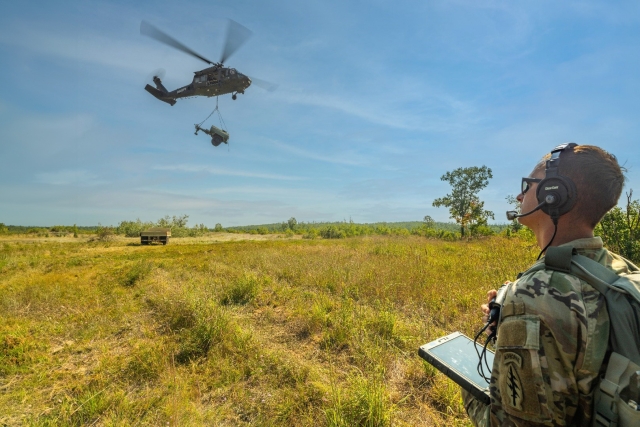
For the first time, a U.S. soldier with no aviation background planned and executed real-world missions using an autonomous Black Hawk helicopter during the Northern Strike 25-2 military exercise in August.
Lockheed Martin Sikorsky’s Optionally Piloted Black Hawk, equipped with MATRIX technology, was deployed in collaboration with the Joint Personnel Recovery Agency and the Defense Advanced Research Projects Agency (DARPA). The demonstration highlighted how autonomous systems could extend operational reach and lower risks to human crews in complex environments.
A U.S. Army National Guard Sergeant First Class became the first soldier to independently plan, command, and execute multiple missions using a handheld tablet interface. In less than an hour of training, the soldier directed the aircraft to a destination 70 nautical miles away and carried out multiple precision airborne drops—marking the first time an OPV Black Hawk was fully operated by an active-duty soldier rather than a trained pilot or engineer.
The demonstration included several operational firsts. In the initial exercise, the soldier conducted a logistics resupply from a Coast Guard vessel on Lake Huron and commanded the OPV Black Hawk to perform precision parachute drops. A second mission showcased the helicopter’s ability to autonomously hover while soldiers attached a 2,900-pound water tank beneath it—a key milestone for aerial resupply operations.
In another test, the aircraft transported High Mobility Artillery Rocket System (HIMARS) launch tubes and executed a simulated medical evacuation. The soldier commanded the Black Hawk to perform an autonomous patient transfer at an unimproved landing site, marking the first instance of a soldier-led autonomous medevac operation.
The MATRIX system, developed under DARPA’s Aircrew Labor In-cockpit Automation System (ALIAS) program, enables non-pilot operators to control sophisticated flight operations, including resupply and personnel recovery missions, even in hazardous or low-visibility conditions.
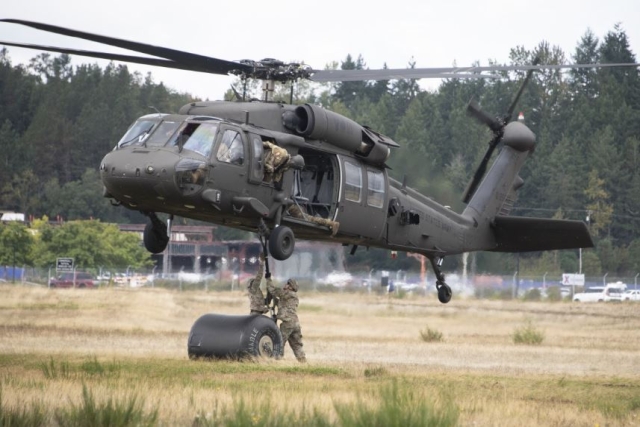
U.S. Army Awards Sikorsky $43M Contract for Black Hawk Modernization
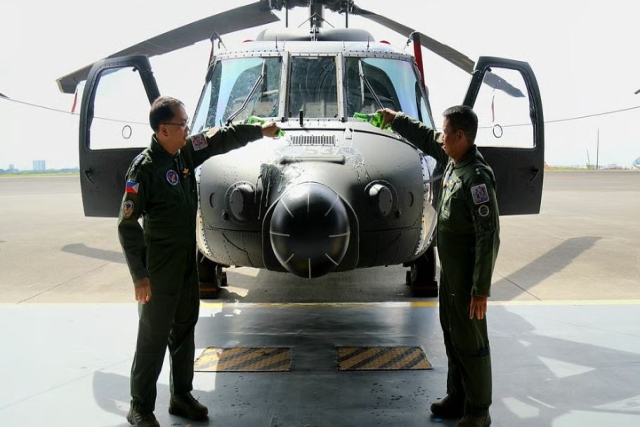
Philippines Receives Five New Black Hawk Helicopters
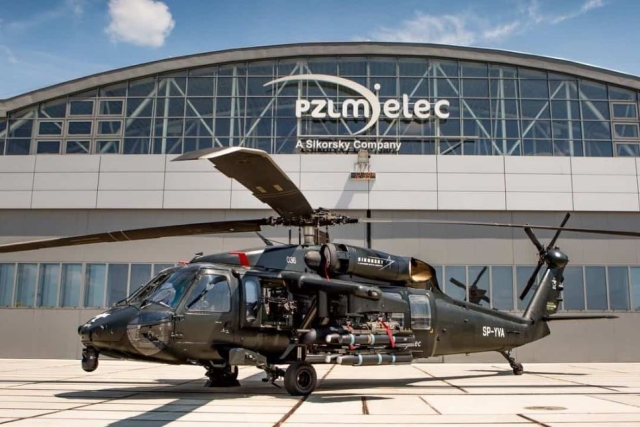
Poland Halts Black Hawk Helicopter Deal
American Airlines Jet, U.S. Army Black Hawk Collide Near Washington, Crash Into...
70 Civilians killed, 360 Injured in Ukrainian Strikes on Russian Economic Targets
Hand to Hand Combat Between Chinese, Philippine Soldiers in South China Sea
2 US troops KILLED, 1 Missing, 4 Injured in Iran Missile Strikes
Russia's Unmanned Systems Group Signs Several International Contracts to Sell its Supercam...

One Month Since U.S., Israeli War Against Iran: Who Is Gaining?
One month after the United States and Israel launched coordinated strikes on Iran on February 28 the conflict has expanded...
Modern Tank Showdown: T-90MS, Leopard 2A7, M1E3 Abrams Compared
Main Battle Tanks (MBTs) have shown their mettle in recent conflicts such as in Ukraine despite being increasingly vulnerable to...
European Nations Prioritizing Europe-made IRIS-T & SAMP-T over American Patriot Air Defense Systems?
European nations looking to procure new air defense systems appear to be giving the much-vaunted American Patriot a miss in...
Russian T-90MS Crew Discuss Future Upgrades
Defense Mirror spoke with the crew members of the Russian T-90MS main battle tank, produced by UralVagonZavod
China's Mass-produced J-35A Aircraft Set to Disrupt Global Stealth Fighter Market
China is aiming to disrupt the global stealth fighter market by mass-producing its fifth-generation J-35A at a pace comparable to...
The Future of Combat: Miniaturized Laser Weapons Set to Replace Bullets and Missiles
Lasers may soon replace bullets, and drones could disable enemy UAVs with beams of light instead of missiles