Turkey’s Unmanned Fighter ‘Kizilelma’ Integrates Embedded Targeting System in Global First
This is the first use of an embedded electro-optical targeting system on an unmanned fighter aircraft.

Turkey’s first unmanned fighter, Bayraktar Kizilelm, a completed the integration and testing of an embedded electro-optical targeting system (EOTS) developed by on November 17.
Baykar announced that the TOYGUN EOTS has been fitted onto the unmanned fighter platform as part of ongoing development work. The system, created using domestic resources, is designed to provide imaging, tracking and laser designation functions without altering the aircraft’s low-observable structure.
Two flight tests were carried out over the past week at the Akinci Flight Training and Test Center in Corlu. According to technical data released by program officials, the trials verified image stability at different altitude and speed ranges, long-distance tracking of moving targets, and laser designation accuracy. The system maintained uninterrupted data exchange with the aircraft’s mission computer and met the requirements for serial integration.

The integration marks the first time an embedded EOTS has been used on an unmanned fighter aircraft. Comparable installations on manned aircraft are currently seen only on fifth-generation platforms, such as the U.S.-built F-35, where sensors are placed within the airframe rather than as external pods.
Program engineers stated that TOYGUN was designed with features tailored for unmanned operations, including wide-spectrum scanning and IR-based long-range detection intended to support 360-degree situational awareness. The system incorporates AI-enabled functions for target tracking and classification.
With the embedded sensor now operational on the platform, Bayraktar Kizilelma is expected to conduct targeting tasks while maintaining its low-observability profile, allowing it to detect, track and designate targets before releasing domestically produced munitions.
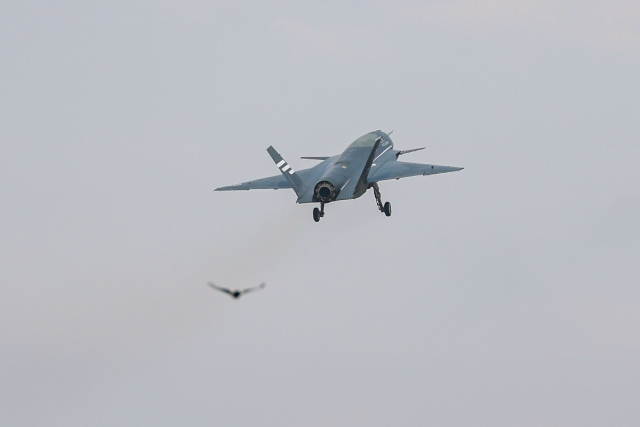
Turkey’s First Unmanned Fighter Clears Aerodynamic System Identification Test
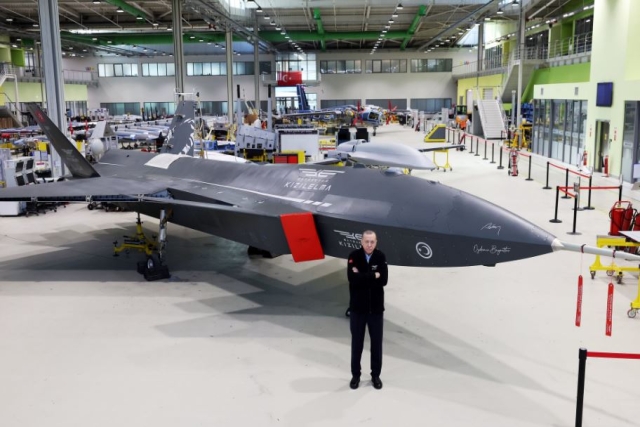
Turkish Unmanned Fighter, Kızılelma Completes Flight Tests, Serial Production in 2024

Turkish Unmanned Fighter Jet Passes System Identification Test in Second Fight
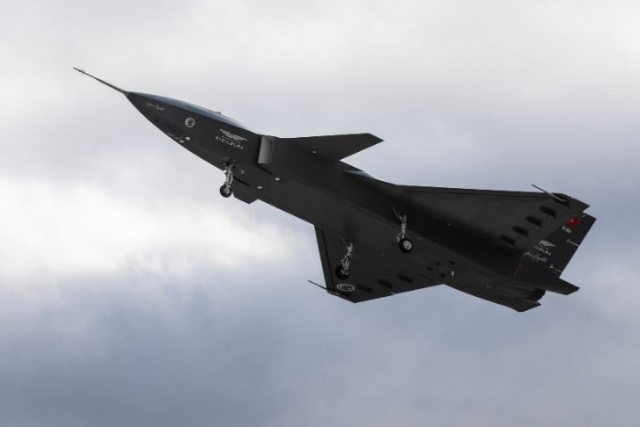
Turkey’s Unmanned Fighter Makes First Flight
Ukraine Pulls Off World’s First Unmanned Amphibious Assault

IRGC Strikes Two Super Tankers in Strait of Hormuz, 5 Killed in...

Houtis Fire Missiles at Saudi Airport after Riyadh Bombs Yemen’s Sanaa Airport...

Iran Blockade Back, Now U.S. to Charge 20% Hormuz Transit Fee

One Month Since U.S., Israeli War Against Iran: Who Is Gaining?
One month after the United States and Israel launched coordinated strikes on Iran on February 28 the conflict has expanded...
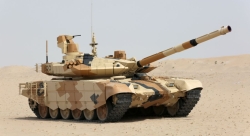
Modern Tank Showdown: T-90MS, Leopard 2A7, M1E3 Abrams Compared
Main Battle Tanks (MBTs) have shown their mettle in recent conflicts such as in Ukraine despite being increasingly vulnerable to...
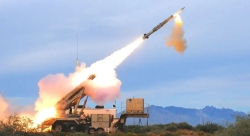
European Nations Prioritizing Europe-made IRIS-T & SAMP-T over American Patriot Air Defense Systems?
European nations looking to procure new air defense systems appear to be giving the much-vaunted American Patriot a miss in...

Russian T-90MS Crew Discuss Future Upgrades
Defense Mirror spoke with the crew members of the Russian T-90MS main battle tank, produced by UralVagonZavod

China's Mass-produced J-35A Aircraft Set to Disrupt Global Stealth Fighter Market
China is aiming to disrupt the global stealth fighter market by mass-producing its fifth-generation J-35A at a pace comparable to...

The Future of Combat: Miniaturized Laser Weapons Set to Replace Bullets and Missiles
Lasers may soon replace bullets, and drones could disable enemy UAVs with beams of light instead of missiles