Philippines Seeks Five Japanese TC-90 Maritime Patrol Aircraft
Manila plans year-end inspection as talks advance on aircraft, destroyer escorts, and radar support from Japan
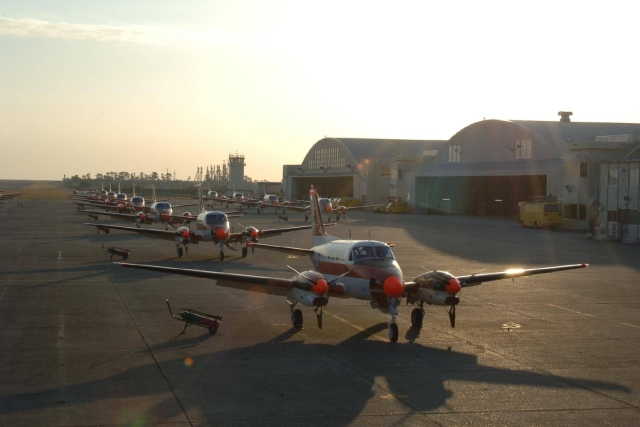
The Philippines is pursuing the acquisition of five additional retired TC-90 maritime patrol aircraft from Japan as both governments continue talks on the possible transfer of used Japanese destroyer escorts.
Philippine Navy chief Vice Adm. Jose Ma Ambrosio Ezpeleta told The Japan Times that a joint inspection team will travel to Japan before the end of the year to assess the TC-90s recently made available by the Maritime Self-Defense Force. “We still have a lot of gaps in our maritime domain awareness capabilities, so we want to determine if we can incorporate these additional aircraft into our fleet to step up our patrols,” he said in Manila.
The twin-turboprop TC-90s, used mainly for pilot training, will undergo a visual inspection before Philippine experts submit recommendations to naval headquarters and the Department of Defense. If cleared, detailed transfer talks with Tokyo could follow. Japan previously transferred five TC-90s between 2017 and 2018 under its official development assistance program after easing export rules in 2014.
Manila currently monitors only about 30% of its 2.26 million square-kilometer exclusive economic zone, a gap that has become more pressing amid heightened tensions with China. Expanding maritime surveillance remains central to the country’s military modernization drive.
Japan continues to supply key systems. In addition to earlier radar deliveries, Tokyo is expected to provide coastal surveillance radars under the official security assistance framework, supporting new Philippine forward operating bases including one in Mahatao, Batanes Province, less than 200 km from Taiwan. Surveillance drones are also reportedly under discussion for the next assistance tranche.
The TC-90 inspection team will be the second Philippine delegation to visit Japan this year. In August, another group examined the six Abukuma-class destroyer escorts that Tokyo may transfer. Ezpeleta said the navy would welcome “at least three vessels,” which would allow one ship to remain deployed while another undergoes maintenance and a third is used for training.
Japan has yet to issue an official transfer offer for the Abukuma ships, and the process may depend on Tokyo’s ongoing debate over revising export rules for secondhand military platforms. The ruling Liberal Democratic Party is moving to loosen restrictions, a step that could enable the transfer.
Japan is also assisting the Philippines through anti-submarine warfare training and intelligence sharing. With the bilateral reciprocal access agreement now in force, Ezpeleta said more regular exercises and port calls by the Maritime Self-Defense Force are expected, adding that the pact may support future rotational deployments by Japanese personnel.
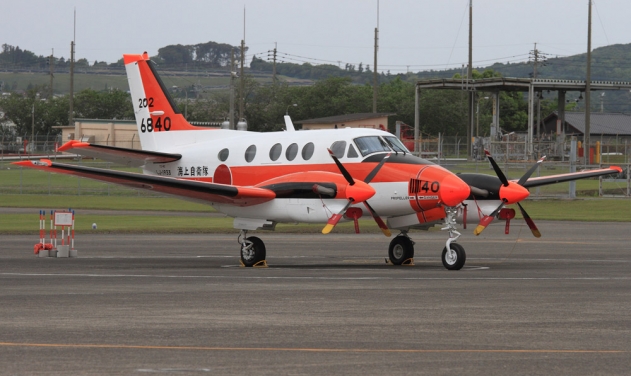
Philippines To Patrol Sea With TC-90 Planes Leased From Japan
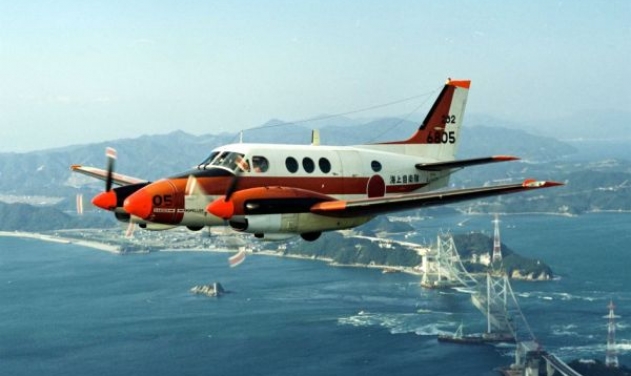
Philippine Navy Plans To Lease Retired Japanese TC-90 Trainers

Houtis Fire Missiles at Saudi Airport after Riyadh Bombs Yemen’s Sanaa Airport...
Iran Blockade Back, Now U.S. to Charge 20% Hormuz Transit Fee
First Use of Unmanned Kamikaze Boat by the U.S. in Attack...
Russian FSB Prevents Ukrainian Plot to Attack Su-57 Fighter Bases with FPV...

One Month Since U.S., Israeli War Against Iran: Who Is Gaining?
One month after the United States and Israel launched coordinated strikes on Iran on February 28 the conflict has expanded...

Modern Tank Showdown: T-90MS, Leopard 2A7, M1E3 Abrams Compared
Main Battle Tanks (MBTs) have shown their mettle in recent conflicts such as in Ukraine despite being increasingly vulnerable to...
European Nations Prioritizing Europe-made IRIS-T & SAMP-T over American Patriot Air Defense Systems?
European nations looking to procure new air defense systems appear to be giving the much-vaunted American Patriot a miss in...
Russian T-90MS Crew Discuss Future Upgrades
Defense Mirror spoke with the crew members of the Russian T-90MS main battle tank, produced by UralVagonZavod

China's Mass-produced J-35A Aircraft Set to Disrupt Global Stealth Fighter Market
China is aiming to disrupt the global stealth fighter market by mass-producing its fifth-generation J-35A at a pace comparable to...

The Future of Combat: Miniaturized Laser Weapons Set to Replace Bullets and Missiles
Lasers may soon replace bullets, and drones could disable enemy UAVs with beams of light instead of missiles