British Army's Challenger 3 Tank Completes First-ever Live Firing
Fully crewed 120mm gun trial marks first U.K. firing of a new main battle tank in more than 30 years
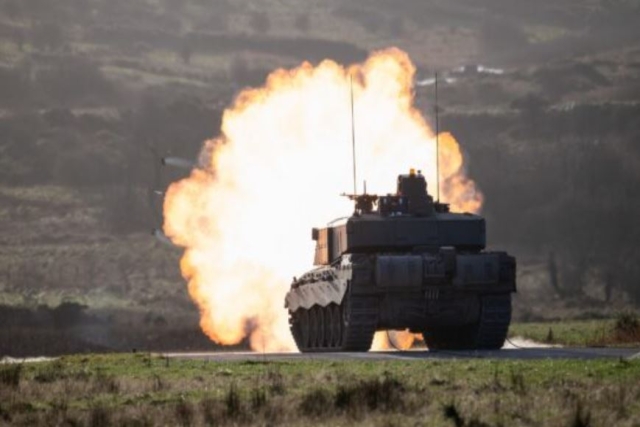
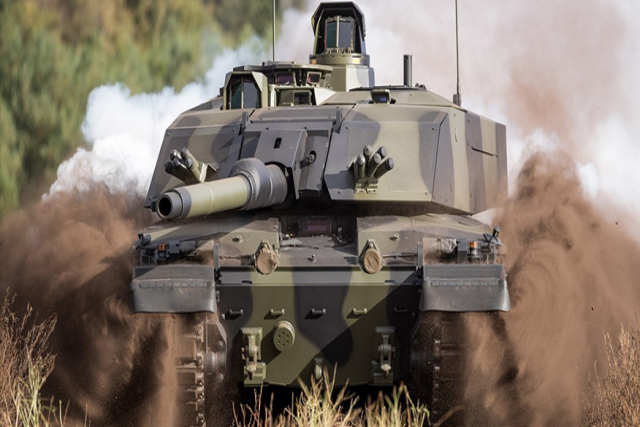
The British Army’s next-generation Challenger 3 main battle tank has completed its first-ever crewed live firing, marking a key milestone in the programme intended to sustain the U.K.’s heavy armour capability into the 2040s.
Defence Equipment and Support (DE&S), the procurement arm of the U.K. Ministry of Defence, confirmed the trial took place at an undisclosed firing range. This test marks the first time in more than three decades that a newly developed British main battle tank has fired its main gun in the United Kingdom.
The trial was led by Rheinmetall BAE Systems Land (RBSL), the joint venture between Germany’s Rheinmetall and Britain’s BAE Systems developing Challenger 3. It followed a phased assurance programme that began with remote firing of the main gun before progressing to crewed firing by RBSL personnel alongside the British Army and DE&S.
Challenger 3 is equipped with the Rheinmetall Waffe Munitions-built 120mm smoothbore L55A1 cannon, replacing the rifled L30A1 gun used on Challenger 2. The new weapon fires NATO-standard single-piece ammunition, including kinetic-energy anti-tank rounds and programmable multipurpose munitions, improving interoperability with allied forces. The move to single-piece rounds reduces onboard ammunition stowage to 31 rounds, down from 49 on Challenger 2, with ammunition stored in an isolated turret bustle to improve survivability.
Beyond the main gun, Challenger 3 introduces a digitised turret with open-architecture electronics, incorporating Thales Orion sights and the Day/Night Gunner and Panoramic Sight (DNGS T3), also fitted to the Army’s Ajax vehicles. Protection upgrades include a new modular armour system and provision for the Israeli-made Trophy active protection system to counter anti-tank guided missiles and rocket-propelled grenades. Mobility improvements are being delivered under the Heavy Armour Automotive Improvement Project, upgrading the engine, suspension and cooling systems without increasing engine power.
The tank is being manufactured at RBSL’s Telford facility under a contract valued at more than £800 million, which has attracted £40 million in inward investment and relies heavily on U.K.-based small and medium-sized suppliers. The programme will convert 148 Challenger 2 tanks to the Challenger 3 standard, including eight prototypes, with entry into service planned for 2027.
Further crewed firing activity and reliability growth trials are scheduled later this year as Challenger 3 moves toward full operational capability.
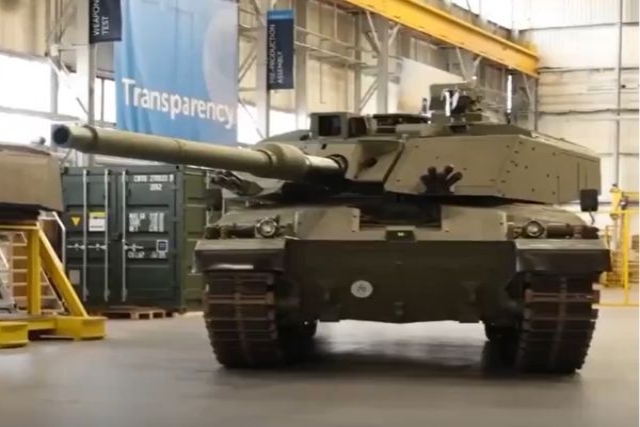
British Army to Unveil Challenger 3 Tank at Army Expo 2024
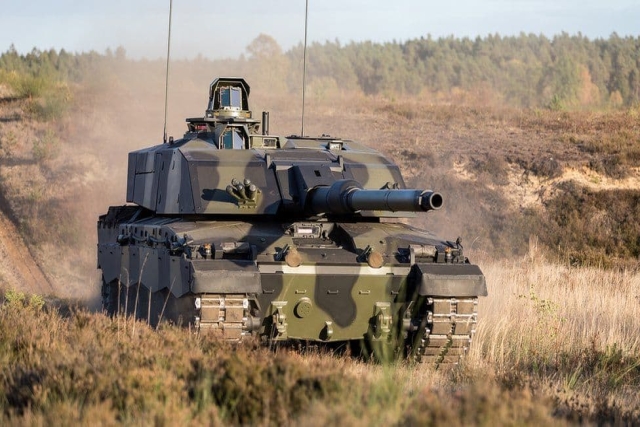
RBSL Secures Contract for Modular Armor System in Challenger 3 Program
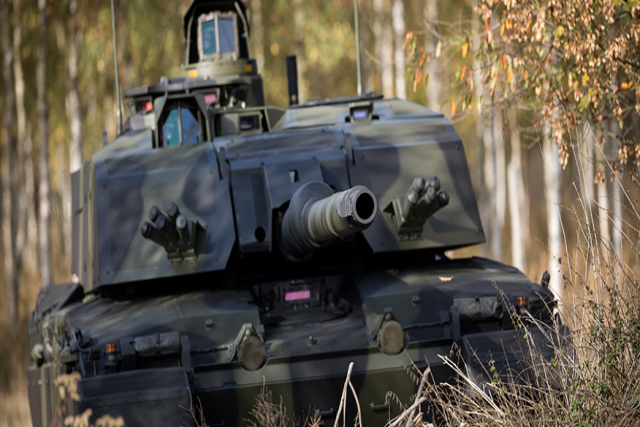
Thales to Develop Next Generation Sights for British Army’s Upgraded Challenger 3...
Jankel to Design Challenger 3 Crew Seating for British Army

Turkey to Sell Russian S-400 Systems to Third Country as GE Engine...
Pentagon Awards Contracts to Develop Laser Weapons Against Cruise Missiles, Drones

Iran Threatens to Close Strait of Hormuz as US Signals Return to...

China-made Aircraft Fly in U.S. Airshow for First Time

One Month Since U.S., Israeli War Against Iran: Who Is Gaining?
One month after the United States and Israel launched coordinated strikes on Iran on February 28 the conflict has expanded...

Modern Tank Showdown: T-90MS, Leopard 2A7, M1E3 Abrams Compared
Main Battle Tanks (MBTs) have shown their mettle in recent conflicts such as in Ukraine despite being increasingly vulnerable to...
European Nations Prioritizing Europe-made IRIS-T & SAMP-T over American Patriot Air Defense Systems?
European nations looking to procure new air defense systems appear to be giving the much-vaunted American Patriot a miss in...
Russian T-90MS Crew Discuss Future Upgrades
Defense Mirror spoke with the crew members of the Russian T-90MS main battle tank, produced by UralVagonZavod

China's Mass-produced J-35A Aircraft Set to Disrupt Global Stealth Fighter Market
China is aiming to disrupt the global stealth fighter market by mass-producing its fifth-generation J-35A at a pace comparable to...

The Future of Combat: Miniaturized Laser Weapons Set to Replace Bullets and Missiles
Lasers may soon replace bullets, and drones could disable enemy UAVs with beams of light instead of missiles