U.S. Firm Demos Electronic Suppression of Fiber Optic-equipped FPV Drones
FPV drones, tethered to an optical cable, are considered invulnerable to electronic attack.

U.S. defense firm Epirus has demonstrated the electronic suppression of fiber optic-equipped first-person-view (FPV) drones, challenging the assumption that such systems are immune to electronic attack.
The company said its Leonidas high-power microwave system disabled an FPV drone controlled via a fiber optic cable at a range of several hundred meters. The drone did not rely on a radio-frequency control link, a feature that has allowed fiber optic FPVs to evade conventional jamming.
Military analysts say the test reveals a key vulnerability: while fiber optic drones cannot be jammed in the traditional sense, their onboard electronics can still be damaged by focused electromagnetic energy, rendering the aircraft inoperable.
Leonidas is a solid-state, high-power microwave system built using gallium nitride semiconductors. Epirus states the system combines a compact footprint, reduced weight, and short deployment time with the ability to deliver directed electromagnetic effects.
The standard configuration includes L3Harris’ MX-10D optoelectronic module, featuring a 640 × 512 medium-wave thermal imaging sensor, daylight and low-light cameras, and is paired with multifunction radars from Israeli firm ieMHR.
Company engineers say Leonidas can be deployed on fixed installations and surface ships.
Fiber optic FPV drones are being used extensively in the war in Ukraine, where their resistance to jamming has complicated counter-drone efforts. Ukrainian forces have previously acknowledged the lack of effective means to counter such UAVs.
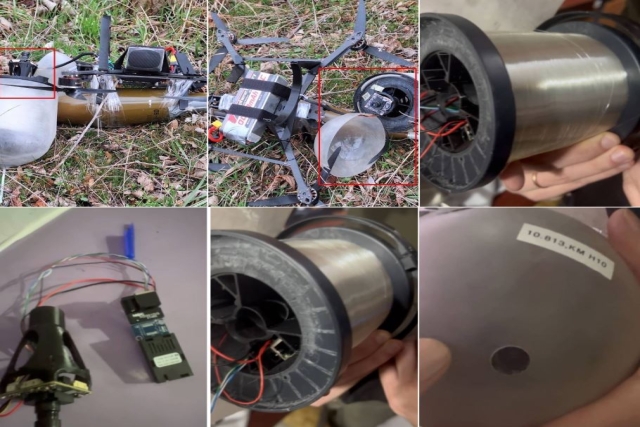
New Russian Radar Tracks Drones Having Fibre Optic Cables, AI Brain
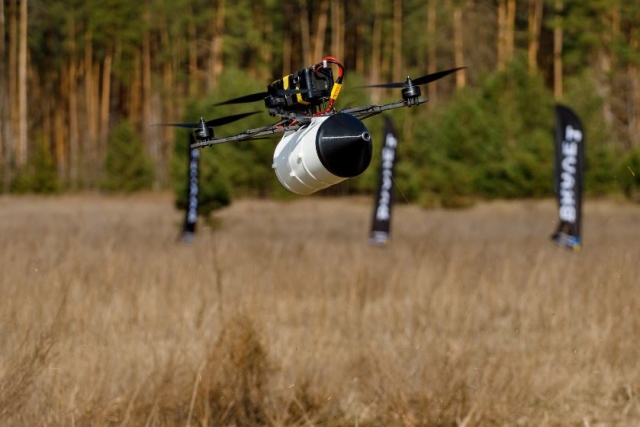
Ukraine Tests Long-Range FPV Drones with Fiber Optic Control
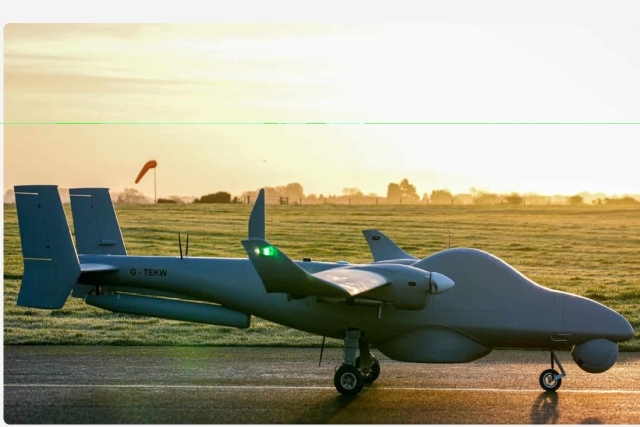
U.K. Army to Induct Ukraine-tested Tekever Reconnaissance Drones

Want Civil Nuclear Deal? Sign Abraham Accords First, Trump Tells Saudi Arabia

Ukraine Unveils MUL.E Electric-Hybrid Combat Motorcycle

Mass Production of Russian MC-21 Airliner Gains Momentum- 18 Aircraft Currently on...

One Month Since U.S., Israeli War Against Iran: Who Is Gaining?
One month after the United States and Israel launched coordinated strikes on Iran on February 28 the conflict has expanded...

Modern Tank Showdown: T-90MS, Leopard 2A7, M1E3 Abrams Compared
Main Battle Tanks (MBTs) have shown their mettle in recent conflicts such as in Ukraine despite being increasingly vulnerable to...
European Nations Prioritizing Europe-made IRIS-T & SAMP-T over American Patriot Air Defense Systems?
European nations looking to procure new air defense systems appear to be giving the much-vaunted American Patriot a miss in...

Russian T-90MS Crew Discuss Future Upgrades
Defense Mirror spoke with the crew members of the Russian T-90MS main battle tank, produced by UralVagonZavod

China's Mass-produced J-35A Aircraft Set to Disrupt Global Stealth Fighter Market
China is aiming to disrupt the global stealth fighter market by mass-producing its fifth-generation J-35A at a pace comparable to...

The Future of Combat: Miniaturized Laser Weapons Set to Replace Bullets and Missiles
Lasers may soon replace bullets, and drones could disable enemy UAVs with beams of light instead of missiles