U.K. Official Responsible for Ajax Program Sacked by Defense Minister
Safety failures, withheld risk information trigger leadership removal, operating status pause.
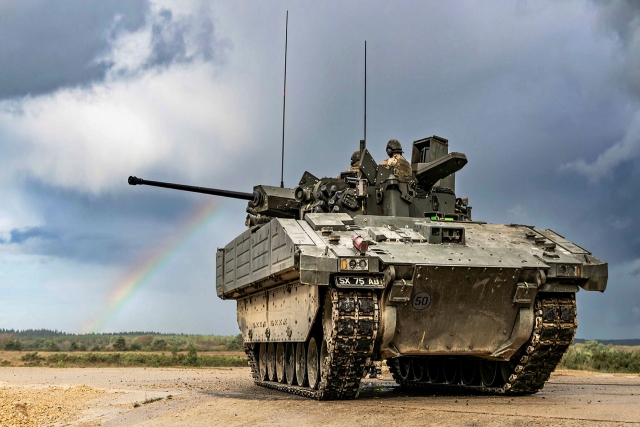
A senior U.K. civil servant overseeing the Ajax armored vehicle program has been removed after internal reviews found that critical safety risks were not fully disclosed before the vehicle was declared safe for use.
Defense Minister Luke Pollard confirmed that Chris Bowbrick, the Senior Responsible Owner of the Ajax program, is no longer in post. Pollard said Ajax’s initial operating capability status has been “paused,” and an interim official has been appointed to oversee the program.
In a written statement to Members of Parliament, Pollard said submissions from senior officials did not reflect the “full breadth of known” risks, particularly those linked to noise and vibration. He said this incomplete information directly influenced the decision to declare the vehicle operational.
“To say that I am angry about the findings of the ministerial review is an understatement,” Pollard said. “Ministers rely on accurate, timely and complete information to make decisions in the national interest. When that information does not meet this standard, the consequences are not abstract. They can be real, human and serious.”
Pollard said he saw those consequences during a recent visit to the Field Army, where he met soldiers who had operated Ajax vehicles. He described the situation as “unacceptable” and said he has written to the wider defense department and asked the Permanent Secretary to follow up on the findings.
The decision follows a series of safety incidents tied to Ajax. In November, 35 soldiers were treated after falling ill during an exercise on Salisbury Plain, weeks after the vehicle was declared safe to use. Pollard said 25 have returned to duty, two were found to have injuries unrelated to Ajax, and eight remain medically downgraded and under monitoring.
Although Ajax’s operating clearance has been paused, Pollard confirmed that trials on the vehicle are restarting to help “ensure we are best placed to decide Ajax’s future.”
In late December 2025, the defence ministry halted all Ajax trials after another soldier reported vibration-related symptoms during testing at the Bovington training area on December 12. The incident followed reports from about 30 personnel affected during the Army’s Titan Storm exercise in November. Investigations found affected personnel had been operating across 23 vehicles, all of which have since undergone 45-point inspections, alongside additional checks focused on identifying the source of the vibration.
Launched in 2014 and led by General Dynamics, the Ajax program was originally scheduled to enter service in 2017. The British Army has ordered 589 vehicles in six variants, with deliveries now expected by 2030, under a £6.3 billion, or roughly $8 billion, contract. Each vehicle costs close to £10 million and weighs more than 40 tonnes.
Ajax is intended to replace armored platforms dating back to the 1970s and would be the first new armored fighting vehicle to enter U.K. Army service in nearly 30 years. Persistent noise and vibration issues have driven repeated delays. A 2021 internal review found that senior Army and Ministry of Defence officials had known for up to two years that earlier Ajax trials posed potential health risks, including hearing damage, before action was taken.
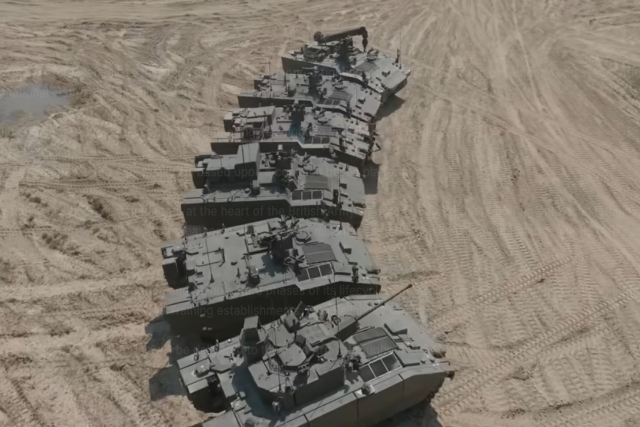
U.K. Halts $8B Ajax Armored Vehicle after Fresh Soldier Injury

U.K. Army Grounds Ajax Armoured Vehicle After 31 Soldiers Fall Ill
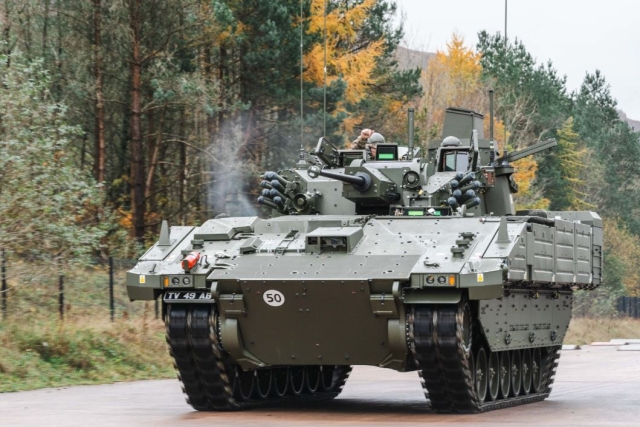
British Army Says Ajax Armoured Vehicle Reaches Initial Operating Capability
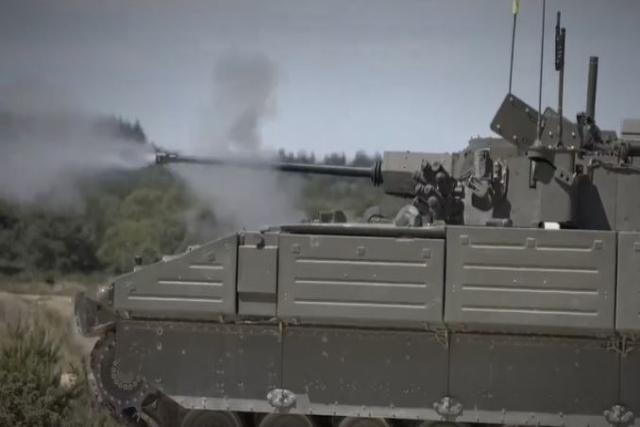
Problem-Plagued British Ajax Armored Vehicle Completes First Fire on the Move

Houtis Fire Missiles at Saudi Airport after Riyadh Bombs Yemen’s Sanaa Airport...

Iran Blockade Back, Now U.S. to Charge 20% Hormuz Transit Fee
First Use of Unmanned Kamikaze Boat by the U.S. in Attack...
Russian FSB Prevents Ukrainian Plot to Attack Su-57 Fighter Bases with FPV...

One Month Since U.S., Israeli War Against Iran: Who Is Gaining?
One month after the United States and Israel launched coordinated strikes on Iran on February 28 the conflict has expanded...

Modern Tank Showdown: T-90MS, Leopard 2A7, M1E3 Abrams Compared
Main Battle Tanks (MBTs) have shown their mettle in recent conflicts such as in Ukraine despite being increasingly vulnerable to...
European Nations Prioritizing Europe-made IRIS-T & SAMP-T over American Patriot Air Defense Systems?
European nations looking to procure new air defense systems appear to be giving the much-vaunted American Patriot a miss in...

Russian T-90MS Crew Discuss Future Upgrades
Defense Mirror spoke with the crew members of the Russian T-90MS main battle tank, produced by UralVagonZavod

China's Mass-produced J-35A Aircraft Set to Disrupt Global Stealth Fighter Market
China is aiming to disrupt the global stealth fighter market by mass-producing its fifth-generation J-35A at a pace comparable to...

The Future of Combat: Miniaturized Laser Weapons Set to Replace Bullets and Missiles
Lasers may soon replace bullets, and drones could disable enemy UAVs with beams of light instead of missiles