Israel Recognizing Somaliland Could Lead to IDF Base There
Recognition raises prospect of Israeli military access to Berbera airport in the Gulf of Aden

Israel’s recognition of the Republic of Somaliland could allow the Israel Defense Forces (IDF) to gain access to facilities in the territory, particularly Berbera International Airport, potentially expanding its military options in the Red Sea region.
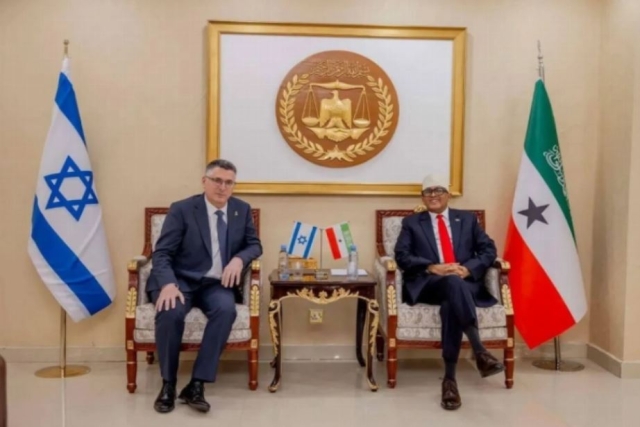
Last year, on December 26, Israel became the first country in the world to formally recognize Somaliland. Its Foreign Minister Gideon Sa’ar met Abdirahman Mohamed Abdullahi, the president of Somaliland, on January 6, after which he said that “we will also cooperate on defense and develop a strategic partnership.” Israeli media later quoted the director of the political department at Somaliland’s Ministry of Foreign Affairs and International Cooperation as saying that a military base “is on the table and being discussed,” while Waddani party chairman Hersi Ali Haji Hassan said the issue would be addressed “when the time comes.”
According to an analysis by www.iiss.org, access to Berbera International Airport would cut the distance to Yemen to about 550 km from Sanaa, compared with at least 1,800 km from Israeli bases, reducing flight ranges by roughly 70%. Operating from Berbera would shorten Israeli Air Force response times against Ansarullah, also known as the Houthis, improve intelligence, surveillance and reconnaissance over the Gulf of Aden and southern Red Sea. It would also reduce reliance on multiple air-to-air refuelling operations by allowing aircraft to land, refuel and redeploy, including with shorter-range drones for maritime monitoring and interdiction.
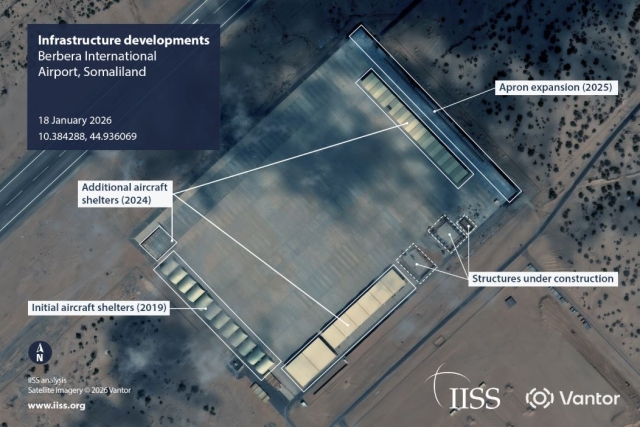
Berbera airport’s operational status remains unclear despite substantial infrastructure upgrades. Built by the Soviet Union in the mid-1970s, it later served as an emergency landing site for NASA’s Space Shuttle between 1980 and 1991. More recently, the airport was upgraded under a Somaliland–U.A.E. agreement to support operations in Yemen, including resurfacing the 4,000m runway in 2018 and constructing an apron by early 2019. In September 2019, following a partial U.A.E. withdrawal, then president Muse Bihi Abdi said the facility would become a civilian airport.
Although listed as a public and military site and declared open to global trade in March 2025, Berbera has seen little commercial use. It could be because of sufficient capacity at the Hargeisa International Airport, and possible delays as Somaliland considers granting access to foreign militaries, including the United States. The commander of U.S. Africa Command visited Berbera in 2022 and again in June 2025, as discussions unfolded against ongoing tensions between Somaliland and Somalia.
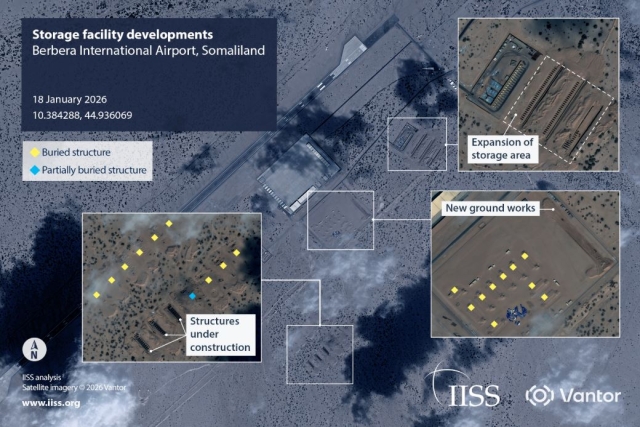
Construction activity since late 2023 points to increasing military utility. Three storage areas with semi-buried structures and berms consistent with fuel and ammunition storage have been built and expanded. Additional aircraft shelters were erected by early 2024, the apron was expanded in late 2025, and new hangar-like structures were visible in January 2026. Raised earth platforms built in October 2025 are assessed as potential positions for mobile air-defense systems.
The arrangement would also carry risks. An Israeli presence could strain relations with Egypt, Saudi Arabia and Turkey, while Berbera’s proximity to Yemen would increase exposure to Houthi missile and drone attacks. For Somaliland, hosting Israeli forces could deepen international isolation and provoke reactions from Somalia, the African Union and China.
The Houthis have threatened to target any Israeli presence in Somaliland, and Somalia-based Al-Shabaab militant group has said it would oppose foreign military use of what it considers Somali territory, raising the risk that attacks could also target the port of Berbera, Somaliland’s main economic hub.
Turkey, Egypt, Serbia Rush Heavy Weapons to Somalia
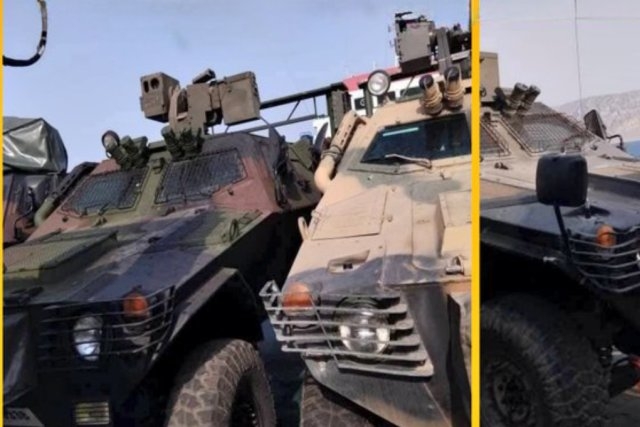
Civilians Loot Weapons from Turkish Ship Seized by Breakaway Somali State,
U.S. Plans to Relocate Gazans to Somalia, Morocco Despite Global Rejection
Turkey Negotiating to Set Up Missile Test Base in Somalia
Greece to Procure Aero Virionment’s Switchblade 300 Miniature Missiles
French DGA Awards Contract to Procure 75 Million Rounds of Small Arms
French Army’s All New 'Cheetah' Attack Helicopter Conducts First Firing During Flight...
China’s Upgraded Y-9 Anti-submarine Patrol Aircraft Makes First Public Appearance

One Month Since U.S., Israeli War Against Iran: Who Is Gaining?
One month after the United States and Israel launched coordinated strikes on Iran on February 28 the conflict has expanded...
Modern Tank Showdown: T-90MS, Leopard 2A7, M1E3 Abrams Compared
Main Battle Tanks (MBTs) have shown their mettle in recent conflicts such as in Ukraine despite being increasingly vulnerable to...
European Nations Prioritizing Europe-made IRIS-T & SAMP-T over American Patriot Air Defense Systems?
European nations looking to procure new air defense systems appear to be giving the much-vaunted American Patriot a miss in...
Russian T-90MS Crew Discuss Future Upgrades
Defense Mirror spoke with the crew members of the Russian T-90MS main battle tank, produced by UralVagonZavod

China's Mass-produced J-35A Aircraft Set to Disrupt Global Stealth Fighter Market
China is aiming to disrupt the global stealth fighter market by mass-producing its fifth-generation J-35A at a pace comparable to...

The Future of Combat: Miniaturized Laser Weapons Set to Replace Bullets and Missiles
Lasers may soon replace bullets, and drones could disable enemy UAVs with beams of light instead of missiles