U.S. Deploys Largest Middle East Military Build-Up Since 2003 Amid Rising Iran Tensions
At sea, the USS Gerald R. Ford aircraft carrier is redeploying toward the Middle East and is expected to join the USS Abraham Lincoln carrier strike group operating in the Arabian Sea.

The United States has reportedly deployed its largest concentration of military assets in the Middle East since the 2003 Iraq War, as tensions with Iran escalate and President Donald Trump weighs potential military action.
Open-source intelligence and flight-tracking data indicate that more than 120 U.S. aircraft have been repositioned to bases across Europe and the Middle East in recent days.
The deployments include F-16s from Spangdahlem Air Base in Germany, Aviano Air Base in Italy, and McEntire Joint National Guard Base in South Carolina, as well as F-22 Raptors and F-35 stealth fighters. Several aircraft reportedly crossed the Atlantic using “TREND” callsigns, typically associated with operational deployments.
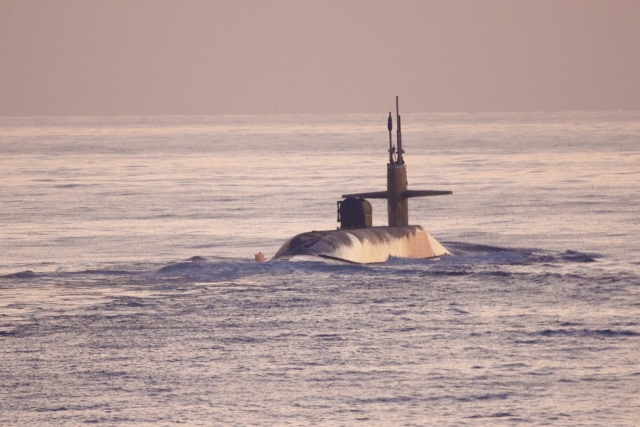
Support assets, including E-3 Sentry AWACS aircraft, aerial refuelling tankers, intelligence and surveillance platforms, and P-8 Poseidon maritime patrol aircraft, have also been active in the region. One P-8 reportedly conducted patrols over the Strait of Hormuz on February 17.
At sea, the USS Gerald R. Ford aircraft carrier is redeploying toward the Middle East and is expected to join the USS Abraham Lincoln carrier strike group operating in the Arabian Sea. The U.S. Navy also maintains guided-missile destroyers equipped with Tomahawk cruise missiles and advanced missile defence systems in the region.
The military build-up follows reports that President Trump has given Iran “10 to 15 days” to reach a new agreement on its nuclear and missile programmes.
Although indirect talks in Geneva produced guiding principles, key issues remain unresolved. The White House says diplomacy is preferred, but military options—including limited strikes or broader operations—are under consideration, potentially involving long-range bombers from the U.S. or Diego Garcia.
Iran has reinforced sensitive facilities, including at Isfahan, conducted naval drills with Russia, and warned the UN it would respond “decisively” to any attack.

Three Iranian-origin Silicon Valley Engineers Indicted for Stealing Google Trade Secrets

Iranian Leaders' Assassination, Attack on Nuclear, Missile Sites Among Options Before Trump

18 F-35s among 50 U.S. Fighters Deployed to Middle East as Iran...
70 Civilians killed, 360 Injured in Ukrainian Strikes on Russian Economic Targets
Hand to Hand Combat Between Chinese, Philippine Soldiers in South China Sea
2 US troops KILLED, 1 Missing, 4 Injured in Iran Missile Strikes
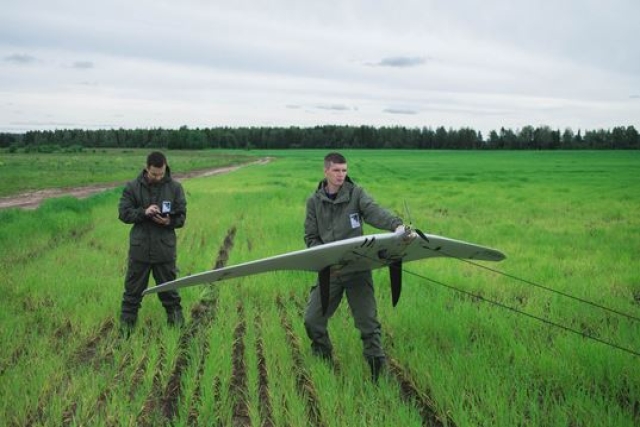
Russia's Unmanned Systems Group Signs Several International Contracts to Sell its Supercam...
One Month Since U.S., Israeli War Against Iran: Who Is Gaining?
One month after the United States and Israel launched coordinated strikes on Iran on February 28 the conflict has expanded...
Modern Tank Showdown: T-90MS, Leopard 2A7, M1E3 Abrams Compared
Main Battle Tanks (MBTs) have shown their mettle in recent conflicts such as in Ukraine despite being increasingly vulnerable to...
European Nations Prioritizing Europe-made IRIS-T & SAMP-T over American Patriot Air Defense Systems?
European nations looking to procure new air defense systems appear to be giving the much-vaunted American Patriot a miss in...
Russian T-90MS Crew Discuss Future Upgrades
Defense Mirror spoke with the crew members of the Russian T-90MS main battle tank, produced by UralVagonZavod

China's Mass-produced J-35A Aircraft Set to Disrupt Global Stealth Fighter Market
China is aiming to disrupt the global stealth fighter market by mass-producing its fifth-generation J-35A at a pace comparable to...

The Future of Combat: Miniaturized Laser Weapons Set to Replace Bullets and Missiles
Lasers may soon replace bullets, and drones could disable enemy UAVs with beams of light instead of missiles