Limited Tech Transfer, No Source Code in India's $40B Rafale Order
MRFA approval clears path for 114-jet deal as French report says SPECTRA software code will not be shared
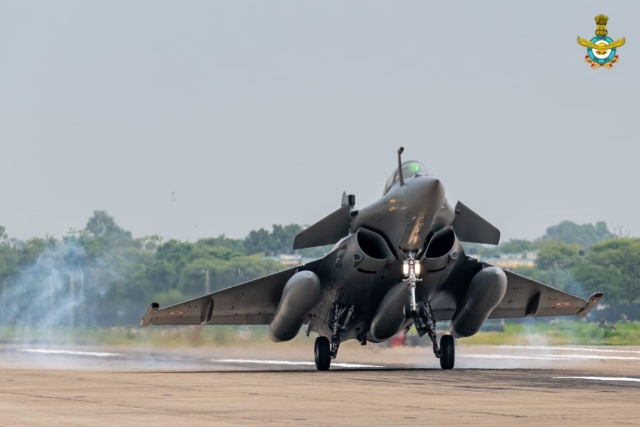
France reportedly does not plan to transfer source code for key electronic systems as India moves ahead with a proposed $40 billion order for 114 Rafale fighter jets under the Multi-Role Fighter Aircraft (MRFA) programme.
On February 12, the Defence Acquisition Council granted Acceptance of Necessity (AoN) for the Multi-Role Fighter Aircraft (MRFA) programme, clearing the way for government-to-government negotiations with France. The approval does not constitute a final contract with the manufacturer, Dassault Aviation.
The proposed purchase would be India’s largest arms acquisition to date. India previously ordered 36 Rafale jets in 2016 for the Indian Air Force and finalized a 2025 agreement for 26 naval variants for deployment on INS Vikrant.
The MRFA programme replaces the earlier Medium Multi-Role Combat Aircraft (MMRCA) tender for 126 aircraft, which was scrapped after disagreements over industrial sharing and liability involving Hindustan Aeronautics Limited (HAL).
Rafale assembly in India under “Make in India”
Under the current structure, 18 aircraft would be delivered from France, while 96 would be assembled in India under the “Make in India” initiative.
Production would involve cooperation between Dassault Aviation and TATA. Local content is projected to begin at 30% and exceed 60% by the end of the contract. Some Indian analysts have called for at least 80% local content to meet industrial sovereignty goals.
In June 2025, the two companies signed agreements to manufacture Rafale fuselages in Hyderabad. The facility, expected to begin output in 2028, will produce rear, centre and forward fuselage sections at a rate of up to two complete sets per month, marking the first production of full Rafale structural components outside France.
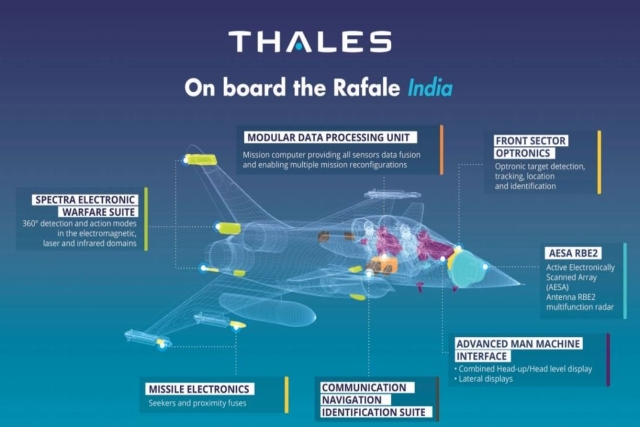
No access to SPECTRA source code
French publication L’Essentiel de l’Éco reported that Paris does not intend to transfer the source code for the SPECTRA electronic warfare suite and other core avionics. These systems manage radar functions, electronic protection and mission operations.
There has been no official comment from either government.
If confirmed, the restriction would limit India’s ability to independently modify internal software or integrate certain sensors and weapons without coordination with French manufacturers. The report stated that France may instead provide application programming interfaces to allow limited integration without granting access to underlying software architecture.
India currently operates Rafale aircraft in the F3-R configuration with India-specific enhancements. The new order is expected to include jets built to the F4 standard, with discussions referencing a potential pathway toward the future F5 configuration.
India’s defence budget
The move comes as India’s defence budget increases 15% for fiscal year 2026–2027 to $93 billion, including a 22% rise in capital allocations for aircraft, ships and artillery systems.
Between 2026 and 2030, India’s defence expenditure could exceed $540 billion.
The U.S. is promoting the F-15EX and F-21, and Russia continues marketing its platforms including the Su-57. European competitors including Saab’s Gripen and the Eurofighter consortium remain engaged in the Indian fighter aircraft market.
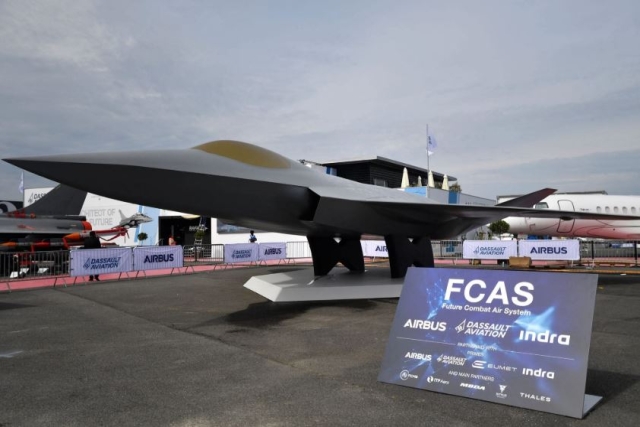
India exploring collaboration with France on FCAS jet project?
As per a report by The Print, India is reportedly eyeing co-developing a sixth-generation fighter with France under the Future Combat Air System (FCAS) programme. This comes amid disputes between France, Germany, and Spain over leadership, workshare, nuclear capability, and carrier requirements.
FCAS, led by Dassault Aviation, Airbus, and Indra Sistemas, faces a technical deadlock, with Airbus proposing a “two-fighter solution” linking separate jets through a shared combat cloud and drone systems.
Sources told the publication that India has told France it is willing to join if talks with Germany fail.
India aims to access sixth-generation technologies—manned-unmanned teaming, combat cloud networking, AI integration, advanced propulsion, and stealth—to complement its indigenous Advanced Medium Combat Aircraft (AMCA), expected by 2035.

India and France Elevate Ties to Special Global Strategic Partnership
India-France Expand Defence Manufacturing with First Private Helicopter Assembly Line, HAMMER Weapons...
Begin Work on 6th Gen Aircraft Engines: Indian Def Min to DRDO
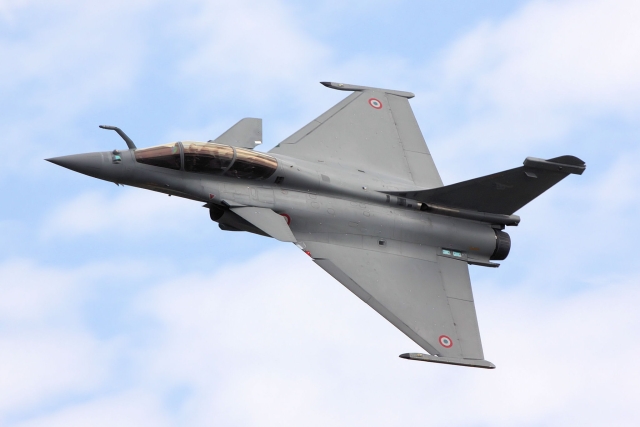
Indian MoD Approves Rafale Aircraft, Combat Missiles and Pseudo Satellites Procurement Worth...
70 Civilians killed, 360 Injured in Ukrainian Strikes on Russian Economic Targets

Hand to Hand Combat Between Chinese, Philippine Soldiers in South China Sea
2 US troops KILLED, 1 Missing, 4 Injured in Iran Missile Strikes
Russia's Unmanned Systems Group Signs Several International Contracts to Sell its Supercam...

One Month Since U.S., Israeli War Against Iran: Who Is Gaining?
One month after the United States and Israel launched coordinated strikes on Iran on February 28 the conflict has expanded...
Modern Tank Showdown: T-90MS, Leopard 2A7, M1E3 Abrams Compared
Main Battle Tanks (MBTs) have shown their mettle in recent conflicts such as in Ukraine despite being increasingly vulnerable to...
European Nations Prioritizing Europe-made IRIS-T & SAMP-T over American Patriot Air Defense Systems?
European nations looking to procure new air defense systems appear to be giving the much-vaunted American Patriot a miss in...
Russian T-90MS Crew Discuss Future Upgrades
Defense Mirror spoke with the crew members of the Russian T-90MS main battle tank, produced by UralVagonZavod

China's Mass-produced J-35A Aircraft Set to Disrupt Global Stealth Fighter Market
China is aiming to disrupt the global stealth fighter market by mass-producing its fifth-generation J-35A at a pace comparable to...
The Future of Combat: Miniaturized Laser Weapons Set to Replace Bullets and Missiles
Lasers may soon replace bullets, and drones could disable enemy UAVs with beams of light instead of missiles