U.S. Navy’s MQ-25A Refuelling Aircraft Completes First Test Flight
During the flight, the MQ-25A’s basic flight controls, engine performance and handling characteristics were validated.
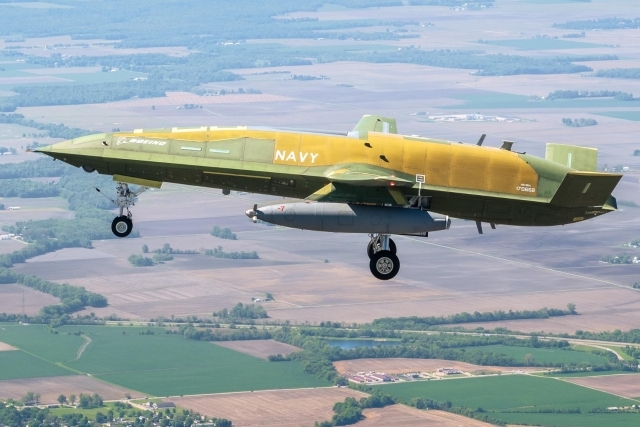
The U.S. Navy’s MQ-25A refuelling aircraft successfully completed its first test flight from Boeing's facility at Mid-America Airport in Mascoutah, Illinois, April 25, achieving a key step for unmanned carrier operations.
The MQ-25A ‘Stingray’ took off at 10:49 a.m. CDT and flew for approximately two hours. During the flight, U.S. Navy and Boeing Air Vehicle Pilots (AVPs) controlled the aircraft from the Unmanned Carrier Aviation Mission Control System MD-5 ground control station that includes Lockheed Martin’s MDCX™ system.
The AVPs executed a series of maneuvers and tests, successfully validating the aircraft’s basic flight controls, engine performance, and handling characteristics.
Rear Adm. Tony Rossi, who oversees the Program Executive Office for Unmanned Aviation and Strike Weapons (PEO (U&W)) said, “The MQ-25A is not just an aircraft; it’s the first step in integrating unmanned aerial refueling onto the carrier deck, directly enabling our manned fighters to fly further and faster. This capability is vital to the future of naval aviation.”
The MQ-25A Stingray is the U.S. Navy's first operational, carrier-based unmanned aircraft system, designed primarily to serve as an aerial refueling tanker. By taking over the refueling mission from crewed fighters, the MQ-25A will significantly extend the combat range and effective strike capability of the Carrier Air Wing.
The MQ-25A integrated test team will continue ground control station integration, expanding the flight envelope, and verifying performance parameters prior to its ferry flight to Pax River later this year.
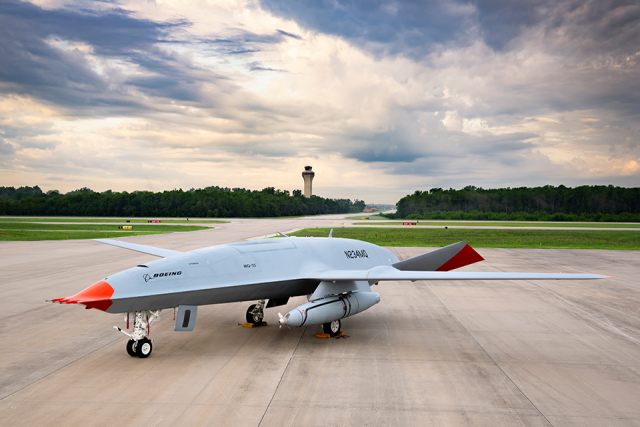
MQ-25 Stingray Tanker Drone Could Be Upgraded to Support Surveillance, Strike Missions

Boeing’s MQ-25 Stingray Completes First Test Flight with Aerial Refueling Pod
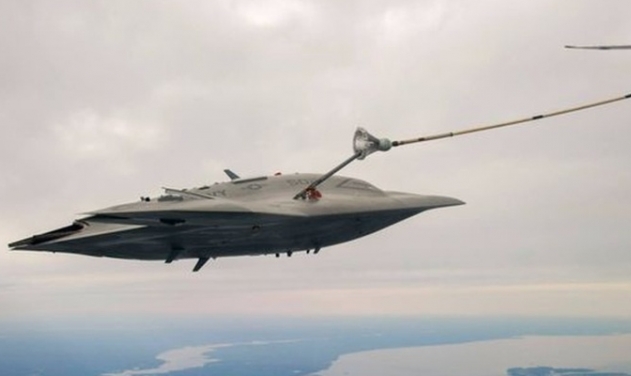
Boeing Beats Lockheed, General Atomics to win MQ-25A Autonomous Refueling UAV Contract...
US Turns Israel’s Ben Gurion Airport into Forward Base for War...
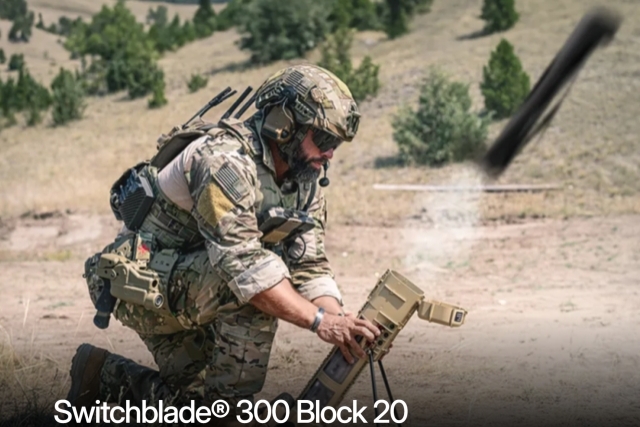
Greece to Procure Aero Virionment’s Switchblade 300 Miniature Missiles
French DGA Awards Contract to Procure 75 Million Rounds of Small Arms
French Army’s All New 'Cheetah' Attack Helicopter Conducts First Firing During Flight...

One Month Since U.S., Israeli War Against Iran: Who Is Gaining?
One month after the United States and Israel launched coordinated strikes on Iran on February 28 the conflict has expanded...

Modern Tank Showdown: T-90MS, Leopard 2A7, M1E3 Abrams Compared
Main Battle Tanks (MBTs) have shown their mettle in recent conflicts such as in Ukraine despite being increasingly vulnerable to...
European Nations Prioritizing Europe-made IRIS-T & SAMP-T over American Patriot Air Defense Systems?
European nations looking to procure new air defense systems appear to be giving the much-vaunted American Patriot a miss in...
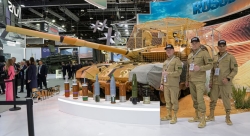
Russian T-90MS Crew Discuss Future Upgrades
Defense Mirror spoke with the crew members of the Russian T-90MS main battle tank, produced by UralVagonZavod

China's Mass-produced J-35A Aircraft Set to Disrupt Global Stealth Fighter Market
China is aiming to disrupt the global stealth fighter market by mass-producing its fifth-generation J-35A at a pace comparable to...

The Future of Combat: Miniaturized Laser Weapons Set to Replace Bullets and Missiles
Lasers may soon replace bullets, and drones could disable enemy UAVs with beams of light instead of missiles