Russia Cracks the Ukraine drone Code? Majority of Drone Attacks on June 6 Neutralized
Ukraine launched a massive drone assault in response to Russian missile attacks a day before.
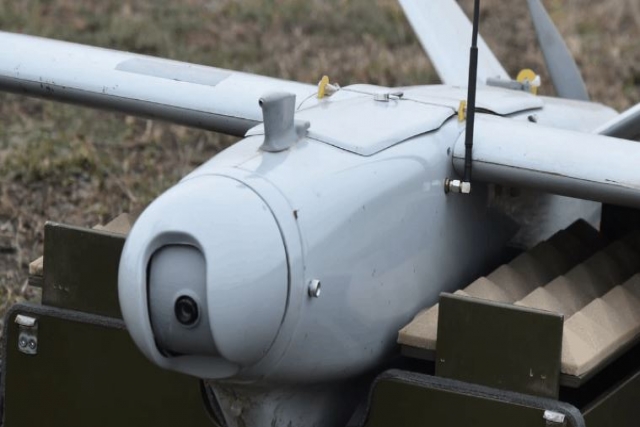
Russia’s air defenses repelled a massed Ukrainian drone strike on July 6 highlighting a new technique to spot and hit the drones, Lt. Gen. Aytech Bizhev, former Russian Air Force deputy commander of the CIS Joint Air Defense System, told Sputnik.
The surprisingly high hit rate against Ukrainian drones is attributed to all of Russia’s air defenses – short-, medium- and long-range, from surface-to-air missile batteries to teams equipped with MANPADs – being integrated into one multi-layered network.
The ground-based component is further integrated with the Aerospace Forces, with surface-to-air launchers and fighter aircraft operating in concert.
Commanders of anti-air units are authorized to operate autonomously in case of emergency – a possible loss of contact with the central command won’t stop them from doing their duty.
Russia’s air defense forces have received invaluable experience while repelling Ukrainian attacks – the kind of experience that no other air defense in the world has, and which allows Russian forces to tackle airborne attacks so efficiently.
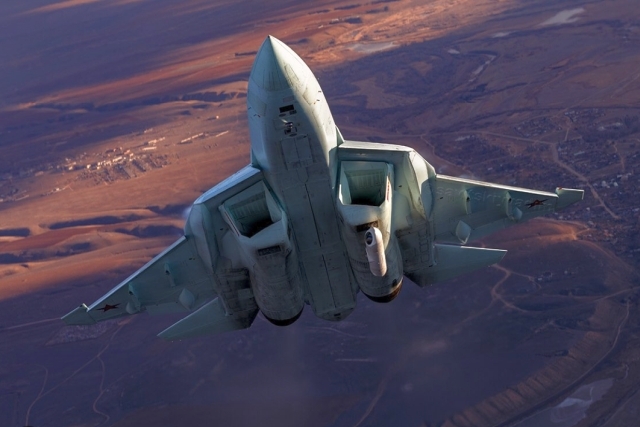
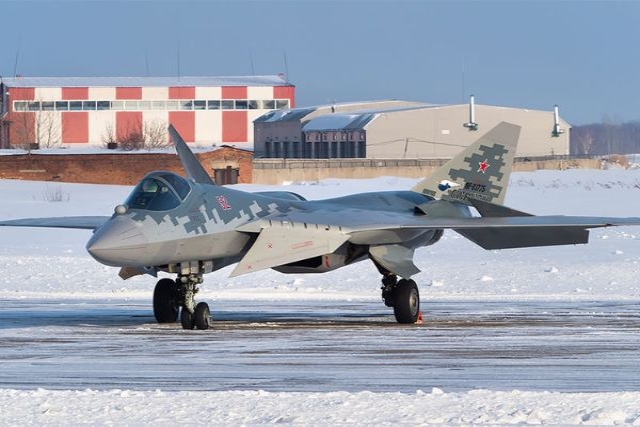
Su-57 with 101KS-N targeting pod
The Russian Aerospace Forces have been deploying the Su-57 jet in a missile and drone hunting role.
According to reports in the Russian media, on July 4, while repelling an enemy missile attack, Russian Forces intercepted eight Ukrainian FP-5 Flamingo heavy long-range cruise missiles. According to some military-related social media accounts, the Su-57 was deployed to counter the enemy's air attack.
Some reports say that the Su-57 fifth-generation fighter has been adapted for a distinctly counter-drone and counter-missile role by fitting it with a 101KS-N, a pod-mounted optical-electronic and multi-channel targeting system. The 101KS-N ensures detection and automatic tracking of long-range kamikaze UAVs "Lyuty" and FP-1 at distances of 25-35 km, and cruise missiles FP-5 "Flamingo", which have higher-contrast engines, at a distance of 50-70 km.
Ukraine Blames Lack of Patriot Interceptors as Russian Missiles Rain Down on...
Post Russian Missile Strike on Kyiv: Ukraine Rushes to Buy $1 Billion...
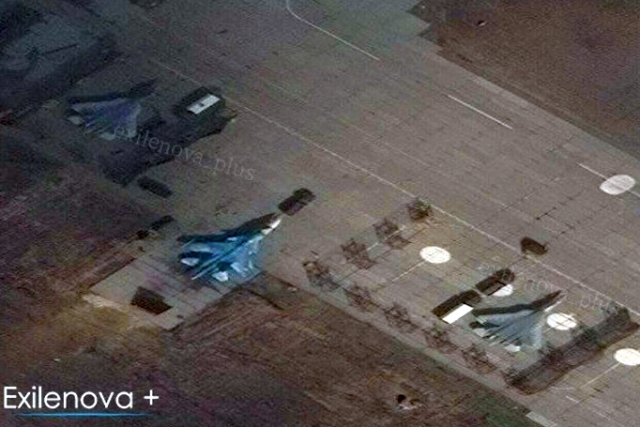
Ukrainian Drones Hit Su-57 and Su-34 Jets at Shagol Airfield in Russian...
Ready for the F-35? Russian Military Receives New Su-57 Fighters Upgraded with...
Denmark to Acquire Two Boeing P8-A Poseidon Aircraft to Monitor Greenland, Arctic...
Russia Cracks the Ukraine drone Code? Majority of Drone Attacks on June...

Egypt Chooses Russian Antey-2500, KA-52 Helicopters to Guard its New “Octagon” Military...

NATO Special Forces Select Thales-Leonardo Consortium to Deliver Communication System

One Month Since U.S., Israeli War Against Iran: Who Is Gaining?
One month after the United States and Israel launched coordinated strikes on Iran on February 28 the conflict has expanded...
Modern Tank Showdown: T-90MS, Leopard 2A7, M1E3 Abrams Compared
Main Battle Tanks (MBTs) have shown their mettle in recent conflicts such as in Ukraine despite being increasingly vulnerable to...
European Nations Prioritizing Europe-made IRIS-T & SAMP-T over American Patriot Air Defense Systems?
European nations looking to procure new air defense systems appear to be giving the much-vaunted American Patriot a miss in...
Russian T-90MS Crew Discuss Future Upgrades
Defense Mirror spoke with the crew members of the Russian T-90MS main battle tank, produced by UralVagonZavod

China's Mass-produced J-35A Aircraft Set to Disrupt Global Stealth Fighter Market
China is aiming to disrupt the global stealth fighter market by mass-producing its fifth-generation J-35A at a pace comparable to...

The Future of Combat: Miniaturized Laser Weapons Set to Replace Bullets and Missiles
Lasers may soon replace bullets, and drones could disable enemy UAVs with beams of light instead of missiles