Search Results
-

Netherlands to Spend $352M on Drones, AI in 2025
April 24, 2025 @ 07:06 AMThe Netherlands will invest €310 million ($352 million) this year to expand its use of drones and artificial intelligence (AI) across its defense operations, according to State Secretary of Defense Gijs Tuinman. “This year I want to invest 310 million euros in unmanned systems and scaling up other innovations
-
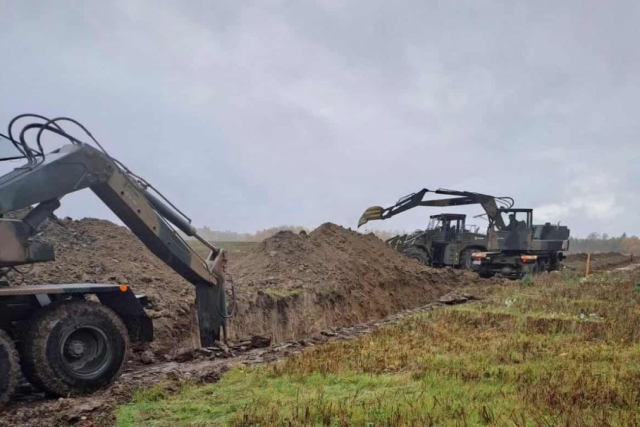
Poland to Invest $2.55B on ‘East Shield’ Border Project with Russia, Belarus
April 24, 2025 @ 04:49 AMPoland has begun constructing a
-
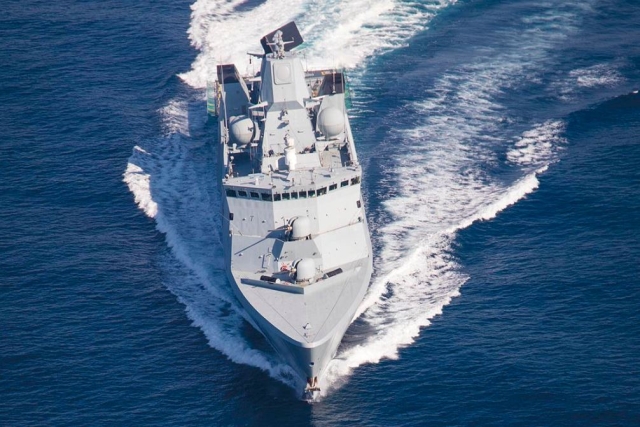
Danish Political Parties Agree to $612M Naval Fleet Augmentation Plan
April 23, 2025 @ 11:24 AMThe Danish Government and opposition parties agreed to a
-
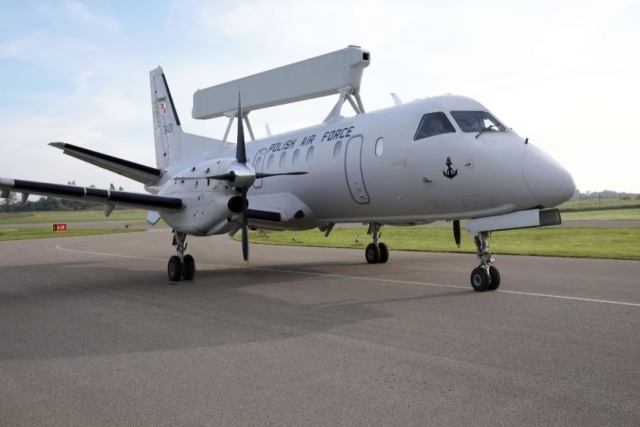
Ukraine Tests First Swedish Saab-340 AEW Aircraft
April 23, 2025 @ 05:59 AMUkraine has reportedly received the first of two Swedish Saab 340 Airborne Early Warning and Control (AEW&C) aircraft from Sweden, a development that could raise concerns for Russia. The Swedish-made aircraft, designated ASC 890 and equipped with the Erieye radar system, made its reported maiden test flight over the Lviv region in western Ukraine, according to Ukrainian media outlet UNIAN
-
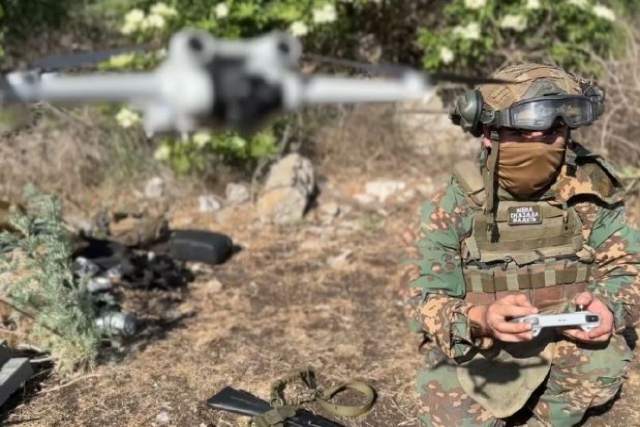
Rostec Begins Testing ‘Friend or Foe’ System for Drones
April 23, 2025 @ 04:28 AMRussias Rostec State Corporation has started testing a new drone identification system that works on a “friend or foe” basis, automatically recognizing friendly unmanned aerial vehicles (UAVs) at distances up to 100 km and altitudes up to 5 km. Developed by Rosel, a holding within Rostec, the system uses a lightweight onboard transponder—just 90 grams in weight—with low power consumption, enabling its integration into various drone types, including both civilian and special-purpose UAVs
-

U.A.E.'s Caracal Set Up Small Arms Factory in Hyderabad With India’s ICOMM...
April 22, 2025 @ 12:58 PMCaracal, the U.A
-

Russian Cyber Attacks Target Dutch Infrastructure in Growing Hybrid Threats
April 22, 2025 @ 09:38 AMThe Netherlands is facing a growing number of hybrid threats, particularly from Russia, according to the 2024 annual report of the Dutch Military Intelligence and Security Service (MIVD), which was sent to the House of Representatives
-
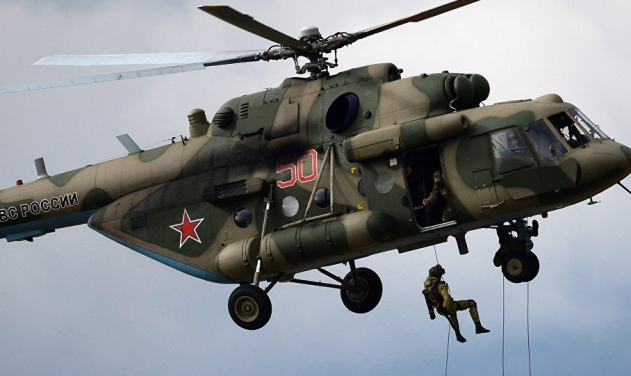
Rosoboronexport to Establish Service Center For Mi Helicopters in Peru
April 21, 2025 @ 03:25 PMRussias Rosoboronexport (ROE) will soon open a full-fledged service center for Mi series of helicopters in Peru. In the run up to the International Defense Technology Exhibition (SITDEF) PERU 2025, which will be held from April 24 to 27 in Lima (Republic of Peru), ROE Director General Alexander Mikheev announced that the Mi helicopter repair facility will open “in the short term
-
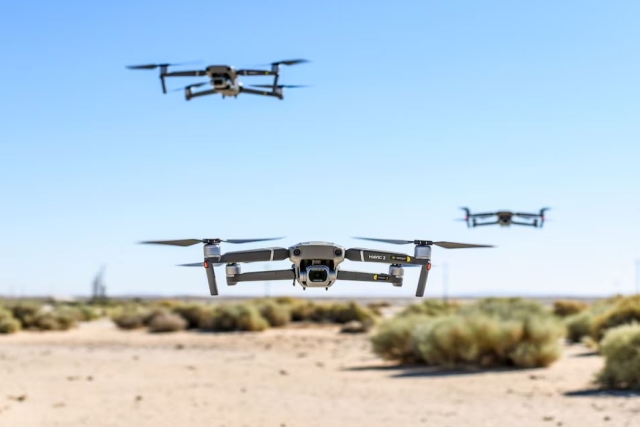
U.S. Dependent on China for Key Drone Components
April 21, 2025 @ 09:38 AMThe United States remains heavily reliant on Chinese-made components for military drones, complicating its defense posture in the Pacific and exposing a vulnerability in its defense supply chain. As the Pentagon accelerates drone production to prepare for potential conflict in the Indo-Pacific, critical parts such as batteries, gliders, engines, radios, and cameras are still being sourced from China—a country that controls around 90 percent of the global drone market,
-
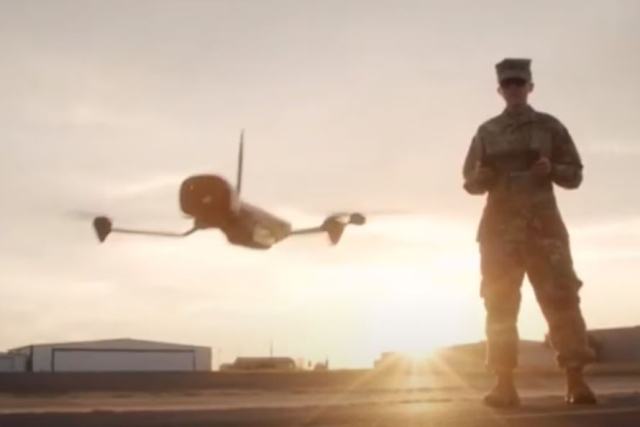
South Korea Demos Photonic Radar Technology to Detect Small Drones
April 21, 2025 @ 08:55 AMThe Agency for Defense Development (ADD) of South Korea

18 Killed, 90 Injured in one of the Deadliest Russian Attacks on
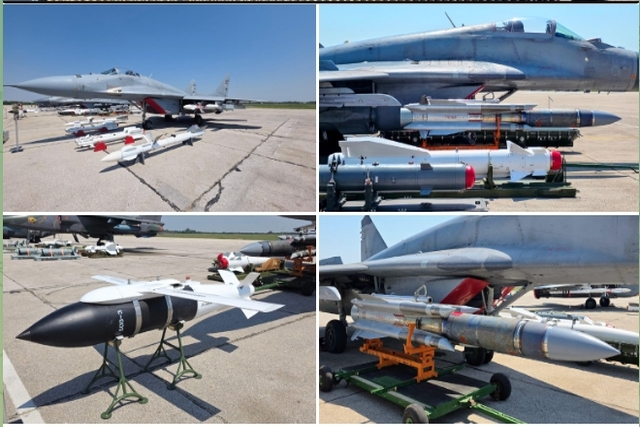
Serbia Modernizes MiG-29SM Fighters with Russian & Chinese Weapons, French IFF System
Ukraine to Receive Gripen-E Fighter Jets in 2029, Its First All-New Western
KNDS Suspends Initial Public Offering Due to “European Defense Market Volatility”

One Month Since U.S., Israeli War Against Iran: Who Is Gaining?
One month after the United States and Israel launched coordinated strikes on Iran on February 28 the conflict has expanded...
Modern Tank Showdown: T-90MS, Leopard 2A7, M1E3 Abrams Compared
Main Battle Tanks (MBTs) have shown their mettle in recent conflicts such as in Ukraine despite being increasingly vulnerable to...
European Nations Prioritizing Europe-made IRIS-T & SAMP-T over American Patriot Air Defense Systems?
European nations looking to procure new air defense systems appear to be giving the much-vaunted American Patriot a miss in...
Russian T-90MS Crew Discuss Future Upgrades
Defense Mirror spoke with the crew members of the Russian T-90MS main battle tank, produced by UralVagonZavod

China's Mass-produced J-35A Aircraft Set to Disrupt Global Stealth Fighter Market
China is aiming to disrupt the global stealth fighter market by mass-producing its fifth-generation J-35A at a pace comparable to...

The Future of Combat: Miniaturized Laser Weapons Set to Replace Bullets and Missiles
Lasers may soon replace bullets, and drones could disable enemy UAVs with beams of light instead of missiles