Strengthening Europe’s Capacity to Combat Drones on Agenda as EU, NATO Defense Ministers Meet
Defense minister Troels Lund Poulsen calls for unified EU, NATO action to counter growing aerial threats and support Ukraine.
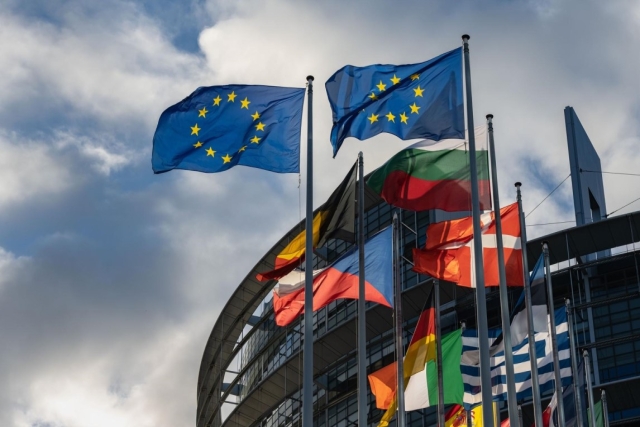
Denmark’s defense minister Troels Lund Poulsen called for a major boost to Europe’s anti-drone, air, and missile defense capabilities as he attended joint EU and NATO defense ministerial meetings in Brussels on Tuesday.
Poulsen said the growing number of drone incidents across Europe highlights the urgency of addressing hybrid threats, emphasizing that Denmark is ready to contribute to new EU initiatives aimed at detecting, targeting, and neutralizing hostile drones.
“The drone incidents around Europe in recent weeks clearly show that Europe needs to be even more prepared to deal with hybrid threats,” Poulsen said. “Denmark offers to be part of the upcoming work to strengthen Europe’s capacity to counter drone threats, so that we can ensure that Europe’s anti-drone capacity is strengthened in the coming years.”
The new EU initiative will draw lessons from Ukraine’s battlefield experience and aims to enhance the bloc’s ability to respond to emerging aerial threats. The plan aligns with the EU’s White Paper on European Defence Preparedness, which targets achieving full European defense self-reliance by 2030. The European Commission is expected to soon present a roadmap for meeting that goal.
Poulsen also underscored the need for deeper defense cooperation among EU nations. “We must cooperate more with other EU countries on the development, procurement and production of defense equipment,” he said. “It is crucial that we ensure the best possible framework for rapid European rearmament.”
Before the EU meetings, Poulsen attended a NATO Defense Ministers’ session focusing on air and missile defense. He cited recent Russian airspace violations and drone activity near Denmark as evidence of the growing threat environment.
“Europe and Denmark are in a serious security situation,” he said. “Russia has violated NATO countries’ airspace several times, and the drone incidents in Denmark in recent weeks show the need for us to strengthen the alliance’s ability to combat drones, including based on the experience from Ukraine.”
Both the EU and NATO sessions are expected to lay groundwork for coordinated action on defense production, capability development, and airspace security across the continent.
Spain Cancels Missile Projects with Israel, Will Go with European Solutions

Saab-Led Consortium to Develop NATO's Underwater Battlespace Project
Huge Explosions after Russia Attacks Train Carrying Ammo from NATO to Ukraine
Nammo to Supply 25mm Ammo for European Buyers of F-35 Jet

Indonesia Signs Agreement with Leonardo to Buy AW-149 Helicopter
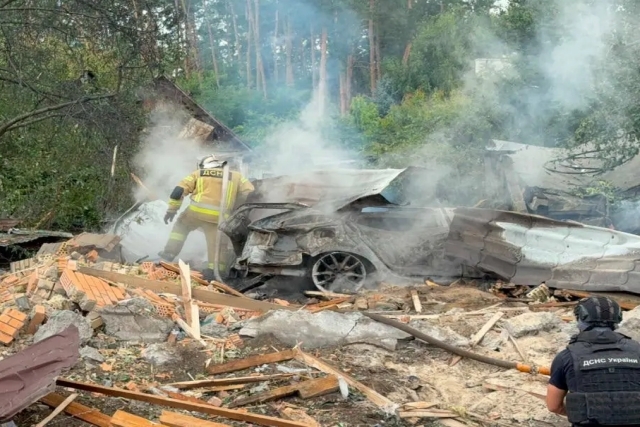
Russia Strikes Ukrainian Arms Show Venue, 10 Killed, 100 Injured

A Bridge for a Cargo Ship- Trump Announces Tit-for-Tat Attacks Against Iran

Cyber warfare against Russia? SSL Certificates of Many Government, Media Websites Revoked

One Month Since U.S., Israeli War Against Iran: Who Is Gaining?
One month after the United States and Israel launched coordinated strikes on Iran on February 28 the conflict has expanded...
Modern Tank Showdown: T-90MS, Leopard 2A7, M1E3 Abrams Compared
Main Battle Tanks (MBTs) have shown their mettle in recent conflicts such as in Ukraine despite being increasingly vulnerable to...
European Nations Prioritizing Europe-made IRIS-T & SAMP-T over American Patriot Air Defense Systems?
European nations looking to procure new air defense systems appear to be giving the much-vaunted American Patriot a miss in...

Russian T-90MS Crew Discuss Future Upgrades
Defense Mirror spoke with the crew members of the Russian T-90MS main battle tank, produced by UralVagonZavod

China's Mass-produced J-35A Aircraft Set to Disrupt Global Stealth Fighter Market
China is aiming to disrupt the global stealth fighter market by mass-producing its fifth-generation J-35A at a pace comparable to...

The Future of Combat: Miniaturized Laser Weapons Set to Replace Bullets and Missiles
Lasers may soon replace bullets, and drones could disable enemy UAVs with beams of light instead of missiles