U.S. Navy Sea Hawk Helicopter, F/A-18F Jet Crash in South China Sea
Two aircraft from the USS Nimitz crash during routine operations; all five crew members rescued and under investigation.

Two aircraft - a MH‑60R Sea Hawk helicopter and an F/A‑18F Super Hornet fighter - operated by the U.S. Pacific Fleet crashed separately over the South China Sea on Sunday.
The crashes happened during what were described as routine operations from the USS Nimitz aircraft carrier.
At approximately 2:45 p.m. local time, the helicopter assigned to the “Battle Cats” of Helicopter Maritime Strike Squadron 73 went down in the waters while flying from the Nimitz. Search-and-rescue teams launched from the carrier group recovered the three crew members, who were transported back to the ship and reported to be in stable condition.
Around 3:15 p.m., a Super Hornet from the “Fighting Redcocks” of Strike Fighter Squadron 22 crashed while also deployed from the Nimitz. The two aviators aboard ejected and were recovered by search-and-rescue teams. They too were returned to the carrier and are reported in stable condition.
The Pacific Fleet said an investigation has been launched into both incidents. The service did not disclose weather data, mechanical fault details or the exact nature of the training missions at the time of the crashes.
The Nimitz carrier remains deployed in the Indo-Pacific region amid heightened maritime tensions in the South China Sea—a zone claimed in large part by China despite a 2016 international tribunal ruling against those claims.
Meanwhile, China’s Ministry of Foreign Affairs stated the aircraft crashed during a military exercise and offered humanitarian assistance to the U.S. following the incidents.
Chinese military analysts reached by the Global Times claimed that these incidents may reflect a decline in the readiness and operational capability of the U.S. Navy, pointing to ageing equipment, heavy deployment frequency and possible personnel fatigue.
Wei Dongxu characterized the back-to-back loss of a carrier-borne helicopter and fighter jet on the same day as evidence of declining reliability of U.S. Navy aviation assets and crew training.
Another expert, Song Zhongping, noted the U.S. Navy’s repeated naval‐air operations in the South China Sea under the “freedom of navigation” banner while facing sustained global deployment burdens.
Polish F-16 Jet Crashes during Radom Airshow Rehearsal Killing Pilot
F-35 Alaska Crash: WoW Sensors Indicated Aircraft Was on Ground Despite Being...
Netherlands to Send Patriot Air Defense Systems to Poland after Suspected Russian...
Ghana Ministers Die in Crash Of Chinese-Made Z9 Military Helicopter Near Gold...
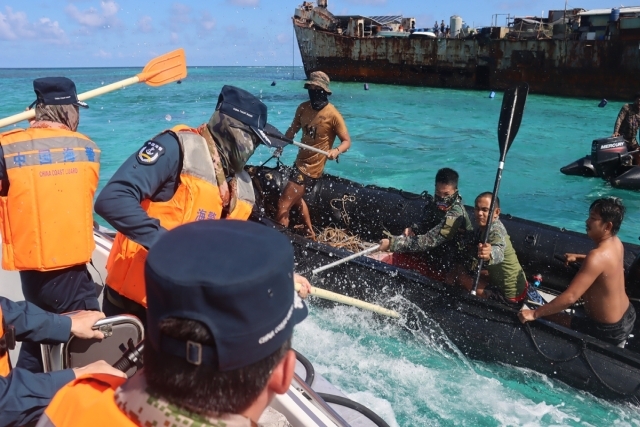
Hand to Hand Combat Between Chinese, Philippine Soldiers in South China Sea

2 US troops KILLED, 1 Missing, 4 Injured in Iran Missile Strikes
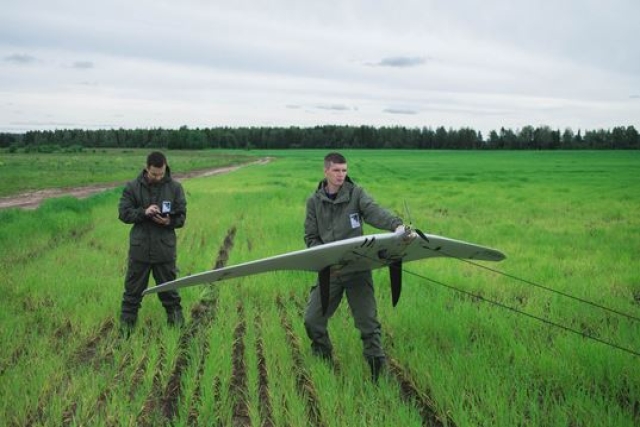
Russia's Unmanned Systems Group Signs Several International Contracts to Sell its Supercam...

50 Killed, 500 Injured in U.S. Airstrikes Against Iranian

One Month Since U.S., Israeli War Against Iran: Who Is Gaining?
One month after the United States and Israel launched coordinated strikes on Iran on February 28 the conflict has expanded...
Modern Tank Showdown: T-90MS, Leopard 2A7, M1E3 Abrams Compared
Main Battle Tanks (MBTs) have shown their mettle in recent conflicts such as in Ukraine despite being increasingly vulnerable to...
European Nations Prioritizing Europe-made IRIS-T & SAMP-T over American Patriot Air Defense Systems?
European nations looking to procure new air defense systems appear to be giving the much-vaunted American Patriot a miss in...
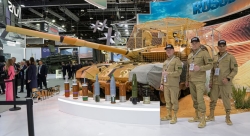
Russian T-90MS Crew Discuss Future Upgrades
Defense Mirror spoke with the crew members of the Russian T-90MS main battle tank, produced by UralVagonZavod

China's Mass-produced J-35A Aircraft Set to Disrupt Global Stealth Fighter Market
China is aiming to disrupt the global stealth fighter market by mass-producing its fifth-generation J-35A at a pace comparable to...

The Future of Combat: Miniaturized Laser Weapons Set to Replace Bullets and Missiles
Lasers may soon replace bullets, and drones could disable enemy UAVs with beams of light instead of missiles