U.S. Navy's Unmanned Surface Vessel Completes Fastest Transatlantic Crossing
Lightfish USV reaches Portugal after autonomous 4,000-mile voyage nearly 12 days faster than previous attempt
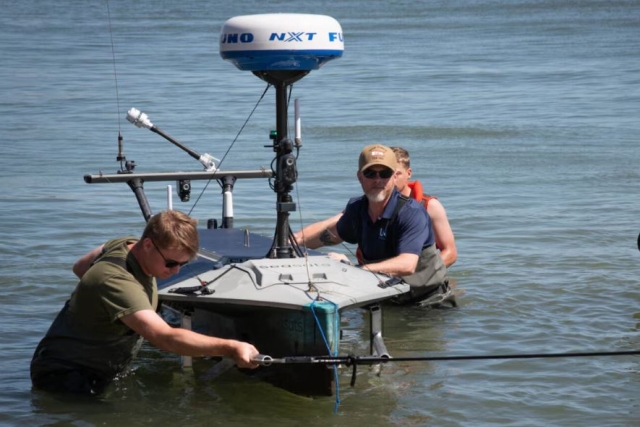
A U.S. Navy-sponsored unmanned surface vessel has completed the fastest known autonomous transatlantic crossing, arriving in Troia, Portugal, on Sept. 9 after more than two months at sea.
Engineers from the Naval Information Warfare Center (NIWC) Atlantic’s Unmanned Naval Innovation Team (UNIT) recovered the solar-powered Lightfish after its 4,000-mile journey, which began in late June from Sullivan’s Island, South Carolina. The vessel completed the voyage nearly 12 days faster than the last known attempt.
Lightfish remained untouched for more than 60 days as it crossed the Atlantic. Engineers and fleet watch floors monitored the vessel through cameras, remote software and real-time telemetry. Michael Grass, the team's lead scientist and program manager, said the mission validated a “follow-the-sun” command-and-control model, with oversight transferred twice daily between Navy numbered fleets.
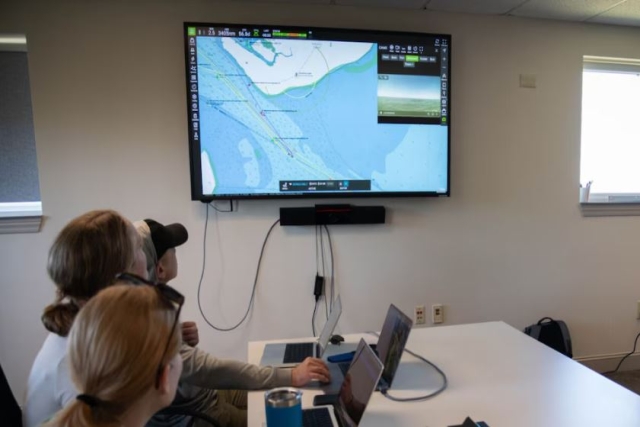
The operation was supported by Commander, Task Force 66 (CTF 66), U.S. 6th Fleet’s all-domain task force formed in 2024. The recovery aligned with the Portuguese-led Robotic Experimentation and Prototyping using Maritime Uncrewed Systems (REPMUS) exercise, which gathers more than 30 nations, NATO organizations, industry and academic partners to test unmanned systems.
After arriving in Portugal, Lightfish required minor repairs, generator fuel and cleaning. Engineers scraped barnacles from its hull after the long crossing and several days spent loitering offshore.
Lightfish will remain at sea for additional missions, including travel to Africa and a future return crossing to Charleston. UNIT engineers will use the deployments to refine autonomy, endurance and data-integration capabilities.
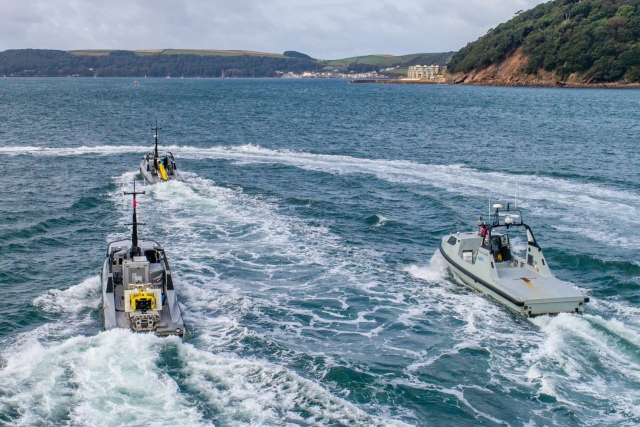
Singapore Navy to Deploy Thales Pathmaster Mine Detection System on USV
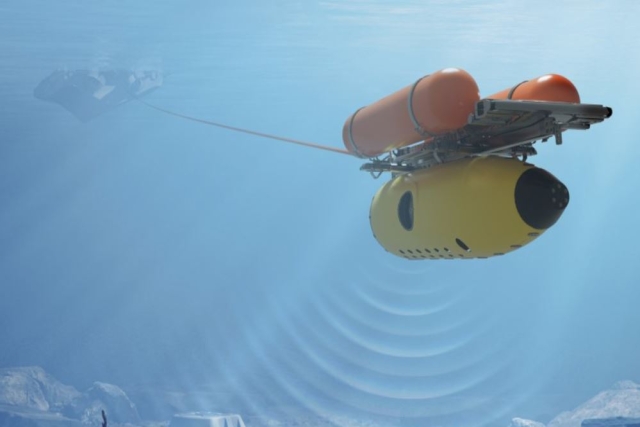
Norwegian Navy Receives Patria Sonac ACS for USV-Based Minesweeping
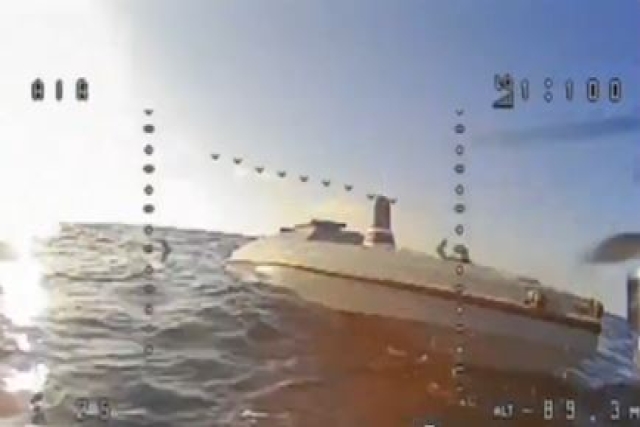
Russian FPV Drone Downs Ukrainian Magura V5 USV in Black Sea Encounter

Ukrainian 'Sea Baby' USV Fitted with 122mm Grad Rocket Launchers

IRGC Strikes Two Super Tankers in Strait of Hormuz, 5 Killed in...

Houtis Fire Missiles at Saudi Airport after Riyadh Bombs Yemen’s Sanaa Airport...
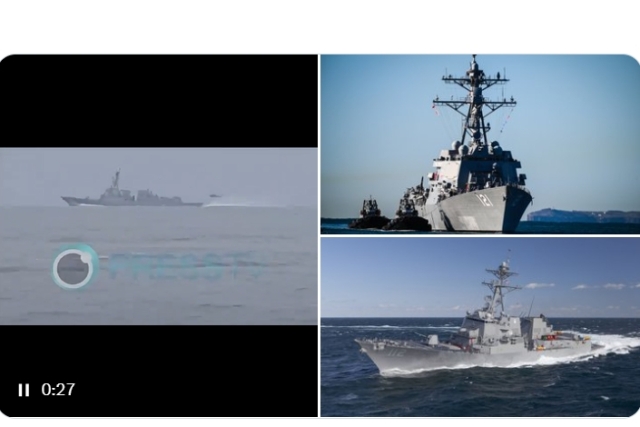
Iran Blockade Back, Now U.S. to Charge 20% Hormuz Transit Fee
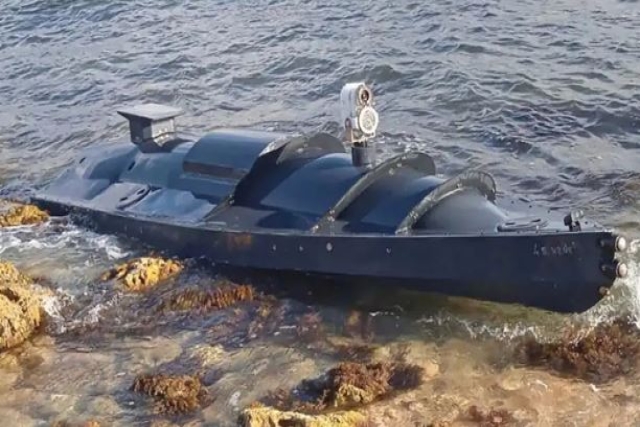
First Use of Unmanned Kamikaze Boat by the U.S. in Attack...

One Month Since U.S., Israeli War Against Iran: Who Is Gaining?
One month after the United States and Israel launched coordinated strikes on Iran on February 28 the conflict has expanded...
Modern Tank Showdown: T-90MS, Leopard 2A7, M1E3 Abrams Compared
Main Battle Tanks (MBTs) have shown their mettle in recent conflicts such as in Ukraine despite being increasingly vulnerable to...
European Nations Prioritizing Europe-made IRIS-T & SAMP-T over American Patriot Air Defense Systems?
European nations looking to procure new air defense systems appear to be giving the much-vaunted American Patriot a miss in...

Russian T-90MS Crew Discuss Future Upgrades
Defense Mirror spoke with the crew members of the Russian T-90MS main battle tank, produced by UralVagonZavod

China's Mass-produced J-35A Aircraft Set to Disrupt Global Stealth Fighter Market
China is aiming to disrupt the global stealth fighter market by mass-producing its fifth-generation J-35A at a pace comparable to...

The Future of Combat: Miniaturized Laser Weapons Set to Replace Bullets and Missiles
Lasers may soon replace bullets, and drones could disable enemy UAVs with beams of light instead of missiles