EU Launches Project to Cut Noise from Autonomous Underwater Vehicles
Programme aims to improve underwater stealth while reducing human-made sound affecting marine life
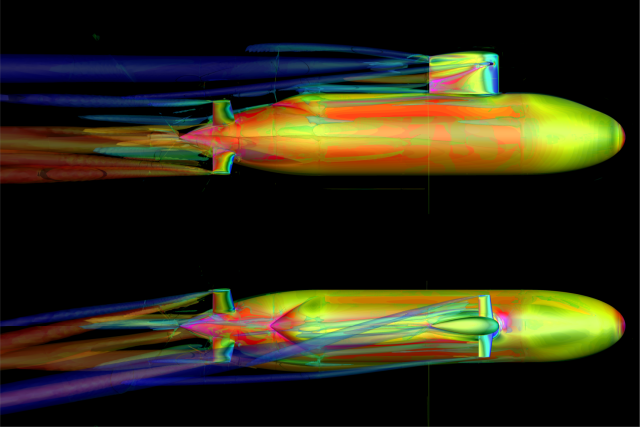
The European Defence Agency (EDA) has launched a four-year programme to reduce noise from autonomous underwater vehicles, targeting improved naval stealth and lower acoustic impact on marine ecosystems.
The €4.8 million Submarine Hull/Rudder/Propeller Hydrodynamics Interaction and Hydroacoustics (SPHYDA) project brings together Italy as lead nation with Germany, the Netherlands, Spain and Norway, supported by nine industrial and research partners.
SPHYDA will run until late 2029. The consortium is developing numerical models and experimental tools to predict how hull designs, rudders and propellers generate noise. The project aims to deliver higher-fidelity simulations, improved measurement techniques and design guidelines to support quieter, more efficient underwater platforms while meeting EU environmental rules.
It builds on earlier EDA and EU-funded research into propeller noise and hydrodynamic performance, expanding the focus to whole-vehicle acoustics. The effort aligns with European underwater warfare priorities and complements NATO research on sonar and autonomous systems.
The team will design and construct an autonomous underwater vehicle for towing-tank and manoeuvring-basin experiments, followed by outdoor tests to assess far-field noise under operational conditions. Lower radiated noise remains a priority for navies seeking to reduce sonar detection ranges.
“SPHYDA is a crucial step toward developing the capability to diagnose and predict the complex hydrodynamic mechanisms responsible for the generation and propagation of noise from underwater vehicles in real operating conditions,” said Riccardo Broglia, Research Director at the Institute of Marine Engineering of the Italian National Research Council, the project manager.
Consortium partners:
Consiglio Nazionale delle Ricerche – Istituto di Ingegneria del Mare; Maritime Research Institute Netherlands; Netherlands Organization for Applied Scientific Research; Norwegian Defence Research Establishment; Bundeswehr Technical Center for Ships and Naval Weapons; Technische Universität Hamburg; thyssenkrupp Marine Systems; NAVANTIA; CEHIPAR – El Canal de Experiencias Hidrodinámicas de El Pardo.
First Australian Ghost Shark Extra Large Autonomous Underwater Vehicle Rolls Out
Helsing Acquires Blue Ocean to Advance Autonomous Underwater Vehicle Capabilities
Japan Joins AUKUS Autonomous Underwater Communications Exercise
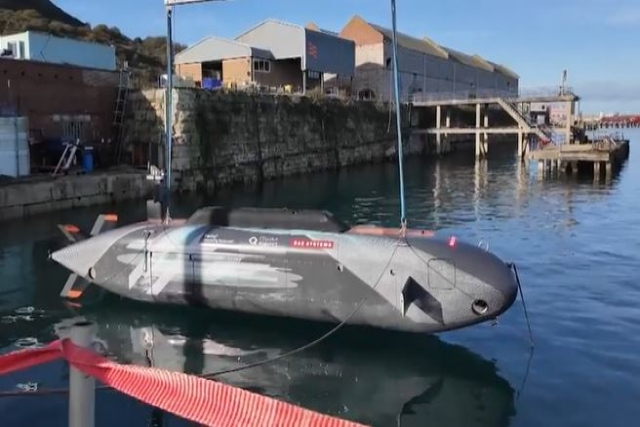
BAE Systems’ Large Autonomous Underwater Vehicle to Be Ready by mid-2026

NATO Special Forces Select Thales-Leonardo Consortium to Deliver Communication System

Ukraine Blames Lack of Patriot Interceptors as Russian Missiles Rain Down on...
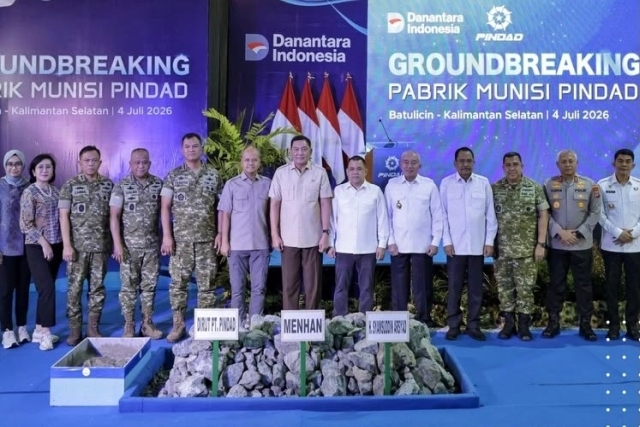
Ammunition Factory of Indonesian PT Pindad Breaks Ground
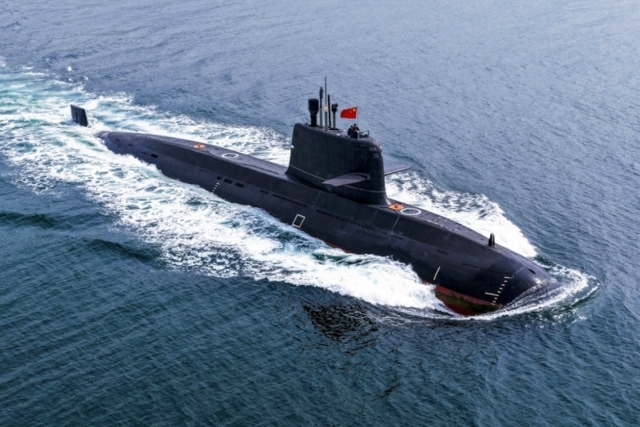
China Tests Nuclear-capable Missile that Can Hit Targets 10,000 km Away

One Month Since U.S., Israeli War Against Iran: Who Is Gaining?
One month after the United States and Israel launched coordinated strikes on Iran on February 28 the conflict has expanded...
Modern Tank Showdown: T-90MS, Leopard 2A7, M1E3 Abrams Compared
Main Battle Tanks (MBTs) have shown their mettle in recent conflicts such as in Ukraine despite being increasingly vulnerable to...
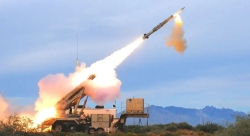
European Nations Prioritizing Europe-made IRIS-T & SAMP-T over American Patriot Air Defense Systems?
European nations looking to procure new air defense systems appear to be giving the much-vaunted American Patriot a miss in...
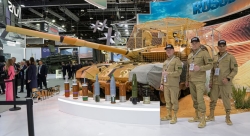
Russian T-90MS Crew Discuss Future Upgrades
Defense Mirror spoke with the crew members of the Russian T-90MS main battle tank, produced by UralVagonZavod
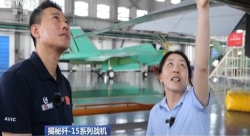
China's Mass-produced J-35A Aircraft Set to Disrupt Global Stealth Fighter Market
China is aiming to disrupt the global stealth fighter market by mass-producing its fifth-generation J-35A at a pace comparable to...
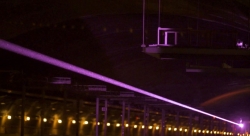
The Future of Combat: Miniaturized Laser Weapons Set to Replace Bullets and Missiles
Lasers may soon replace bullets, and drones could disable enemy UAVs with beams of light instead of missiles