Russia Lays Out New Transport Aircraft, Large Passenger Jet Plans
Plans cover a medium transport, a heavy lifter to replace the An-124, and a large MC-21 passenger variant.
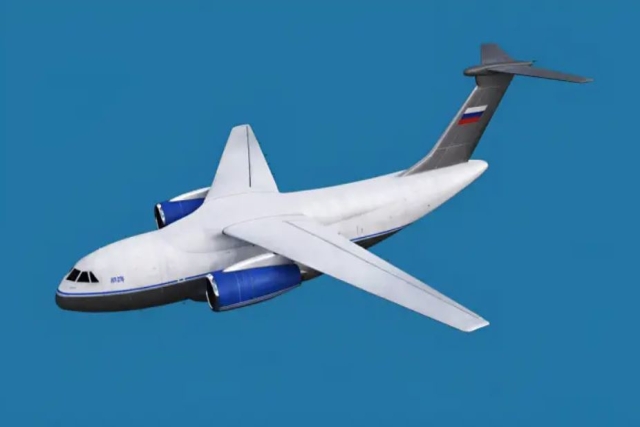
Russia has announced plans to build two new military transport aircraft and develop a larger passenger jet as it expands domestic aircraft production under sanctions pressure.
Ulyanovsk Region Governor Alexey Russkikh was quoted as saying by Russian media recently that production of two wide-body transport aircraft will begin at the Aviastar plant, a subsidiary of Ilyushin PJSC, after talks with President Vladimir Putin on retooling the facility and expanding its workforce from 12,000 to 20,000.
Aviastar currently supports An-124 heavy transports and produces Il-76MD-90A military aircraft. The first new model slated for production is the Il-276 medium military transport, positioned between the light Il-112V and heavy Il-76. It is intended to replace the aging An-12, An-26, and An-72 fleets. The project was initially developed with India, which later withdrew.
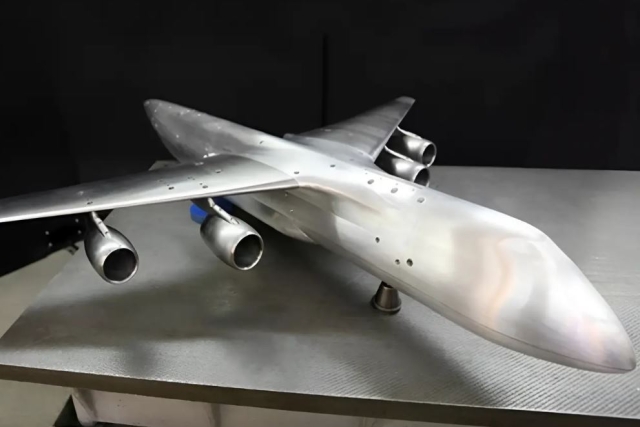
The Il-276 is designed to carry 12 tons over 3,700 kilometers, 20 tons over 2,000 kilometers, or up to 90 paratroopers. It shares the Il-76 fuselage cross-section and is expected to be powered by either PS-90A-76 or PD-14M engines. The estimated cost is $35–40 million per aircraft.
The second aircraft is the Il-100 heavy transport, known as the “Elephant,” being developed as a successor to the An-124. After Ukraine ties were severed and supplies of the D-18T engine were cut off, efforts to restart An-124 production stalled. In 2016, TsAGI began work on a fully Russian-built heavy transport.
The Il-100 is designed to carry 150–180 tons over 7,000 kilometers at a cruising speed of 850 kilometers per hour. Engine selection remains unresolved. The original plan centered on the PD-35 engine, but officials now point to the PD-26.
Russian Industry and Trade Minister Denis Manturov said, “For the Ministry of Defense's mission to power a prospective 100-ton transport aircraft, the PD-26 engine with a thrust of 26 tons is most suitable. It could also be used for a prospective wide-body passenger aircraft.”

That same engine is now being considered for the next generation of the MC-21 passenger jet. Manturov said the PD-26 could power the future MC-21-500 and MC-21-600 variants.
Russian officials say the PD-14 engines no longer meet range requirements after the MC-21 gained weight due to the shift to domestically produced composites and avionics under Western sanctions. The aircraft’s range was cut by about one-third. A shortened MC-21 version later drew weak interest from airlines.
Industry reports indicate the revamped MC-21 could reach about 50 meters in length with a wingspan of at least 40 meters. It would carry up to 270 passengers over 9,000 kilometers, cruise at around 870 kilometers per hour, and operate above 12,000 meters. Engineers are expected to redesign the wings, landing gear, and fuel systems while keeping the cockpit aligned with the current MC-21 to simplify pilot training.

Second Russian MC-21 Import-substituted Aircraft Takes to Flight
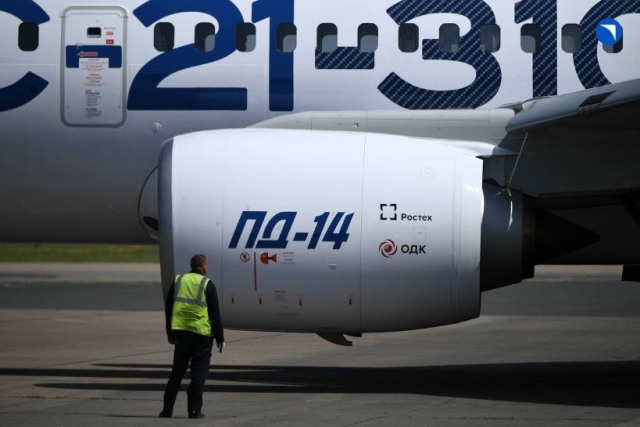
First Batch of 'Ready To Fly' Russian Engines Shipped For Installation on...
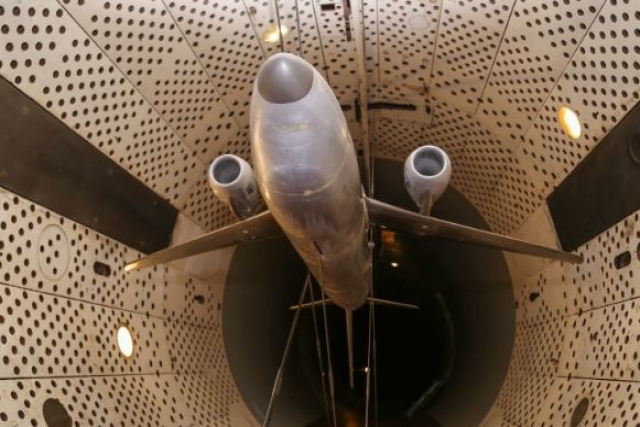
Russia's UEC Opens Plant to Speed up Engine Production for MC-21, SSJ...

Belarus' Belavia Likely to Become First International Operator of Russian MC-21 Airliner

Bombardier to Supply Two Global 6500 Aircraft for Korea’s Electronic Warfare Program
Patria Becomes the First Partner Outside the U.S. to Assemble F-35 Jet’s...

Rheinmetall, Space Norway to Collaborate on Space-based Maritime Domain Awareness
French Rafale Jet Gets Anti-Drone Capability with New 68mm Laser-guided Rocket

One Month Since U.S., Israeli War Against Iran: Who Is Gaining?
One month after the United States and Israel launched coordinated strikes on Iran on February 28 the conflict has expanded...

Modern Tank Showdown: T-90MS, Leopard 2A7, M1E3 Abrams Compared
Main Battle Tanks (MBTs) have shown their mettle in recent conflicts such as in Ukraine despite being increasingly vulnerable to...
European Nations Prioritizing Europe-made IRIS-T & SAMP-T over American Patriot Air Defense Systems?
European nations looking to procure new air defense systems appear to be giving the much-vaunted American Patriot a miss in...

Russian T-90MS Crew Discuss Future Upgrades
Defense Mirror spoke with the crew members of the Russian T-90MS main battle tank, produced by UralVagonZavod

China's Mass-produced J-35A Aircraft Set to Disrupt Global Stealth Fighter Market
China is aiming to disrupt the global stealth fighter market by mass-producing its fifth-generation J-35A at a pace comparable to...

The Future of Combat: Miniaturized Laser Weapons Set to Replace Bullets and Missiles
Lasers may soon replace bullets, and drones could disable enemy UAVs with beams of light instead of missiles