Leonardo to Build Long-range Missile Defence Radars for Italy
New radars will form the sensor backbone of Italy’s future national air and ballistic missile defence system

Leonardo has signed a contract with Italy’s defence technology directorate TELEDIFE to develop and deliver four long-range radars intended to detect and track ballistic missile threats as part of Italy’s future national air and missile defence network.
The agreement, announced on 18 December, follows the unveiling last month of Italy’s planned integrated air and missile defence architecture, designed to link sensors, command systems, and interceptors into a single national framework.
Under the contract, Leonardo will supply Ground Based Radar units and Mobile Long Range Radar systems capable of detecting ballistic threats at ranges of up to 3,000 kilometres. The radars are intended to provide early warning, target identification, and continuous tracking, while supporting real-time updates to the operational picture and cueing fire control radars and interceptors.
The systems use fully digital active electronically scanned array technology based on gallium nitride, which allows extended detection range and continuous surveillance. The radars are designed around an open architecture, allowing them to integrate with multiple air and missile defence assets across different operational domains.
The contract represents the second major step in the programme after Italy conducted the first qualification launch of its SAMP/T NG surface-to-air missile system earlier this month. That test used Leonardo’s KRONOS Grand Mobile High Power radar sensor, another component of Italy’s evolving air defence capability.
Italian defence authorities have framed the programme as a response to the growing range and complexity of long-range missile threats. Based on official information released with the contract, Italy is set to become the first European country to field a nationally integrated air and ballistic missile defence capability built around domestically developed sensors and command systems.
Leonardo did not disclose the contract value or delivery schedule.
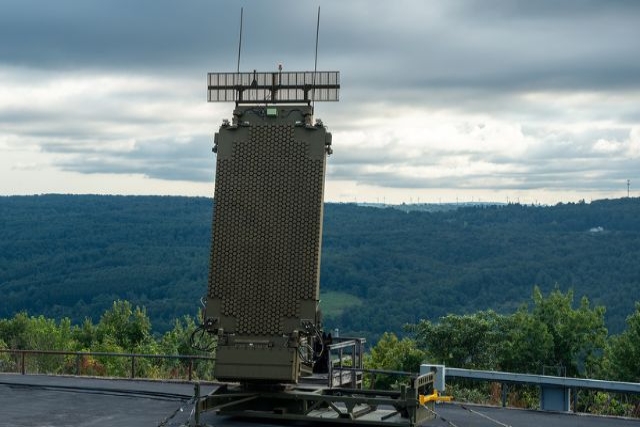
Denmark Chooses Lockheed Martin TPY-4 Radar for NATO Air Defence
India’s SFO Technologies Wins Thales’ RBE2 Radar Wired Structures Contract for Rafale...
Denmark Clears Lockheed Martin Air Warning Radars for Arctic Regions
U.S.A.F.’s B-52 Bomber Completes Ferry Flight after AESA Radar Upgrade...

70 Civilians killed, 360 Injured in Ukrainian Strikes on Russian Economic Targets

Hand to Hand Combat Between Chinese, Philippine Soldiers in South China Sea

2 US troops KILLED, 1 Missing, 4 Injured in Iran Missile Strikes
Russia's Unmanned Systems Group Signs Several International Contracts to Sell its Supercam...

One Month Since U.S., Israeli War Against Iran: Who Is Gaining?
One month after the United States and Israel launched coordinated strikes on Iran on February 28 the conflict has expanded...
Modern Tank Showdown: T-90MS, Leopard 2A7, M1E3 Abrams Compared
Main Battle Tanks (MBTs) have shown their mettle in recent conflicts such as in Ukraine despite being increasingly vulnerable to...
European Nations Prioritizing Europe-made IRIS-T & SAMP-T over American Patriot Air Defense Systems?
European nations looking to procure new air defense systems appear to be giving the much-vaunted American Patriot a miss in...

Russian T-90MS Crew Discuss Future Upgrades
Defense Mirror spoke with the crew members of the Russian T-90MS main battle tank, produced by UralVagonZavod

China's Mass-produced J-35A Aircraft Set to Disrupt Global Stealth Fighter Market
China is aiming to disrupt the global stealth fighter market by mass-producing its fifth-generation J-35A at a pace comparable to...
The Future of Combat: Miniaturized Laser Weapons Set to Replace Bullets and Missiles
Lasers may soon replace bullets, and drones could disable enemy UAVs with beams of light instead of missiles