U.S. Army Unveils Prototype of New M1E3 Battle Tank
Early prototype revealed ahead of Detroit Auto Show as testing is set to begin later this year
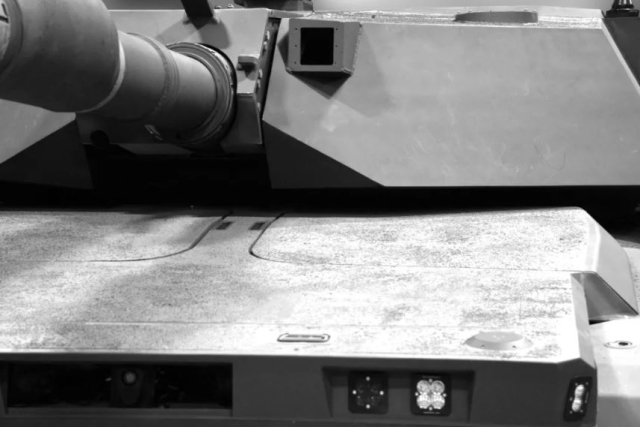
The U.S. Army has released the first images of an early prototype of the M1E3, the planned next-generation successor to the Abrams main battle tank.
Published ahead of the Detroit Auto Show, the images show what the Army describes as an early technology demonstrator rather than a production model. “We’re proud to announce the completion of the first M1E3 early prototype,” the Army said, adding that the vehicle reflects lessons learned from earlier risk-reduction activities.
As per the images, the M1E3 retains a turret broadly similar to earlier M1 variants, possibly with a lower profile, and includes a new sensor window near the gun mantlet. The main gun appears externally similar to the 120mm M256 used on current Abrams tanks, though the Army has previously indicated that future iterations could adopt different armament. The service has confirmed the addition of an autoloader, allowing the crew to be reduced from four to three.

The hull shows more extensive changes, with a redesigned layout featuring two prominent hatches, new LED lighting, cameras, and external sensor housings. Some of these sensors are believed to support driver-assistance features and studies related to autonomous or semi-autonomous operation.
The M1E3 program is intended to address long-standing Abrams limitations, particularly weight and fuel consumption. The Army has said it aims to reduce combat weight from about 78 tons on the M1A2 SEPv3 to roughly 60 tons. The tank will also feature a hybrid propulsion system to improve fuel efficiency and onboard power generation.
“It’ll be hybrid. It will not be fully electric,” Army Chief Technology Officer Dr. Alex Miller said previously, estimating fuel efficiency improvements of “about 40 percent” compared with the current gas turbine engine.
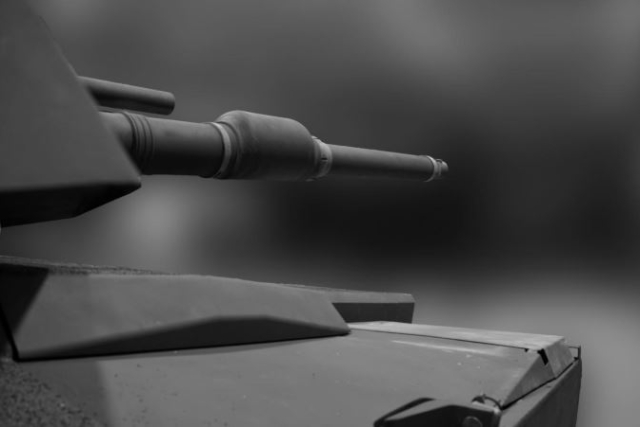
Survivability is another focus, with plans for a more integrated active protection system designed to counter modern threats such as top-attack munitions, drones, electronic warfare effects, and advanced anti-tank weapons, while avoiding the weight penalties of add-on systems.
Although only two partial images have been released and key details remain undisclosed, the prototype confirms the U.S. Army has moved into early hardware development of a redesigned main battle tank tailored for future battlefield requirements.
Australia Completes Delivery of 49 M1A1 Abrams Tanks to Ukraine
Thomas Global Delivers Abrams Training Simulators to Australian Army
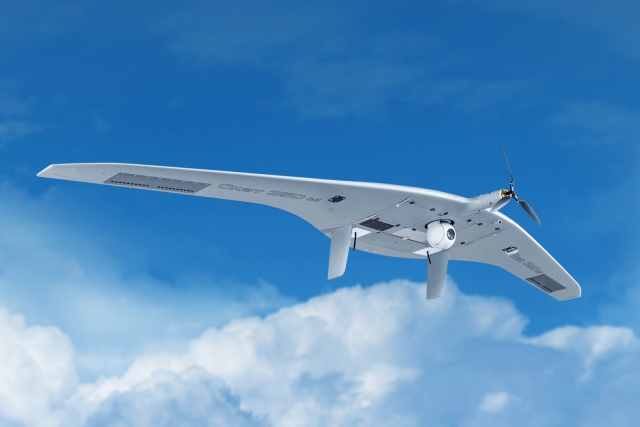
Russia’s SKAT 350M Drone Guides Strikes on U.S.-Made Abrams Tanks, Bradley Vehicles...

Russian Official Claims U.S. Imitating ‘Cope Cage’ Tank Defenses in Abrams Upgrades...
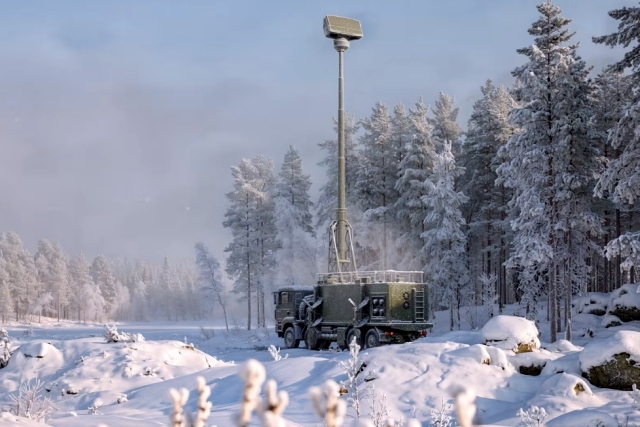
Saab Unveils All-New Giraffe AMB-D Air Defense Radar at Eurosatory 2026
European Countries Announce $4 Billion Arms Support for Ukraine
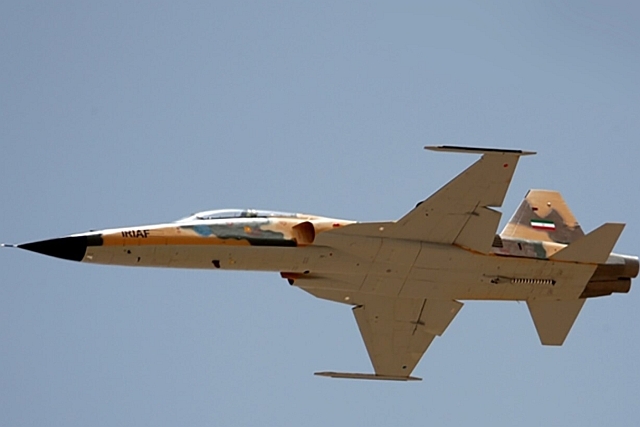
Iranian Pilots Recount Deception Operation in the Bombing of a U.S. Base...
Korean Hanwha’s Chunmoo Missiles to be Launched from Thales’ X-Fire Launchers

One Month Since U.S., Israeli War Against Iran: Who Is Gaining?
One month after the United States and Israel launched coordinated strikes on Iran on February 28 the conflict has expanded...
Modern Tank Showdown: T-90MS, Leopard 2A7, M1E3 Abrams Compared
Main Battle Tanks (MBTs) have shown their mettle in recent conflicts such as in Ukraine despite being increasingly vulnerable to...
European Nations Prioritizing Europe-made IRIS-T & SAMP-T over American Patriot Air Defense Systems?
European nations looking to procure new air defense systems appear to be giving the much-vaunted American Patriot a miss in...
Russian T-90MS Crew Discuss Future Upgrades
Defense Mirror spoke with the crew members of the Russian T-90MS main battle tank, produced by UralVagonZavod

China's Mass-produced J-35A Aircraft Set to Disrupt Global Stealth Fighter Market
China is aiming to disrupt the global stealth fighter market by mass-producing its fifth-generation J-35A at a pace comparable to...

The Future of Combat: Miniaturized Laser Weapons Set to Replace Bullets and Missiles
Lasers may soon replace bullets, and drones could disable enemy UAVs with beams of light instead of missiles