Denmark to Deploy New Coastal Missiles, Underwater Surveillance Ship
Moves follow military advice as Copenhagen strengthens maritime security in the Baltic Sea.
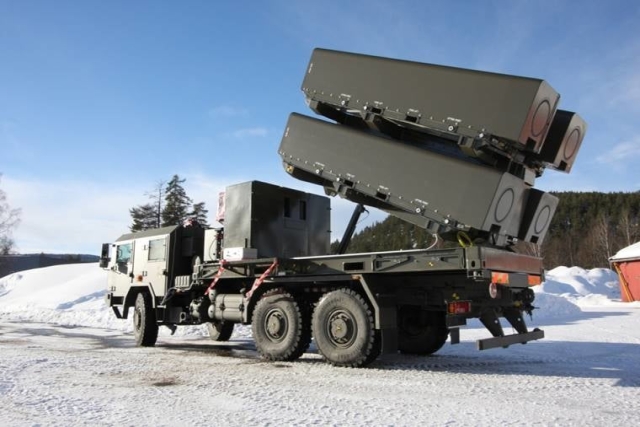
Denmark has decided to base its future coastal missile defense at Naval Station Korsør and locate a new capacity for monitoring critical underwater infrastructure at Naval Station Frederikshavn, the defence ministry has announced.
The decision was taken by the parties to Denmark’s defence agreement and follows military recommendations from the Chief of Defense. The selected locations meet operational and logistical requirements and support rapid implementation of both capabilities, the ministry said.
The coastal missile defense will be stationed at Korsør when the first batteries are delivered. The capability is intended to support Denmark’s control of key maritime routes, including the Danish straits and access to the Baltic Sea. The system will be mobile, allowing deployment to relevant locations across Denmark, and initial elements are expected to be delivered in 2026.
“A core task for the Defense is to maintain control and freedom of action in the Danish waters, which constitute the access routes to the Baltic Sea. With a new coastal missile defense, we will increase the Defense's combat power considerably in this field. The location in Korsør ensures a rapid build-up of capacity,” Minister of Defense Troels Lund Poulsen said.
The coastal missile system is being supplied by Kongsberg and is based on the Naval Strike Missile Coastal Defence System. When fully established, the unit is expected to employ up to around 100 personnel, including conscripts.
Separately, Denmark will base a ship for monitoring critical underwater infrastructure at Naval Station Frederikshavn. The vessel, purchased from Danish Navigare Capital Partners A/S, will serve as a platform for subsea and seabed surveillance. The ship was previously used to service offshore wind farms and will undergo minor modifications to meet operational requirements. Delivery is expected by the end of 2026.
Frederikshavn was selected due to its logistical readiness and the operational benefits of co-locating with other naval units. Staffing requirements for the underwater infrastructure monitoring capability are still being assessed but are expected to involve up to around 50 personnel.

Amid Trump Threats, Denmark Steps Up Military Deployment in Greenland

Even as Trump Threatens to Take Greenland, Denmark Moves Ahead with Over...

U.S. Oks Denmark’s P-8A Maritime Patrol Aircraft worth $1.8B

Denmark to Order AMRAAM-ER Missiles worth $951M

Houtis Fire Missiles at Saudi Airport after Riyadh Bombs Yemen’s Sanaa Airport...
Iran Blockade Back, Now U.S. to Charge 20% Hormuz Transit Fee
First Use of Unmanned Kamikaze Boat by the U.S. in Attack...

Russian FSB Prevents Ukrainian Plot to Attack Su-57 Fighter Bases with FPV...

One Month Since U.S., Israeli War Against Iran: Who Is Gaining?
One month after the United States and Israel launched coordinated strikes on Iran on February 28 the conflict has expanded...

Modern Tank Showdown: T-90MS, Leopard 2A7, M1E3 Abrams Compared
Main Battle Tanks (MBTs) have shown their mettle in recent conflicts such as in Ukraine despite being increasingly vulnerable to...
European Nations Prioritizing Europe-made IRIS-T & SAMP-T over American Patriot Air Defense Systems?
European nations looking to procure new air defense systems appear to be giving the much-vaunted American Patriot a miss in...

Russian T-90MS Crew Discuss Future Upgrades
Defense Mirror spoke with the crew members of the Russian T-90MS main battle tank, produced by UralVagonZavod

China's Mass-produced J-35A Aircraft Set to Disrupt Global Stealth Fighter Market
China is aiming to disrupt the global stealth fighter market by mass-producing its fifth-generation J-35A at a pace comparable to...

The Future of Combat: Miniaturized Laser Weapons Set to Replace Bullets and Missiles
Lasers may soon replace bullets, and drones could disable enemy UAVs with beams of light instead of missiles