Pratt & Whitney Reveals Details of XA103 Engine for Sixth-gen F-47 Fighter
Adaptive-cycle engine completes detailed design review as U.S.A.F. advances NGAD toward 2028 first flight
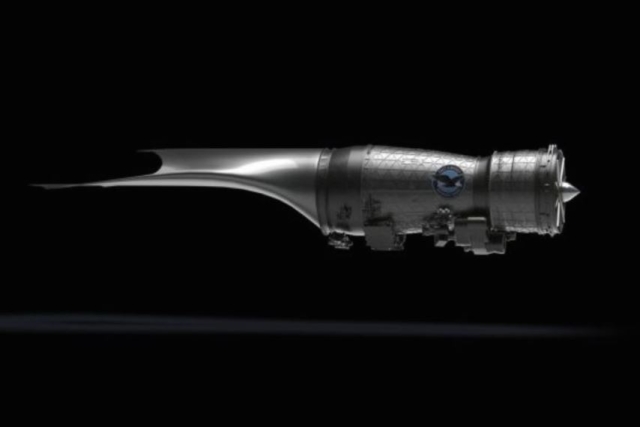
Pratt & Whitney has released new details and imagery of its XA103 adaptive-cycle engine, developed under the U.S. Air Force’s Next Generation Adaptive Propulsion (NGAP) program to power the Boeing F-47 sixth-generation fighter.
The XA103 is competing against an offering from General Electric within NGAP. The engine is intended for the F-47, which is being developed by Boeing under the Air Force’s Next Generation Air Dominance (NGAD) program.
Technical specifications
The XA103 is a three-flow adaptive-cycle engine capable of shifting airflow between the core and fan streams through a third bypass channel. In high-efficiency mode, the third stream increases bypass ratio and provides additional cooling capacity. In high-thrust mode, airflow is redirected to maximize combat power.
The company states the adaptive architecture is designed to deliver up to 25% greater fuel efficiency and up to 20% more thrust compared with conventional fixed-cycle engines. Additional cooling and electrical power capacity are intended to support latest sensors, electronic warfare systems and potential directed-energy systems.
The XA103 is the first engine the company has designed entirely within a digital collaborative environment, linking design, testing, manufacturing and supply-chain partners through a shared data architecture. A critical design review was completed in February 2024, followed by a detailed design review in early 2025. Prototype construction is underway, with ground testing planned for the late 2020s.
During a recent demonstration attended by U.S. Air Force officials, the company showcased a digital model of the XA103 incorporating hundreds of digital sensors.
Contract value and acquisition plans
Boeing’s contract for development of the F-47 is valued at more than $20 billion and covers at least 185 aircraft. Engine development contracts under NGAP are capped at up to $3.5 billion per company through 2032.
The U.S.A.F.’s fiscal year 2025 budget request included $3.3 billion for NGAD development, of which $2.7 billion was allocated to manned combat aircraft and $557 million to unmanned Collaborative Combat Aircraft (CCA).
The first F-47 flight is planned for 2028, with entry into service expected in the 2030s. The aircraft is intended to replace the F-22 fleet, which totals 195 produced aircraft, with 187 currently operational.
The Air Force reportedly plans to acquire approximately 200 F-47s and more than 1,000 CCAs, with roughly two unmanned systems envisioned to operate alongside each F-47 and F-35A under a manned-unmanned teaming concept.
On Feb. 18, 2026, Pratt & Whitney released a video showing a computer-generated, F-47-inspired aircraft alongside details of the XA103. The design depicts a twin-engine, single-seat tailless aircraft with a trapezoidal wing planform and canard foreplanes, two-dimensional thrust vectoring nozzles and air intakes beneath the canards.
However, the aircraft shown is not an official representation of the F-47. Since awarding the contract to Boeing in 2025, the U.S. Air Force has released only limited renderings of the aircraft, which officials have said were altered to obscure key design features.
Program background
The NGAD program evolved from the Air Dominance Initiative launched by DARPA in 2014 and centers on a sixth-generation crewed fighter operating with unmanned systems.
NGAP builds on technology developed under the Adaptive Engine Transition Program, with the goal of fielding an engine capable of shifting between high-performance and high-efficiency modes during flight.

Potential “Kill Switch” in U.S.A.F’s New F-47 Stealth Jet Raises Eyebrows...
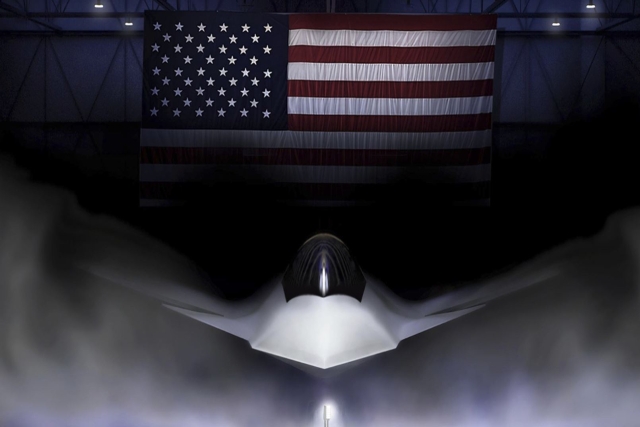
American F-47 Jet Using Canards from Older Generation Fighters: Chinese Expert

Boeing to Build America’s Sixth-Gen Fighter, Designated F-47
Iran Threatens to Close Strait of Hormuz as US Signals Return to...
China-made Aircraft Fly in U.S. Airshow for First Time

Switzerland to increase F-35 Offsets from 60% to 73%
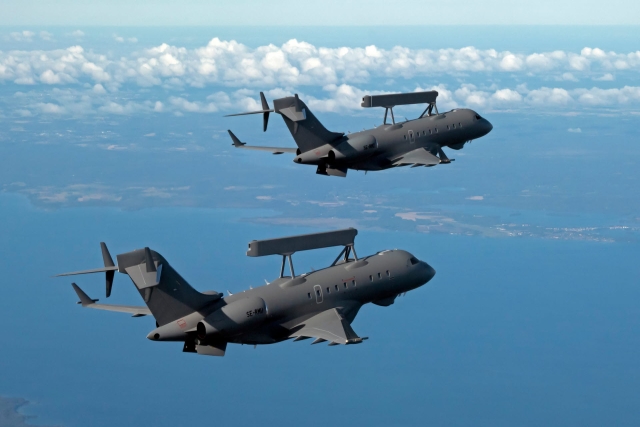
11 NATO Countries Select Saab GlobalEye AWACS Over Boeing E-7 Aircraft

One Month Since U.S., Israeli War Against Iran: Who Is Gaining?
One month after the United States and Israel launched coordinated strikes on Iran on February 28 the conflict has expanded...
Modern Tank Showdown: T-90MS, Leopard 2A7, M1E3 Abrams Compared
Main Battle Tanks (MBTs) have shown their mettle in recent conflicts such as in Ukraine despite being increasingly vulnerable to...
European Nations Prioritizing Europe-made IRIS-T & SAMP-T over American Patriot Air Defense Systems?
European nations looking to procure new air defense systems appear to be giving the much-vaunted American Patriot a miss in...

Russian T-90MS Crew Discuss Future Upgrades
Defense Mirror spoke with the crew members of the Russian T-90MS main battle tank, produced by UralVagonZavod

China's Mass-produced J-35A Aircraft Set to Disrupt Global Stealth Fighter Market
China is aiming to disrupt the global stealth fighter market by mass-producing its fifth-generation J-35A at a pace comparable to...

The Future of Combat: Miniaturized Laser Weapons Set to Replace Bullets and Missiles
Lasers may soon replace bullets, and drones could disable enemy UAVs with beams of light instead of missiles