Iran Fires ‘Dancing Missiles’ at Israeli, U.S. Targets in Tel Aviv, Kuwait
Tehran says solid-fuel ballistic missile used for first time in current conflict during Operation True Promise 4.
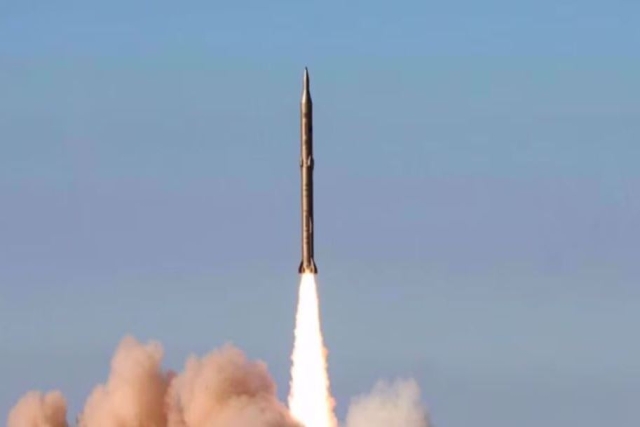
Iran on Sunday launched a series of missiles targeting Israeli and U.S. positions, including the Sejjil — often referred to as the “dancing missile” for its maneuverability — marking the first reported operational use of the system since the war began on February 28, according to Iran’s state-controlled media.
The missile barrage formed part of what Iranian officials described as the 54th wave of Operation True Promise 4, which they said targeted Israeli military and administrative sites linked to air operations.
Iranian authorities said several missile systems were used in the attack, including the Khorramshahr, Kheibar Shekan, Qadr and Emad missiles. The Sejjil drew particular attention because it had not previously been used in the current conflict.
Targets across Israel, Gulf region
Iran’s Islamic Revolutionary Guard Corps (IRGC) said the missile strikes targeted Israeli sites as well as U.S. military facilities in the Gulf region, including Al-Harir Air Base, Ali Al-Salem Air Base and Camp Arifjan in Kuwait.
In Israel, local media reported that an Iranian missile strike damaged the residence of a U.S. consular official in Tel Aviv. Israeli emergency services said at least three people were injured in southern Tel Aviv, while another person was wounded by falling missile fragments in central areas.
Sejjil Missile
The Sejjil — also known as the Sajjil or Ashoura missile — is a two-stage, solid-fuel ballistic missile developed in Iran. It is designed as a medium-range strike weapon capable of reaching targets about 2,000 kilometres away.
According to data from the Centre for Strategic and International Studies (CSIS), the missile can carry a payload of roughly 700 kilograms. It measures around 18 metres in length, has a diameter of about 1.25 metres and weighs approximately 23,600 kilograms.
Unlike older Iranian missiles that rely on liquid fuel, the Sejjil uses solid propellant, allowing faster preparation and launch times. Analysts note that this design can reduce the time the system is exposed before launch.
The missile is also described as maneuverable during flight, a feature that has led to it being nicknamed the “dancing missile”. The maneuverability is intended to complicate interception by air defense systems.
Development of the Sejjil began in the early 1990s. The first reported test launch took place in 2008, when the missile travelled about 800 kilometres. A second test in May 2009 focused on improved guidance and navigation systems.
CSIS records show at least four additional tests have been conducted since then. During the sixth reported test, the missile travelled about 1,900 kilometres into the Indian Ocean.
Conflict widens in third week
The missile launch comes as the conflict between Iran, Israel and the United States enters its third week.
The war began on February 28 following joint U.S. and Israeli strikes on Iranian targets. The attacks killed the country’s 86-year-old Supreme Leader Ayatollah Ali Khamenei.
Iran subsequently launched strikes on Israel and U.S. military bases in Gulf countries, while U.S. and Israeli forces continued attacks on Iranian sites.
The Pentagon said U.S. and Israeli forces have struck more than 15,000 targets across Iran since the conflict began. Casualty estimates cited by multiple reports indicate that more than 2,000 people have been killed during the fighting, most of them in Iran.
U.S. media also reported that the Pentagon deployed the amphibious assault ship USS Tripoli to the region along with around 2,500 Marines.
Drone strike reported near Dubai airport
Early Monday — the 17th day of the war — a drone reportedly struck a fuel tank near Dubai International Airport, triggering a fire and emergency response by local teams, according to regional reports.
As the fighting continues, both sides have indicated little willingness to step back from the conflict.
U.S. President Donald Trump said on Saturday that Washington was not ready to agree to a deal to end the war.
“Iran wants to make a deal, and I don’t want to make it because the terms aren’t good enough yet,” Trump said when asked about possible negotiations.
Iranian Foreign Minister Abbas Araghchi said Tehran would continue responding to the attacks.
“This war was started by President Trump and the United States by their own choice,” Araghchi said, adding that Iran would defend its people “no matter how long it takes.”
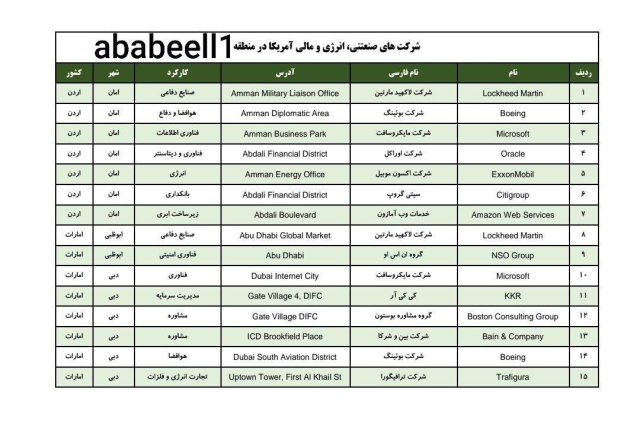
Iran Threatens to Target U.S. Firms in Dubai, Jordan as Missiles Fired...
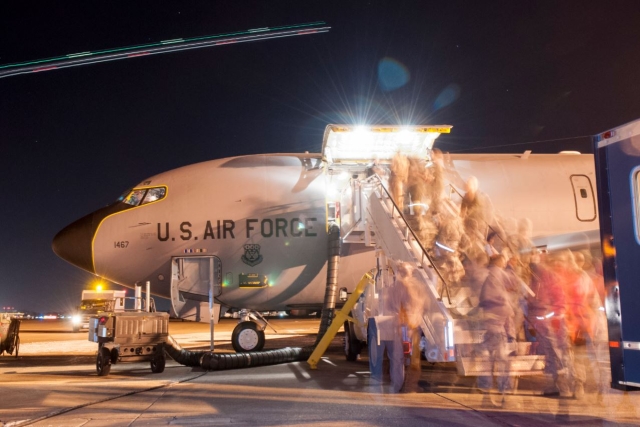
Five U.S. Refueling Aircraft Damaged in Iranian Missile Strike on Saudi Air...
U.S. Bombs Iran’s Kharg Island Military Targets; Trump Warns Oil Facilities Could...
U.S. KC-135 Crash In Iraq Disrupts Aerial Refueling Support for Operations Against...

France Follows U.S. in Allowing Ukraine to Produce Air Defense Missiles
Russia, Ukraine Cause Significant Damage to Each Others’ Oil Tankers, Military Targets
Ukraine Pulls Off World’s First Unmanned Amphibious Assault

IRGC Strikes Two Super Tankers in Strait of Hormuz, 5 Killed in...

One Month Since U.S., Israeli War Against Iran: Who Is Gaining?
One month after the United States and Israel launched coordinated strikes on Iran on February 28 the conflict has expanded...
Modern Tank Showdown: T-90MS, Leopard 2A7, M1E3 Abrams Compared
Main Battle Tanks (MBTs) have shown their mettle in recent conflicts such as in Ukraine despite being increasingly vulnerable to...
European Nations Prioritizing Europe-made IRIS-T & SAMP-T over American Patriot Air Defense Systems?
European nations looking to procure new air defense systems appear to be giving the much-vaunted American Patriot a miss in...

Russian T-90MS Crew Discuss Future Upgrades
Defense Mirror spoke with the crew members of the Russian T-90MS main battle tank, produced by UralVagonZavod

China's Mass-produced J-35A Aircraft Set to Disrupt Global Stealth Fighter Market
China is aiming to disrupt the global stealth fighter market by mass-producing its fifth-generation J-35A at a pace comparable to...

The Future of Combat: Miniaturized Laser Weapons Set to Replace Bullets and Missiles
Lasers may soon replace bullets, and drones could disable enemy UAVs with beams of light instead of missiles