Russian Firm Launches First 16 Satellites to Rival Elon Musk's Starlink
The firm, Bureau 1440 plans to offer high speed internet and other low-earth satellite based services starting 2027
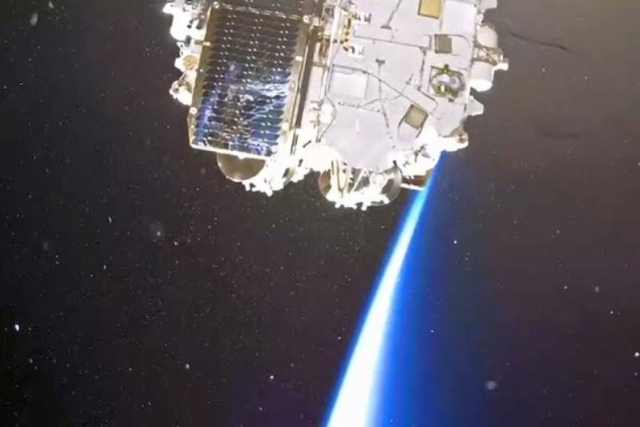
A Russian company has launched the first 16 satellites of its low-Earth orbit communications constellation, marking the initial deployment phase of a system positioned as a domestic alternative to Elon Musk’s Starlink.
Bureau 1440 confirmed that the satellites entered a reference orbit, separated from the launch vehicle, and were taken under control by Mission Control. Following onboard system checks, the satellites are expected to be deployed to their designated operational orbit.
The launch represents the first contingent of the company’s planned low-orbit communications network. According to Alexey Shelobkov, CEO of IKS Holding, the deployment signals a shift from experimental missions toward the development of a commercial communications service. The company has indicated that full commercial operations are expected to begin in 2027.
However, the timeline has previously faced delays. The 16 satellites launched in this mission were originally scheduled for deployment last year, but deadlines were postponed and adjustments were made to project targets.
Bureau 1440 has conducted earlier test missions under its Rassvet program. On July 1, 2023, the company established its first communication session using three satellites from the Rassvet-1 mission, achieving data transfer speeds of 10 Mbps with a latency of 41 milliseconds. These satellites operate in low Earth orbit using Ku- and Ka-band frequencies, with projected capabilities of up to 1 Gbps speeds and latency of up to 70 milliseconds.

Subsequent testing under the Rassvet-2 project included the launch of three additional satellites on May 17, 2024, from the Plesetsk Cosmodrome using a Soyuz-2.1B rocket. One of these satellites featured laser inter-satellite communication technology, with reported data transfer rates of up to 10 Gbps.
The broader constellation plan includes the deployment of 292 satellites by the end of 2027, as part of a total planned network of 383 satellites, which also accounts for replacements of failed units.
Ground infrastructure has also been part of the development. During the initial Rassvet-1 mission launched from the Vostochny Cosmodrome on June 27, 2023, five ground stations were operational to support communications.
Bureau 1440 has also developed user terminals designed for field deployment. The terminals measure up to 60 cm in length and width, weigh under 15 kg, and support throughput speeds of up to 1 Gbps. They are designed to operate in temperatures ranging from -40°C to +40°C and use active phased array technology to automatically connect and maintain links with satellites.

China Unveils Powerful Microwave Weapon Capable of Disrupting Satellite Networks Like Starlink
U.S. Approves $329M in Military Sales to Ukraine for Starlink, Patriot Sustainment...

Netherlands Developing Military Satellite "to Remain Independent of Elon Musk's Starlink"

Zelensky Set to Sign Mineral Deal after U.S. Threatens to Withdraw Starlink...

Hand to Hand Combat Between Chinese, Philippine Soldiers in South China Sea
2 US troops KILLED, 1 Missing, 4 Injured in Iran Missile Strikes
Russia's Unmanned Systems Group Signs Several International Contracts to Sell its Supercam...

50 Killed, 500 Injured in U.S. Airstrikes Against Iranian

One Month Since U.S., Israeli War Against Iran: Who Is Gaining?
One month after the United States and Israel launched coordinated strikes on Iran on February 28 the conflict has expanded...
Modern Tank Showdown: T-90MS, Leopard 2A7, M1E3 Abrams Compared
Main Battle Tanks (MBTs) have shown their mettle in recent conflicts such as in Ukraine despite being increasingly vulnerable to...
European Nations Prioritizing Europe-made IRIS-T & SAMP-T over American Patriot Air Defense Systems?
European nations looking to procure new air defense systems appear to be giving the much-vaunted American Patriot a miss in...

Russian T-90MS Crew Discuss Future Upgrades
Defense Mirror spoke with the crew members of the Russian T-90MS main battle tank, produced by UralVagonZavod

China's Mass-produced J-35A Aircraft Set to Disrupt Global Stealth Fighter Market
China is aiming to disrupt the global stealth fighter market by mass-producing its fifth-generation J-35A at a pace comparable to...
The Future of Combat: Miniaturized Laser Weapons Set to Replace Bullets and Missiles
Lasers may soon replace bullets, and drones could disable enemy UAVs with beams of light instead of missiles