How Iran Could Have Struck American F-35
Dispersed infrared detection, short-range missiles may explain reported engagement despite stealth features
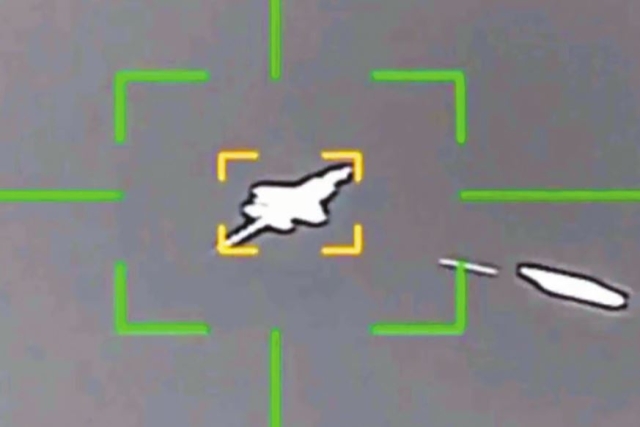
A reported Iranian strike that damaged a U.S. F-35 fighter jet has drawn attention amid conflicting accounts from Tehran and Washington, with emerging analysis pointing to the possible use of infrared-based detection and short-range air defense systems.
Multiple reports said a U.S. F-35 made an emergency landing at a U.S. air base in the Middle East after being struck by what is believed to be Iranian fire. Tim Hawkins, spokesperson for U.S. Central Command, confirmed the aircraft was “flying a combat mission over Iran” when it was forced to land, adding that it landed safely and the incident remains under investigation. The U.S. has not confirmed that the aircraft was hit.
Iran’s Islamic Republic News Agency released footage on X that it said showed the targeting of an F-35 by an Iranian air defense system. The video appears to show the aircraft within the field of view of an infrared sensor.
A Chinese military affairs analyst, Wang Yanan, told Global Times that Iran may have relied on non-radar detection methods due to the vulnerability of large radar systems under sustained airstrikes. He said mobile and dispersed infrared search capabilities could have formed a low- to medium-altitude surveillance network.
Infrared detection systems are more effective at lower altitudes, although they have limited range. According to Wang, these systems can be paired with short-range air defense weapons such as man-portable or vehicle-mounted infrared-guided missiles, which operate using “detect, fire, and relocate” tactics.
While the F-35 is designed to evade radar, its infrared signature cannot be fully eliminated. Wang said engine heat remains detectable, particularly in cooler environments, allowing even basic infrared systems to identify and engage the aircraft at closer distances.
He added that if U.S. forces believed they had air superiority, aircraft may have flown at lower altitudes to improve strike accuracy, potentially placing them within the engagement range of short-range systems. Based on available footage, the engagement may have occurred at a relatively close range, possibly within several to a dozen kilometers, where evasion options are limited once a missile locks on.
The likelihood of a hit could increase if multiple missiles were launched in quick succession, reducing the aircraft’s ability to evade.
The reported incident has prompted comparisons to the 1999 downing of a U.S. F-117 by Yugoslav forces, marking another potential case where a stealth aircraft was struck in contested conditions.
Wang said that while such systems do not significantly alter overall air superiority due to their limited coverage, they can increase operational risks and costs. This may lead to more cautious deployment of stealth aircraft, including adjustments to flight altitude, timing, and operational zones.
Separately, Iran’s Islamic Revolutionary Guard Corps said it had intercepted two AGM-158 cruise missiles near Tehran, according to Sputnik. The AGM-158 is a U.S.-made long-range stealth missile produced by Lockheed Martin.
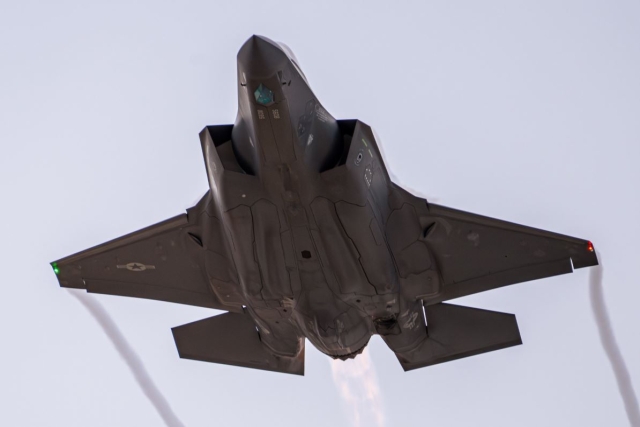
U.S. F-35 Makes Emergency Landing after Mission over Iran
Ukrainian Plot to Attack Moscow-based Defense Enterprise with 35 FPV Drones Foiled

France Follows U.S. in Allowing Ukraine to Produce Air Defense Missiles

Russia, Ukraine Cause Significant Damage to Each Others’ Oil Tankers, Military Targets
Ukraine Pulls Off World’s First Unmanned Amphibious Assault

One Month Since U.S., Israeli War Against Iran: Who Is Gaining?
One month after the United States and Israel launched coordinated strikes on Iran on February 28 the conflict has expanded...
Modern Tank Showdown: T-90MS, Leopard 2A7, M1E3 Abrams Compared
Main Battle Tanks (MBTs) have shown their mettle in recent conflicts such as in Ukraine despite being increasingly vulnerable to...
European Nations Prioritizing Europe-made IRIS-T & SAMP-T over American Patriot Air Defense Systems?
European nations looking to procure new air defense systems appear to be giving the much-vaunted American Patriot a miss in...

Russian T-90MS Crew Discuss Future Upgrades
Defense Mirror spoke with the crew members of the Russian T-90MS main battle tank, produced by UralVagonZavod

China's Mass-produced J-35A Aircraft Set to Disrupt Global Stealth Fighter Market
China is aiming to disrupt the global stealth fighter market by mass-producing its fifth-generation J-35A at a pace comparable to...

The Future of Combat: Miniaturized Laser Weapons Set to Replace Bullets and Missiles
Lasers may soon replace bullets, and drones could disable enemy UAVs with beams of light instead of missiles