U.S. DoW Selects Five Companies to Field Low-cost Containerized Missiles, Hypersonic Weapons.
The two all-new weapons - containerized cruise missiles and Blackbeard hypersonic missiles are marked for deployment in their thousands between 2027 and 2029.
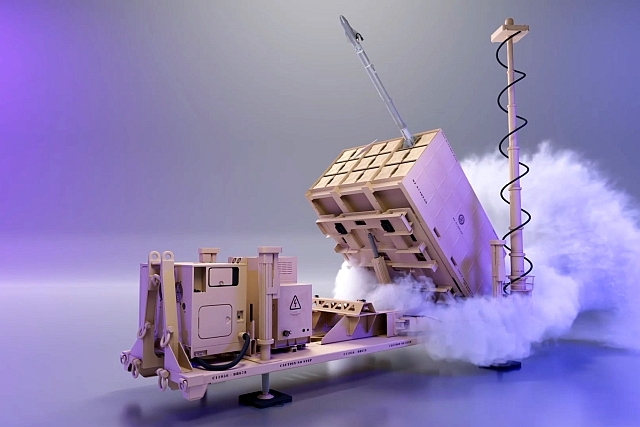
The U.S. Department of War (DoW) has reached framework agreements with a slate of commercial innovators to rapidly develop and field two new low-cost weapons- Containerized Missiles and hypersonic solutions.
Agreements with Anduril, CoAspire, Leidos, and Zone 5 will launch the Low-Cost Containerized Missles (LCCM) program, while a parallel agreement with Castelion advances an initiative to scale low-cost hypersonic solutions, a DoW statement said Tuesday
These agreements will rapidly field effective and affordable kinetic mass for the Joint Force at scale.
The new frameworks for LCCM will drive a fast-paced experimentation and assessment campaign that will culminate in a Military Utility Assessment by the sponsoring Service Components.
This effort positions the DoW to procure over 10,000 low-cost cruise missiles across these portfolios in just three years, starting in 2027.
The DoW is creating a pathway for rapid and repeatable production of high-volume, lethal strike capabilities.The agreements include firm fixed material-unit costs for production lots in 2027 through 2029.
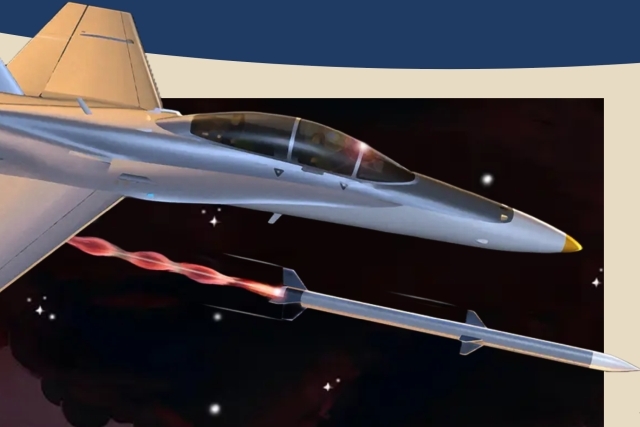
Concurrently, once Castelion achieves testing and validation, the DoW will award a two-year multi-year procurement contract for a minimum of 500 Blackbeard missiles annually, with options to extend for up to five years. To further encourage Castelion's self-funded facility expansion, the Department is actively seeking the necessary authorizations and appropriations to purchase over 12,000 Blackbeard missiles over five years.
Across these framework agreements, several of these new vendors will reach production scale without direct Department investment, reflecting a new model of commercial partnership that rewards speed, innovation, and private sector capital investment.
The DoW will procure test missiles from all four LCCM companies starting in June 2026, laying the groundwork for the assessment phase of the program. These agreements were developed in close coordination with the United States Air Force Program Acquisition Executive Weapons, the Test Resource Management Center and multiple components across the War Department, including the Office of the Under Secretary of War for Acquisition and Sustainment.
"We will deliver affordable mass for our warfighters at unprecedented speed," said Under Secretary of War for Research and Engineering Emil Michael. "In concert with establishing a clear demand signal, these Framework Agreements commit American industry to on-time, on-cost delivery and investment in R&D and facilities."
U.S. Firm Kratos Develops Low-cost Long Range Cruise Missile
DARPA Awards Phase 2 ‘Gremlins’ Contracts To Produce Low-cost, Resusable UASs

New Containerized Missile System Unveiled

Hand to Hand Combat Between Chinese, Philippine Soldiers in South China Sea
2 US troops KILLED, 1 Missing, 4 Injured in Iran Missile Strikes
Russia's Unmanned Systems Group Signs Several International Contracts to Sell its Supercam...

50 Killed, 500 Injured in U.S. Airstrikes Against Iranian

One Month Since U.S., Israeli War Against Iran: Who Is Gaining?
One month after the United States and Israel launched coordinated strikes on Iran on February 28 the conflict has expanded...

Modern Tank Showdown: T-90MS, Leopard 2A7, M1E3 Abrams Compared
Main Battle Tanks (MBTs) have shown their mettle in recent conflicts such as in Ukraine despite being increasingly vulnerable to...
European Nations Prioritizing Europe-made IRIS-T & SAMP-T over American Patriot Air Defense Systems?
European nations looking to procure new air defense systems appear to be giving the much-vaunted American Patriot a miss in...
Russian T-90MS Crew Discuss Future Upgrades
Defense Mirror spoke with the crew members of the Russian T-90MS main battle tank, produced by UralVagonZavod

China's Mass-produced J-35A Aircraft Set to Disrupt Global Stealth Fighter Market
China is aiming to disrupt the global stealth fighter market by mass-producing its fifth-generation J-35A at a pace comparable to...

The Future of Combat: Miniaturized Laser Weapons Set to Replace Bullets and Missiles
Lasers may soon replace bullets, and drones could disable enemy UAVs with beams of light instead of missiles