Russia’s Kalashnikov Signs Contract to Supply 'Karakut' Reconnaissanc Drones to Indian Firm
Kalashnikov will supply an initial batch of drones following which manufacturing facilities will be set up in India
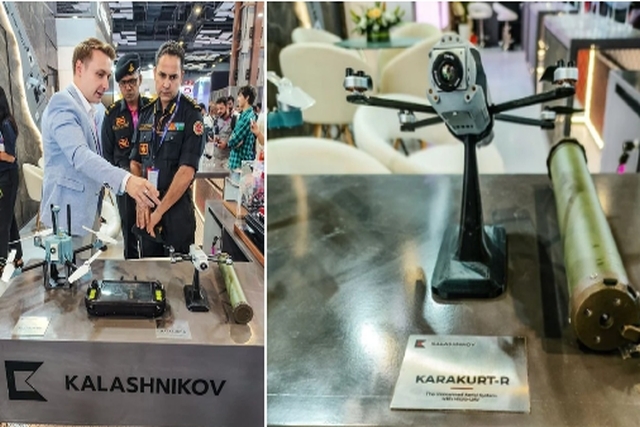
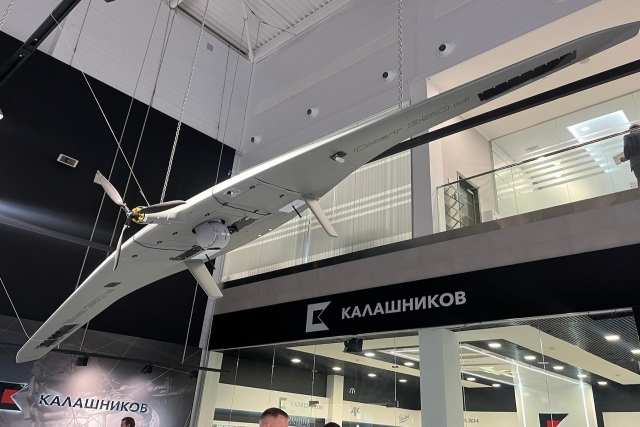
Kalashnikov Concern of Russia signed a contract to supply a batch of Karakut multifunctional unmanned aerial vehicles (UAVs) to an Indian customer at the India Homeland Security Expo 2026 last week.
Delivery is scheduled for the end of 2026, while negotiations are underway to establish licensed production in India, the Russian Weapons Telegram Channel reported.
Weighing 300 grams, the vehicle has a maximum speed of 25 km/h, a flight time of up to 20 minutes, and a range of up to 2 km at an operating altitude of approximately 150 meters. The onboard system includes an optronic station capable of transmitting real-time video over a secure channel, as well as a navigation module resistant to electronic warfare.
The Karakut is designed as a quadcopter, using composite materials that reduce its radar and thermal signature. The power plant is based on quickly replaceable lithium-polymer batteries, and the control system supports both manual and semi-autonomous flight modes to preset waypoints.
In the Indian Army, the device can be used for reconnaissance and fire adjustment at the company and battalion level, as well as for monitoring the perimeters of critical infrastructure facilities in urban areas and difficult terrain.
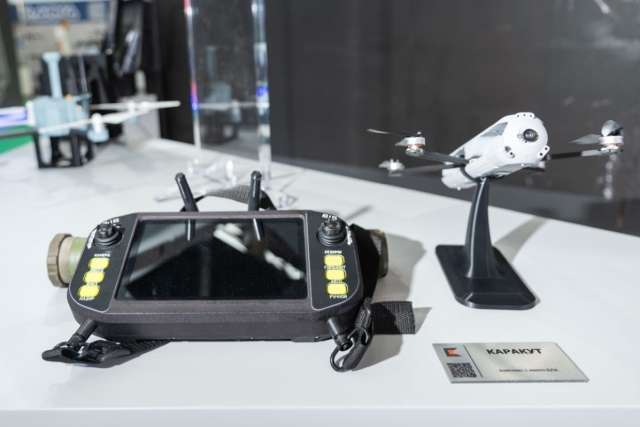
Karakut: Small UAV with big features
Establishing licensed production will allow India to establish its own base for the assembly and modernization of small UAVs, integrating Indian communications equipment and sensors.
At the same time, Russia will retain control over key navigation and data processing algorithms, consistent with the practice of technological partnership within the framework of military-technical cooperation.
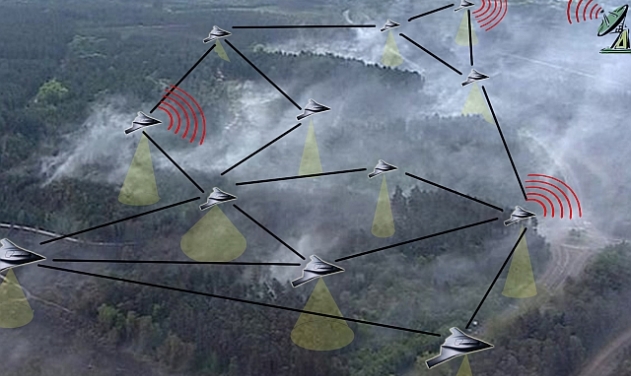
In the future, the Karakut could become an element of a distributed tactical reconnaissance network, integrated with Indian artillery and anti-tank weapon control systems.
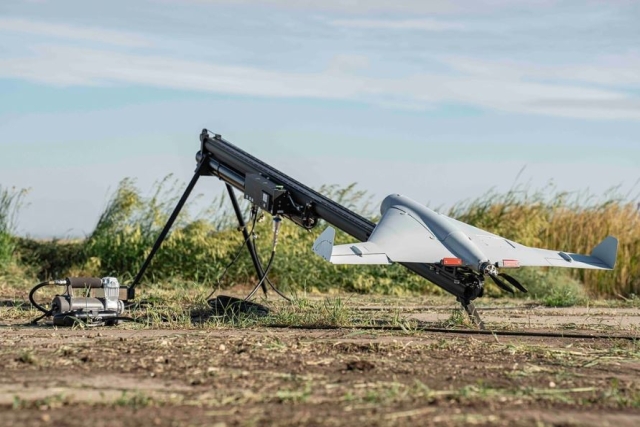
Russia's Kalashnikov Produces KUB-E Loitering Munitions for Foreign Customer
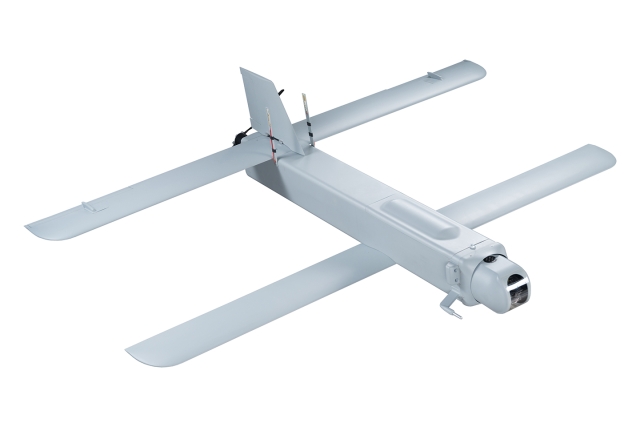
Kalashnikov to Present New KUB Kamikaze Drone at IDEX, Abu Dhabi

Kalashnikov Testing Stealth Combat Electric Motorcycle in Ukraine
Kalashnikov Unveils SKAT-350 Reconnaissance Drone at ARMY-2024
Russia’s Kalashnikov Signs Contract to Supply 'Karakut' Reconnaissanc Drones to Indian Firm...
European Commission Disburses €3.9 Billion Loan to Ukraine for Drone Procurement

Russian Hackers Stealing Backup Data from Ukrainian Signal Accounts

Iran Wants to Solely Guide Ships Around Minefields in Strait of Hormuz

One Month Since U.S., Israeli War Against Iran: Who Is Gaining?
One month after the United States and Israel launched coordinated strikes on Iran on February 28 the conflict has expanded...
Modern Tank Showdown: T-90MS, Leopard 2A7, M1E3 Abrams Compared
Main Battle Tanks (MBTs) have shown their mettle in recent conflicts such as in Ukraine despite being increasingly vulnerable to...
European Nations Prioritizing Europe-made IRIS-T & SAMP-T over American Patriot Air Defense Systems?
European nations looking to procure new air defense systems appear to be giving the much-vaunted American Patriot a miss in...

Russian T-90MS Crew Discuss Future Upgrades
Defense Mirror spoke with the crew members of the Russian T-90MS main battle tank, produced by UralVagonZavod

China's Mass-produced J-35A Aircraft Set to Disrupt Global Stealth Fighter Market
China is aiming to disrupt the global stealth fighter market by mass-producing its fifth-generation J-35A at a pace comparable to...

The Future of Combat: Miniaturized Laser Weapons Set to Replace Bullets and Missiles
Lasers may soon replace bullets, and drones could disable enemy UAVs with beams of light instead of missiles