Germany Approves New P13 Pistols, Skyranger 30 Missiles, RAM Upgrades
Budget Committee backs new service pistols, anti-drone missiles for Skyranger 30, naval missile upgrades, and digital modernization projects.
The German Bundestag’s Budget Committee has approved 14 new defense procurement projects for the German Armed Forces, including new service pistols, guided missile systems, digital modernization programs, and upgrades to naval and air capabilities.
Under the decision, the Bundeswehr will receive new P13 service pistols to replace the aging P8 model. Two framework contracts were approved—one for pistol production and accessories, and another for carrying systems. The program aims to correct ergonomic and technical issues of the P8 and ensure a modern sidearm for troops operating in confined or special environments.
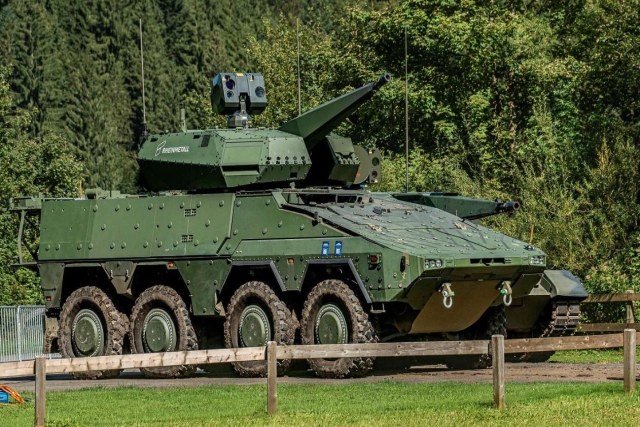
The committee also approved development and delivery of the Small Anti-Drone (SAD) missile for the Skyranger 30 air defense system. The new missile, combined with a 30-millimeter cannon, will enhance frontline defense against small and micro drones. The system is expected to be part of the European Sky Shield Initiative, with deliveries running through 2032.
For medical evacuation, the Bundeswehr will acquire modular equipment kits to enable faster setup of patient transport systems in A400M and C-130J aircraft. The upgrade is expected to expand medical transport capacity by 2029.
The committee also approved modernization of the Rolling Airframe Missile (RAM) launch control systems on German Navy frigates and corvettes, along with additional procurement of RAM Block 2B missiles for delivery between 2030 and 2032 to maintain NATO surface fleet standards.
A new operating contract with the German Aerospace Center (DLR) was cleared for the Heinrich Hertz satellite, which supports both civilian and military communications. The agreement covers satellite operation and project management, ensuring the Bundeswehr gains secure, satellite-based transmission capabilities.
Further projects include procurement of AN/PRC-163 and AN/PRC-167 radios, thermal imaging sights for small arms, and modular roll-off fire protection containers. The Bundeswehr will also gain containerized mobile field kitchens capable of serving up to 250 personnel per unit.
Digital transformation programs were advanced through an amended support agreement with BWI GmbH, the Bundeswehr’s IT systems house, particularly for the Digitization of Land-Based Operations (D-LBO) project.
In naval systems, a framework was approved for a standardized maritime command and weapon system (CWES) under German-Canadian cooperation, aiming for a unified standard across fleets by 2026.
Finally, the Secure Inter-Network Architecture (SINA) program will expand in 2026 with new encrypted devices and peripherals to strengthen secure military communications.
All projects are financed through the Bundeswehr Special Fund and Budget Line 14, supporting Germany’s ongoing efforts to modernize its armed forces across land, sea, air, and cyber domains.
Germany, Lithuania Begin Construction of New Ammunition Plant in Baisogala
Operational Laser Weapon for the German Navy By 2029
France, Germany Sign Letter of Intent for European Space-based Early Warning Capability
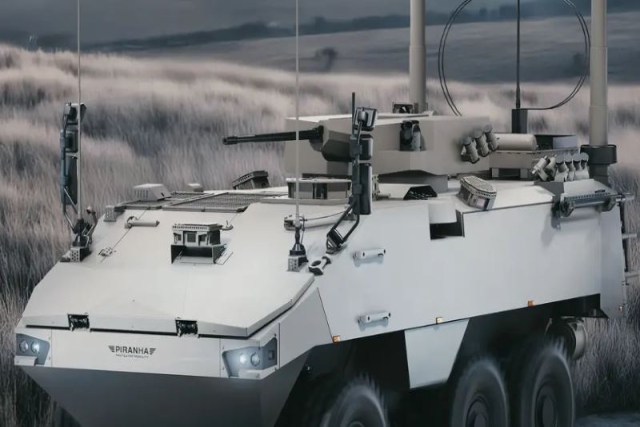
Germany Awards €3B to General Dynamics for Luchs 2 Reconnaissance Vehicle

Houtis Fire Missiles at Saudi Airport after Riyadh Bombs Yemen’s Sanaa Airport...

Iran Blockade Back, Now U.S. to Charge 20% Hormuz Transit Fee

First Use of Unmanned Kamikaze Boat by the U.S. in Attack...

Russian FSB Prevents Ukrainian Plot to Attack Su-57 Fighter Bases with FPV...

One Month Since U.S., Israeli War Against Iran: Who Is Gaining?
One month after the United States and Israel launched coordinated strikes on Iran on February 28 the conflict has expanded...

Modern Tank Showdown: T-90MS, Leopard 2A7, M1E3 Abrams Compared
Main Battle Tanks (MBTs) have shown their mettle in recent conflicts such as in Ukraine despite being increasingly vulnerable to...
European Nations Prioritizing Europe-made IRIS-T & SAMP-T over American Patriot Air Defense Systems?
European nations looking to procure new air defense systems appear to be giving the much-vaunted American Patriot a miss in...

Russian T-90MS Crew Discuss Future Upgrades
Defense Mirror spoke with the crew members of the Russian T-90MS main battle tank, produced by UralVagonZavod

China's Mass-produced J-35A Aircraft Set to Disrupt Global Stealth Fighter Market
China is aiming to disrupt the global stealth fighter market by mass-producing its fifth-generation J-35A at a pace comparable to...

The Future of Combat: Miniaturized Laser Weapons Set to Replace Bullets and Missiles
Lasers may soon replace bullets, and drones could disable enemy UAVs with beams of light instead of missiles