China Presents 40-hour Endurance Anti-submarine Drone at Dubai Airshow
New UAV showcased as first unmanned system to conduct fully autonomous submarine-hunting missions
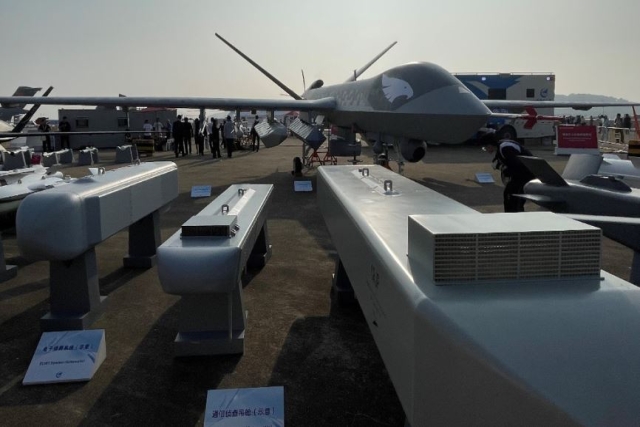
China has introduced the Wing Loong X anti-submarine drone at the Dubai Airshow 2025, presenting what AVIC says is the world’s first unmanned aircraft capable of fully autonomous anti-submarine warfare.
Earlier, crewed aircraft and helicopters were used for submarine detection.
AVIC claims the drone can fly for 40 hours and operate at 10,000 meters while carrying sonobuoys, marine sensors, and lightweight torpedoes. The drone uses onboard AI to analyse sonar and radar data, classify underwater targets, and guide responses with limited human involvement. With a wingspan of more than 20 meters, the platform can maintain near-continuous surveillance over maritime chokepoints — something manned aircraft like the U.S. Navy’s P-8 Poseidon cannot sustain due to crew requirements and operational costs.
The Wing Loong X’s ability to deploy sonobuoys is a major shift, as these sensors have traditionally been used only by manned aircraft. AVIC claims the drone can detect, track, and, if armed, attack submarines autonomously. The company also highlights swarm operations, where multiple drones combine sensor data to monitor large sea areas for extended periods.
At the Airshow China 2024, the Wing Loong-X was displayed with its full suite of anti-submarine capabilities, equipped with various payloads such as sonar buoy pods, torpedoes, air-to-air missiles, and anti-ship missiles, the Global Times noted at the event.
If China fields dozens of these drones at once, submarines operating in contested waters such as the South China Sea could face far greater exposure. Persistent airborne surveillance could erode the stealth advantage long relied upon by U.S. and allied submarines.

Ready-for-Export Su-57 Fighter Exhibited At Dubai Airshow
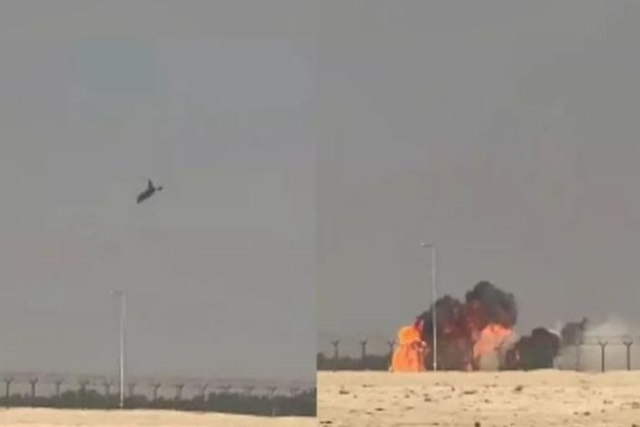
Indian Air Force Pilot Killed after Tejas Fighter Crashes at Dubai Airshow

India’s LCA Tejas Jet Crashes At Dubai Air Show, Pilot’s Fate Unknown...

Airbus, Mubadala Expand Aerospace Partnership at Dubai Airshow 2025

U.S. Hits 7 Bridges in 6th Night of Aggression, Iran says 7...
Canada to Join GCAP Sixth Gen Fighter program as Observer
Commissioning of Taiwan’s First Indigenous Submarine Within Next 2 Months

US Armed Forces Members to Undergo Testing for Testosterone Levels

One Month Since U.S., Israeli War Against Iran: Who Is Gaining?
One month after the United States and Israel launched coordinated strikes on Iran on February 28 the conflict has expanded...
Modern Tank Showdown: T-90MS, Leopard 2A7, M1E3 Abrams Compared
Main Battle Tanks (MBTs) have shown their mettle in recent conflicts such as in Ukraine despite being increasingly vulnerable to...
European Nations Prioritizing Europe-made IRIS-T & SAMP-T over American Patriot Air Defense Systems?
European nations looking to procure new air defense systems appear to be giving the much-vaunted American Patriot a miss in...
Russian T-90MS Crew Discuss Future Upgrades
Defense Mirror spoke with the crew members of the Russian T-90MS main battle tank, produced by UralVagonZavod

China's Mass-produced J-35A Aircraft Set to Disrupt Global Stealth Fighter Market
China is aiming to disrupt the global stealth fighter market by mass-producing its fifth-generation J-35A at a pace comparable to...

The Future of Combat: Miniaturized Laser Weapons Set to Replace Bullets and Missiles
Lasers may soon replace bullets, and drones could disable enemy UAVs with beams of light instead of missiles