U.K. Royal Navy Crewless Helicopter Nears First Flight after Ground Trials
Proteus completes engine and rotor tests as U.K. advances plans for future hybrid air wing
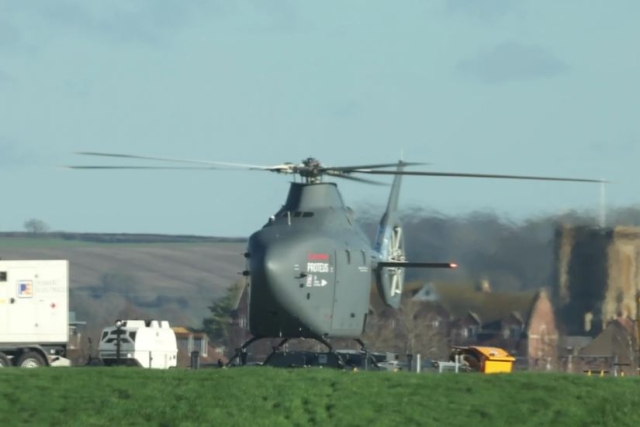
The U.K. Royal Navy’s first full-sized crewless helicopter has moved a step closer to maiden flight after completing ground trials on December 2.
Proteus, built by Leonardo under a £60 million programme, underwent engine activation, systems checks, and rotor tests at the company’s Yeovil site. Developed in less than two and a half years, the aircraft is intended to demonstrate how autonomous Vertical Take-off and Landing systems could operate alongside crewed platforms in a future hybrid air wing.
Senior Ministry of Defence officials and Royal Navy officers observed the trials and were briefed on the aircraft’s onboard software, sensors, and artificial intelligence—capabilities designed to process data and make mission decisions while operating in harsh maritime environments.
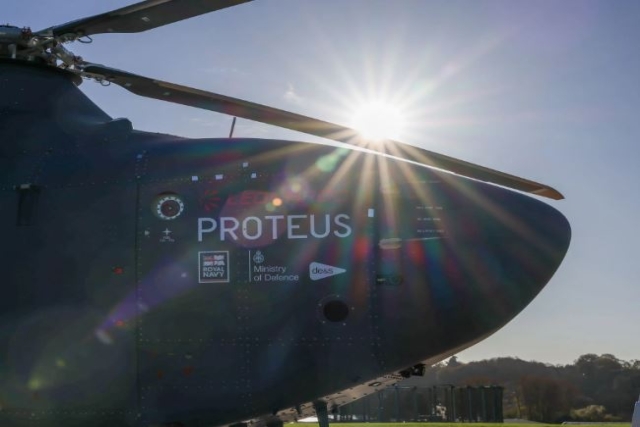
Nigel Colman, Managing Director Helicopters UK at Leonardo, said: “Proteus is equipped with onboard software capabilities, carrying a suite of sensors and systems that allow it to sense its environment, make decisions and act accordingly. All of this processing is conducted onboard the aircraft, while operating in the most extreme environments, including high sea states and strong winds – just where the Royal Navy needs this kind of capability.”
The aircraft features a payload bay capable of carrying up to one tonne, supporting missions such as surveillance, search and rescue, logistics resupply, weapon delivery, and intelligence gathering. Its first assessments will focus on anti-submarine warfare.
During upcoming trials, Proteus will patrol designated maritime areas, using data from allied ships, helicopters, submarines, and sensors to locate underwater threats. It will deploy sonobuoys to detect acoustic signatures and report findings directly to mission commanders.
U.A.E.'s EDGE-Owned ANAVIA Opens New Swiss HQ to Boost Unmanned Helicopter Development...
L3Harris Joins Airbus to Integrate Systems on MQ-72C Unmanned Helicopter
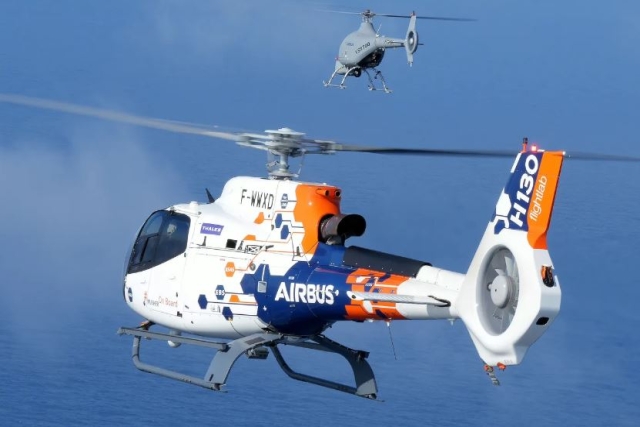
Airbus Demonstrates Manned, Unmanned Helicopter Teaming
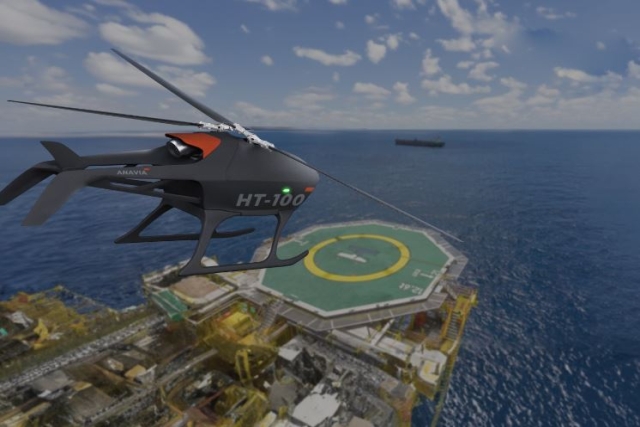
EDGE to Supply 200 Unmanned Helicopters to the U.A.E. MoD
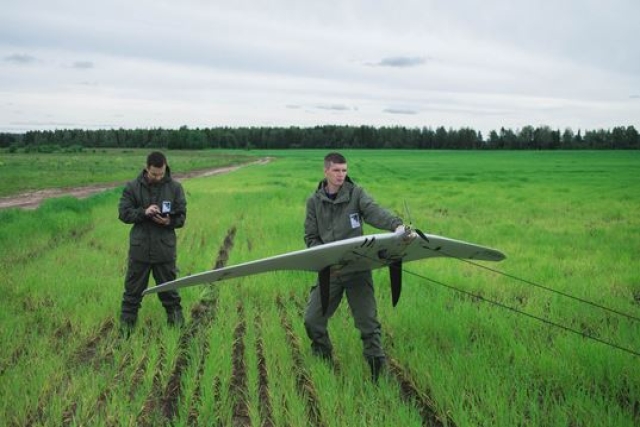
Russia's Unmanned Systems Group Signs Several International Contracts to Sell its Supercam...

50 Killed, 500 Injured in U.S. Airstrikes Against Iranian

US Turns Israel’s Ben Gurion Airport into Forward Base for War...
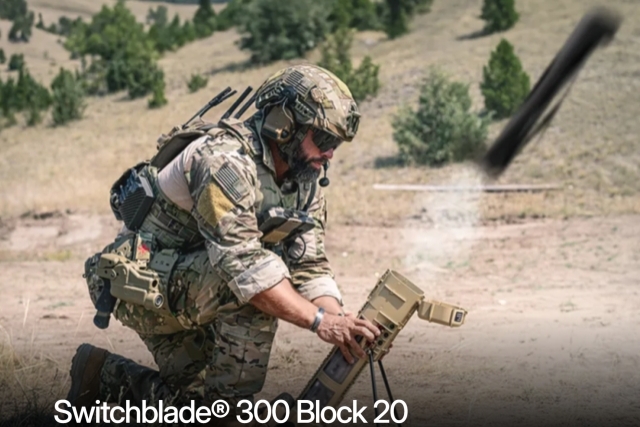
Greece to Procure Aero Virionment’s Switchblade 300 Miniature Missiles

One Month Since U.S., Israeli War Against Iran: Who Is Gaining?
One month after the United States and Israel launched coordinated strikes on Iran on February 28 the conflict has expanded...

Modern Tank Showdown: T-90MS, Leopard 2A7, M1E3 Abrams Compared
Main Battle Tanks (MBTs) have shown their mettle in recent conflicts such as in Ukraine despite being increasingly vulnerable to...
European Nations Prioritizing Europe-made IRIS-T & SAMP-T over American Patriot Air Defense Systems?
European nations looking to procure new air defense systems appear to be giving the much-vaunted American Patriot a miss in...
Russian T-90MS Crew Discuss Future Upgrades
Defense Mirror spoke with the crew members of the Russian T-90MS main battle tank, produced by UralVagonZavod

China's Mass-produced J-35A Aircraft Set to Disrupt Global Stealth Fighter Market
China is aiming to disrupt the global stealth fighter market by mass-producing its fifth-generation J-35A at a pace comparable to...

The Future of Combat: Miniaturized Laser Weapons Set to Replace Bullets and Missiles
Lasers may soon replace bullets, and drones could disable enemy UAVs with beams of light instead of missiles