British Autonomous Full-size Helicopter Completes First Flight
Autonomous platforms such as Proteus sit at the core of the Atlantic Bastion programme to improve U.K. and NATO maritime threat detection and response across the North Atlantic.

The U.K.’s first truly autonomous full-size helicopter has completed its maiden flight from Predannack airfield in Cornwall, the Royal Navy announced today.
The aircraft, the Proteus Technology Demonstrator, was designed and built by Leonardo in Yeovil as a Royal Navy demonstrator to assess how autonomous helicopters could operate alongside crewed aircraft in future hybrid air wings, including roles linked to anti-submarine warfare under the Atlantic Bastion strategy.
The flight followed ground-running trials at Leonardo’s Yeovil site, where engines, sensors and onboard systems were tested. Engineers and representatives from Leonardo, the Royal Navy and U.K. Defence Innovation observed the flight from the Lizard Peninsula.
Predannack, a satellite airfield for RNAS Culdrose near Helston, also functions as the National Drone Hub and plays a role in developing uncrewed and autonomous aviation systems.

The Royal Navy said the flight supports commitments in the Strategic Defence Review, which set out plans for a “New Hybrid Navy” integrating autonomous platforms into maritime operations.
Proteus is larger and more complex than uncrewed systems already in Royal Navy service, such as Malloy octocopters and the Peregrine surveillance helicopter. Leonardo said the aircraft can carry a payload of more than one tonne and operate in challenging maritime conditions, including high sea states and strong winds, potentially freeing crewed helicopters for other missions.
Instead of a cockpit crew, Proteus uses sensors and computer systems driven by software designed to interpret its environment, make decisions and control the aircraft. During its first flight, the helicopter conducted a short test profile using its own flight controls, while test pilots monitored the aircraft from the ground to ensure safety.
The £60 million programme supports around 100 jobs in the U.K. and is described by Leonardo as one of the world’s first efforts to develop a full-size autonomous helicopter.
U.A.E.'s EDGE-Owned ANAVIA Opens New Swiss HQ to Boost Unmanned Helicopter Development...
L3Harris Joins Airbus to Integrate Systems on MQ-72C Unmanned Helicopter
Airbus Demonstrates Manned, Unmanned Helicopter Teaming
EDGE to Supply 200 Unmanned Helicopters to the U.A.E. MoD
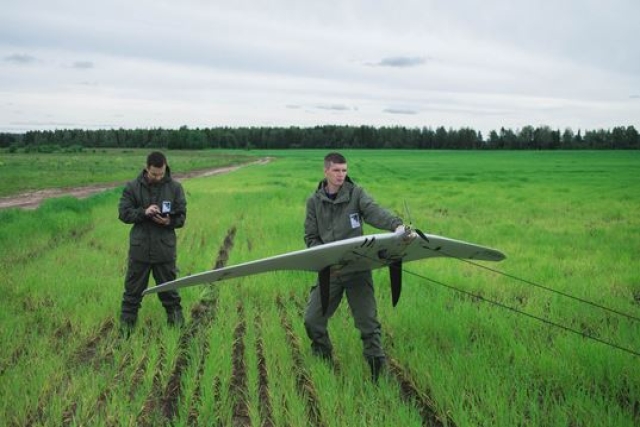
Russia's Unmanned Systems Group Signs Several International Contracts to Sell its Supercam...

50 Killed, 500 Injured in U.S. Airstrikes Against Iranian

US Turns Israel’s Ben Gurion Airport into Forward Base for War...
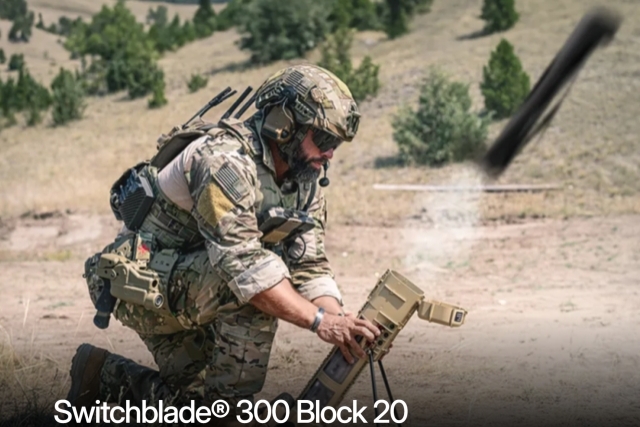
Greece to Procure Aero Virionment’s Switchblade 300 Miniature Missiles

One Month Since U.S., Israeli War Against Iran: Who Is Gaining?
One month after the United States and Israel launched coordinated strikes on Iran on February 28 the conflict has expanded...

Modern Tank Showdown: T-90MS, Leopard 2A7, M1E3 Abrams Compared
Main Battle Tanks (MBTs) have shown their mettle in recent conflicts such as in Ukraine despite being increasingly vulnerable to...
European Nations Prioritizing Europe-made IRIS-T & SAMP-T over American Patriot Air Defense Systems?
European nations looking to procure new air defense systems appear to be giving the much-vaunted American Patriot a miss in...
Russian T-90MS Crew Discuss Future Upgrades
Defense Mirror spoke with the crew members of the Russian T-90MS main battle tank, produced by UralVagonZavod

China's Mass-produced J-35A Aircraft Set to Disrupt Global Stealth Fighter Market
China is aiming to disrupt the global stealth fighter market by mass-producing its fifth-generation J-35A at a pace comparable to...

The Future of Combat: Miniaturized Laser Weapons Set to Replace Bullets and Missiles
Lasers may soon replace bullets, and drones could disable enemy UAVs with beams of light instead of missiles