Indian Space Research Organisation Identifies NVS-02 Failure Cause
Telemetry and simulations revealed that the drive signal failed to reach the pyro valve in the oxidizer line of the main engine.
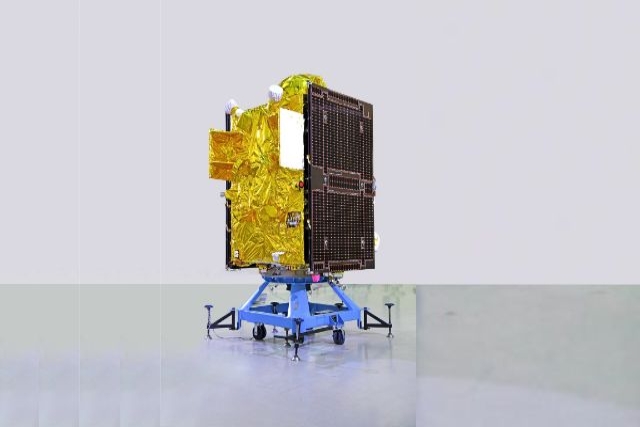
The Indian Space Research Organisation (ISRO) has released the findings of its Apex Committee investigation into the failed orbit-raising of the NVS-02 navigation satellite, launched in January 2025.
Although the GSLV-F15 successfully placed NVS-02 into its intended transfer orbit, the spacecraft was unable to reach its final circular orbit.
Telemetry and simulations revealed that the drive signal failed to reach the pyro valve in the oxidizer line of the main engine. The committee concluded that disengaged contacts in both the primary and redundant electrical connector paths likely broke the circuit, preventing engine ignition.
ISRO has since implemented corrective measures to improve pyro system redundancy and reliability. These changes were successfully validated during the CMS-03 mission, launched aboard LVM-3 M5 in November 2025, where the satellite was placed into its intended orbit.
The NVS-02 failure adds pressure on India’s regional navigation system, NavIC, which currently has only four operational satellites — IRNSS-1B, IRNSS-1F, IRNSS-1I, and NVS-01. With IRNSS-1F already suffering atomic clock failures, any further loss could reduce coverage below critical levels. At least seven satellites are required to ensure consistent, high-precision 3D positioning across India.
Meanwhile, ISRO marked progress in its human spaceflight programme, Gaganyaan. Tracking infrastructure developed with Australia’s Nova Systems has arrived at Site 5 on the Cocos (Keeling) Islands
ISRO Launched 396 Foreign, 70 Domestic Satellites During 2014-23
ISRO Launches GSAT-7A Military Communications Satellite
ISRO Launches Cartosat-2 Series, 30 Other Satellites Into Orbit
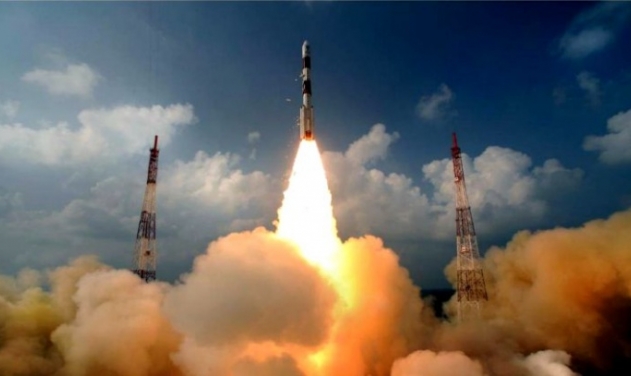
ISRO Launches Record 20 Satellites In Single Rocket

France Follows U.S. in Allowing Ukraine to Produce Air Defense Missiles
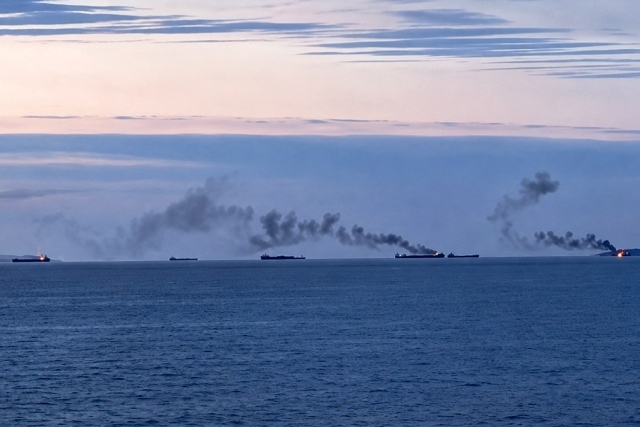
Russia, Ukraine Cause Significant Damage to Each Others’ Oil Tankers, Military Targets
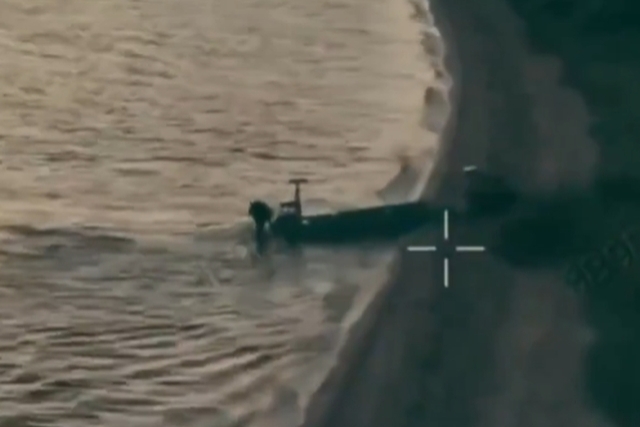
Ukraine Pulls Off World’s First Unmanned Amphibious Assault

IRGC Strikes Two Super Tankers in Strait of Hormuz, 5 Killed in...

One Month Since U.S., Israeli War Against Iran: Who Is Gaining?
One month after the United States and Israel launched coordinated strikes on Iran on February 28 the conflict has expanded...
Modern Tank Showdown: T-90MS, Leopard 2A7, M1E3 Abrams Compared
Main Battle Tanks (MBTs) have shown their mettle in recent conflicts such as in Ukraine despite being increasingly vulnerable to...
European Nations Prioritizing Europe-made IRIS-T & SAMP-T over American Patriot Air Defense Systems?
European nations looking to procure new air defense systems appear to be giving the much-vaunted American Patriot a miss in...
Russian T-90MS Crew Discuss Future Upgrades
Defense Mirror spoke with the crew members of the Russian T-90MS main battle tank, produced by UralVagonZavod

China's Mass-produced J-35A Aircraft Set to Disrupt Global Stealth Fighter Market
China is aiming to disrupt the global stealth fighter market by mass-producing its fifth-generation J-35A at a pace comparable to...

The Future of Combat: Miniaturized Laser Weapons Set to Replace Bullets and Missiles
Lasers may soon replace bullets, and drones could disable enemy UAVs with beams of light instead of missiles