Iran Broadcasts Encrypted Code via ‘Numbers Stations’ to Neighboring Countries
Reports indicate coded transmissions consisting of numbers, words, or letters are being broadcast across the region
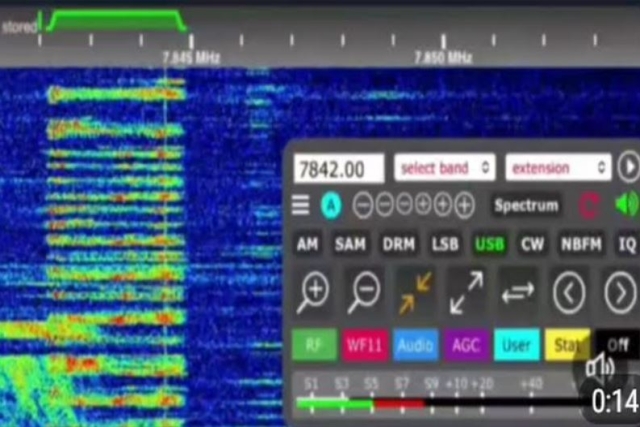
Iranian “numbers stations” broadcasting to nearby countries have reportedly started sending encrypted messages made up of numbers, words, or letters.
This is according to a report by Russian Arms telegram.
Numbers radio stations are long-range broadcasts whose operators are usually not publicly identified. These transmissions typically consist of strings of numbers, letters, or words read aloud by a human speaker or a computer-generated voice. Intelligence analysts have long associated such broadcasts with covert communication between governments and their agents, including personnel operating undercover.
The system relies on encrypted messages that generally require a matching code pad to decode. Without access to that pad, the encrypted sequence is usually impossible to interpret. Code pads are often issued to specific recipients and can be destroyed after use, making interception and decryption difficult.
Another characteristic of numbers radio transmissions is that the recipient does not need to establish any connection to receive the message. The listener only needs to tune a radio receiver at a specific time and frequency. Unlike internet or cellular communications, this passive method leaves no trace that the message has been received.
The infrastructure required for such transmissions is minimal. A standard radio transmitter, an ordinary radio receiver, and a cipher system—sometimes as simple as a notebook used for code pads—are sufficient to operate the system.
The reported activation of these broadcasts suggests that Tehran may be attempting to send instructions to individuals located in neighboring countries. However, the intended recipients and the content of the transmissions remain unknown. Some analysts say the signals could be meant for intelligence operatives operating abroad, but there is no public confirmation.
More Than 15 European Warships Head to the Mediterranean following Iran's attack...

U.S. Justifies Iran Carpet Bombing by Claiming Missiles Launched from Schools, Hospitals...
Turkey, Iran To Form Joint Working Group

Iranian Cluster Missile Strike Kills One in Central Israel

Iran Threatens to Close Strait of Hormuz as US Signals Return to...
China-made Aircraft Fly in U.S. Airshow for First Time

Switzerland to increase F-35 Offsets from 60% to 73%
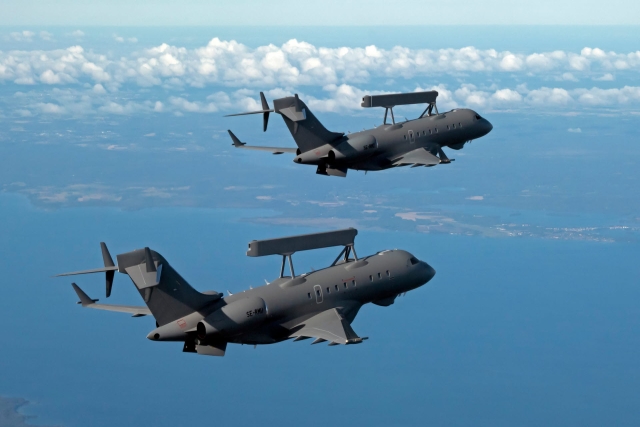
11 NATO Countries Select Saab GlobalEye AWACS Over Boeing E-7 Aircraft

One Month Since U.S., Israeli War Against Iran: Who Is Gaining?
One month after the United States and Israel launched coordinated strikes on Iran on February 28 the conflict has expanded...
Modern Tank Showdown: T-90MS, Leopard 2A7, M1E3 Abrams Compared
Main Battle Tanks (MBTs) have shown their mettle in recent conflicts such as in Ukraine despite being increasingly vulnerable to...
European Nations Prioritizing Europe-made IRIS-T & SAMP-T over American Patriot Air Defense Systems?
European nations looking to procure new air defense systems appear to be giving the much-vaunted American Patriot a miss in...
Russian T-90MS Crew Discuss Future Upgrades
Defense Mirror spoke with the crew members of the Russian T-90MS main battle tank, produced by UralVagonZavod

China's Mass-produced J-35A Aircraft Set to Disrupt Global Stealth Fighter Market
China is aiming to disrupt the global stealth fighter market by mass-producing its fifth-generation J-35A at a pace comparable to...

The Future of Combat: Miniaturized Laser Weapons Set to Replace Bullets and Missiles
Lasers may soon replace bullets, and drones could disable enemy UAVs with beams of light instead of missiles