Israel Offers to Host U.S. Bases in Middle East
The move comes after U.S. bases in Qatar, Saudi Arabia, U.A.E. and Kuwait came under attack from Iran during the current war
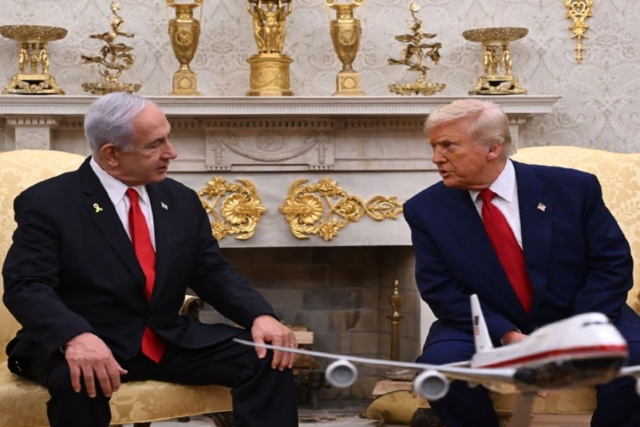
Israel is preparing to invite the United States to relocate some of its military bases in West Asia to Israeli territory and to establish new facilities once the current war ends.
This is according to a report by Channel 12 citing unnamed security sources.
The proposal is part of a broader plan by Israel’s security establishment to reconsider the positioning of U.S. forces in the Middle East, with officials describing the current situation as an opportunity to “reshape the map” of American military deployment. U.S. forces are already present across the region, while security challenges continue to evolve.
An Israeli source quoted in the report said, “We have proved our values of late as a central ally of the United States — one that provides not only stability, but also significant operational and intelligence capabilities. American bases in Israel would create a strategic advantage for both sides.”
Relocation of certain U.S. military assets currently based in Gulf countries, including Qatar, Bahrain, and the United Arab Emirates are being considered. These locations have recently faced Iranian-linked strikes, which exposed vulnerabilities in existing infrastructure.
Under the reported proposal, parts of key facilities such as Al Udeid Air Base in Qatar, the U.S. Fifth Fleet headquarters in Bahrain, and Al Dhafra Air Base in the U.A.E. could be moved to sites in Israel considered less exposed to such threats.
The plan also includes the establishment of new U.S. bases in Israel that could function as logistics hubs and integrate with existing frameworks such as the War Reserve Stockpile-Israel. The proposal outlines closer cooperation in maintaining aircraft, including F-35 and F-16 fighter jets.
Israel is also offering the use of its air defence systems, including THAAD, Patriot, and laser-based interceptors, along with expanded intelligence-sharing mechanisms.
Discussions with the administration of U.S. President Donald Trump are reported to be at an early stage. Security sources indicate that the proposal could provide strategic benefits to both countries without requiring additional deployment of U.S. ground forces.

U.S., Israel Conduct Airstrikes on Iranian Nuclear, Steel Sites
Israeli Forces Overstretched, Facing Collapse: Opposition Leader
KNDS, Israeli Elbit in JV to Produce EuroPULS MLRS System
Iran Launches 83rd Wave of Missile, Drone Strikes Targeting U.S., Israeli Sites...

Mass Production of Russian MC-21 Airiner Gains Momentum- 18 Aircraft Currently on...

Indonesia Signs Agreement with Leonardo to Buy AW-149 Helicopter

Russia Strikes Ukrainian Arms Show Venue, 10 Killed, 100 Injured

A Bridge for a Cargo Ship- Trump Announces Tit-for-Tat Attacks Against Iran

One Month Since U.S., Israeli War Against Iran: Who Is Gaining?
One month after the United States and Israel launched coordinated strikes on Iran on February 28 the conflict has expanded...

Modern Tank Showdown: T-90MS, Leopard 2A7, M1E3 Abrams Compared
Main Battle Tanks (MBTs) have shown their mettle in recent conflicts such as in Ukraine despite being increasingly vulnerable to...
European Nations Prioritizing Europe-made IRIS-T & SAMP-T over American Patriot Air Defense Systems?
European nations looking to procure new air defense systems appear to be giving the much-vaunted American Patriot a miss in...

Russian T-90MS Crew Discuss Future Upgrades
Defense Mirror spoke with the crew members of the Russian T-90MS main battle tank, produced by UralVagonZavod

China's Mass-produced J-35A Aircraft Set to Disrupt Global Stealth Fighter Market
China is aiming to disrupt the global stealth fighter market by mass-producing its fifth-generation J-35A at a pace comparable to...

The Future of Combat: Miniaturized Laser Weapons Set to Replace Bullets and Missiles
Lasers may soon replace bullets, and drones could disable enemy UAVs with beams of light instead of missiles