Maiden Flight of Kawasaki EC-2 SOJ Electronic Warfare Aircraft
Japan conducts first public flight of standoff electronic warfare aircraft designed to disrupt enemy radar systems from distance
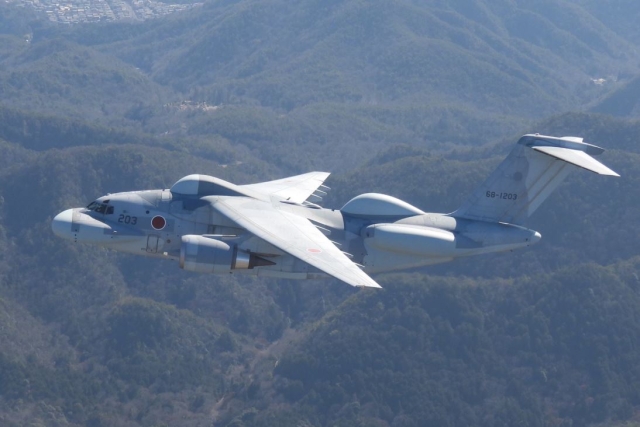
The Kawasaki EC-2 SOJ electronic warfare aircraft completed its first successful public flight at Gifu Air Base.
Derived from the C-2 twin-jet transport, the aircraft is designed to conduct standoff electronic warfare missions by suppressing enemy surveillance and multi-function radar systems without entering the operational range of air defense missiles. Development of the EC-2 began in 2021, with the platform selected for its payload capacity, flight performance, and compatibility with existing infrastructure, according to the Japan Ministry of Defense’s Acquisition, Technology & Logistics Agency.
The EC-2 is equipped with active electronically scanned array antennas operating across a frequency range of 0.5 to 18–20 GHz. It can carry out multiple forms of electronic attack, including frequency-targeted jamming, range- and speed-deception jamming, and simulated jamming, aimed at disrupting enemy sensors and communications.
Based on the third production C-2 airframe, the aircraft features structural modifications, including a large nose and multiple external fairings housing electronic warfare equipment. Missile approach warning sensors are installed as part of its defensive suite, and some systems from the earlier EC-1 platform have been integrated.
Japan’s focus on such capabilities comes amid the deployment of more advanced radar systems in East Asia. The EC-2 is designed to generate high-energy jamming beams to counter modern radar threats, with assessments indicating potential reductions in detection range for certain fighter radars, while more advanced systems may offer greater resistance.
The aircraft will undergo evaluation by the Japan Air Self-Defense Force’s Aviation Development and Testing Group before entering service. It is expected to operate alongside the RC-2 signals intelligence aircraft, which supports electronic warfare missions through data collection.
Japan plans to procure four EC-2 aircraft. The program has been allocated approximately 41.4 billion yen, with unit costs expected to exceed $250 million due to added electronic warfare systems and modifications.

L3Harris, Shield AI Demo Autonomous Electronic Warfare Capability

Russian Troops Receive BMP-3 IFVs with Enhanced Electronic Warfare, Protection
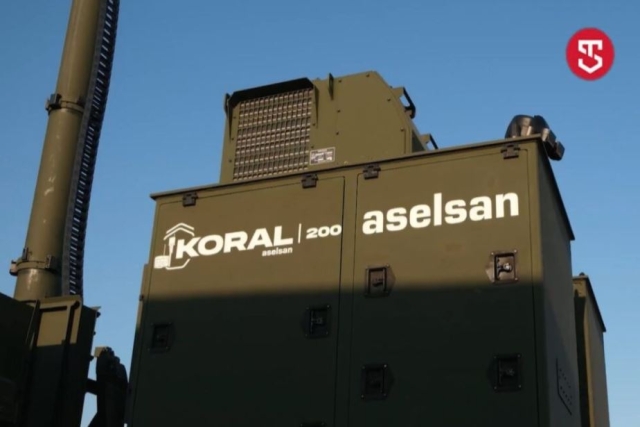
Turkish Army to Receive Two New Ground-based Electronic Warfare Systems This Year

Turkish ASELSAN Signs MoU with U.K.'s Babcock to Supply Electronic Warfare Systems...

Ukraine Unveils MUL.E Electric-Hybrid Combat Motorcycle

Mass Production of Russian MC-21 Airliner Gains Momentum- 18 Aircraft Currently on...

Indonesia Signs Agreement with Leonardo to Buy AW-149 Helicopter

Russia Strikes Ukrainian Arms Show Venue, 10 Killed, 100 Injured

One Month Since U.S., Israeli War Against Iran: Who Is Gaining?
One month after the United States and Israel launched coordinated strikes on Iran on February 28 the conflict has expanded...
Modern Tank Showdown: T-90MS, Leopard 2A7, M1E3 Abrams Compared
Main Battle Tanks (MBTs) have shown their mettle in recent conflicts such as in Ukraine despite being increasingly vulnerable to...
European Nations Prioritizing Europe-made IRIS-T & SAMP-T over American Patriot Air Defense Systems?
European nations looking to procure new air defense systems appear to be giving the much-vaunted American Patriot a miss in...
Russian T-90MS Crew Discuss Future Upgrades
Defense Mirror spoke with the crew members of the Russian T-90MS main battle tank, produced by UralVagonZavod

China's Mass-produced J-35A Aircraft Set to Disrupt Global Stealth Fighter Market
China is aiming to disrupt the global stealth fighter market by mass-producing its fifth-generation J-35A at a pace comparable to...
The Future of Combat: Miniaturized Laser Weapons Set to Replace Bullets and Missiles
Lasers may soon replace bullets, and drones could disable enemy UAVs with beams of light instead of missiles